For most of my life, I have lived by the clock.
Meetings start at 9. Lunch is somewhere around noon. Dinner is at 6 or 7. If you are still working at 9 at night, something has probably gone wrong.
Spain has a different idea.
Or at least that was my first impression.
Alexis and I are spending three weeks in Calpe, on the Costa Blanca, along the Mediterranean south of Valencia and near Alicante. It is a beautiful place, with dramatic mountains dropping toward the sea, beaches tucked beneath cliffs, and a mixture of Spaniards and foreigners who have discovered that this is a pretty agreeable place to spend some time.
And almost without intending to, we have developed our own version of living on Spanish time.
Our mornings can go in several directions. Sometimes I work. Sometimes we hike. Sometimes there is golf, padel or another activity.
Then comes lunch.
Not noon. Not 12:30.
Usually somewhere around 1:30 or 2.
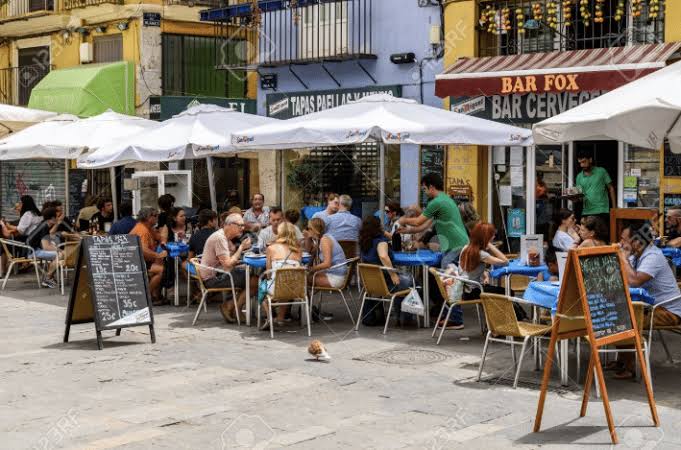
And lunch is not something we squeeze between appointments. It has become our big meal of the day. We sit down. We eat. We talk. We don’t seem to be looking at our watches every few minutes.
Then, for us, comes a couple of hours when very little work gets done.
Sometimes we actually take a nap. Sometimes we read. Sometimes we run an errand. Sometimes we simply do nothing very productive.
I initially called this “siesta time.”
But the longer we have been here—and the more Spaniards I have talked with—the more I realize that description is much too simple.
Most working Spaniards are not going home every afternoon, pulling down the shades and sleeping for two hours.
Some are still working. Some are picking up children. Some are shopping or taking care of errands. Some may grab a short nap. And many younger professionals seem to be moving toward a workday that looks considerably more like ours.
The famous Spanish siesta, it turns out, is partly reality, partly history and partly stereotype.
That distinction matters.
There is a long-standing image outside Spain of the Spaniard enjoying a leisurely lunch followed by an afternoon nap while the rest of the world gets back to work. It is easy for that image to carry with it an implication that Spaniards are somehow less industrious.
From what I have seen and from the Spaniards I have talked with, that is not only simplistic. It is wrong.
What does remain noticeably different is the rhythm surrounding meals and, particularly, the evening.
For us, by about 6, I am back at work.
And I mean work.
From 6 until 9 I answer emails, deal with Edge Foundation matters, write, make calls and take care of whatever needs my attention. Those three hours have become as serious and disciplined a work period as anything I would schedule at home.
Then, at an hour when many Americans are winding down for the night, Spain seems to come alive.
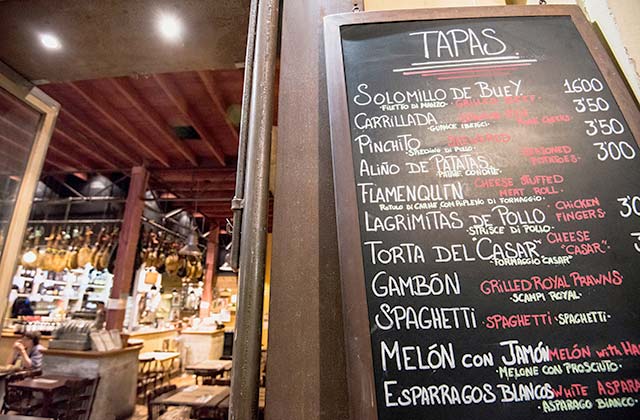
Around 9, we head out for tapas or a light dinner.
And this may be the part of Spanish life that has struck me most.
It is not simply that the restaurants are full.
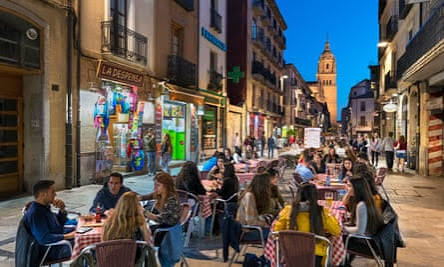
The streets are full.
The promenades are full.
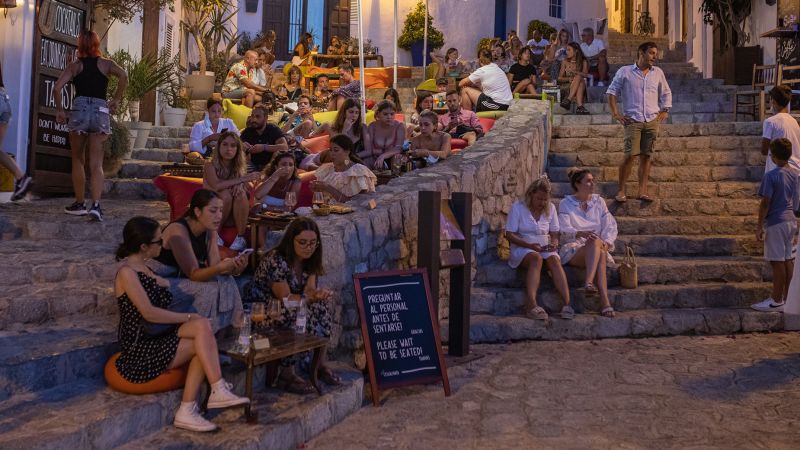
People are walking, talking, eating, visiting and lingering.
And not just twenty-somethings or young couples.
No sir.
Entire families are out.
Three generations together. Grandparents, parents and children—including some very young children.
At 9:30 or 10 at night, we see children walking along the promenade, sitting with their families at restaurants, eating ice cream, playing and simply being part of the evening.
Nobody seems terribly concerned that they should all be home because it is “past their bedtime.”
That part of Spanish life is not something I imagined.
The official meal times bear it out. Lunch is commonly served from roughly 1 until 4 in the afternoon and dinner from 8 until 11 or later. The clock is genuinely shifted later than the one I am accustomed to.
But I am becoming much more careful about describing what happens in between.
There is no universal Spanish timetable.
Madrid is not Calpe. An office worker is not a shopkeeper. A young family is not a retired couple. Summer is not winter. And the Spain of 2026 is certainly not the Spain of 1960.
Modern working life has changed Spain just as it has changed virtually every other developed country.
Which may be precisely why I find the parts that have survived so interesting.
The two-hour afternoon nap may be disappearing.
But the importance of the meal has not disappeared.
The late evening has not disappeared.
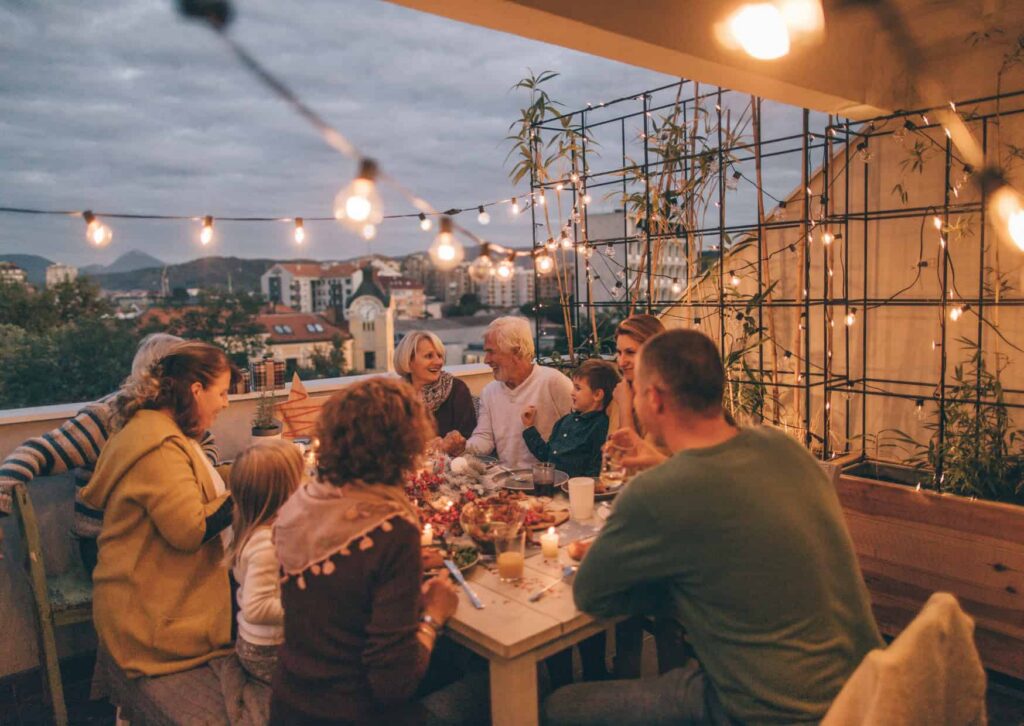
The sight of families spending time together in public spaces has certainly not disappeared.
And neither, apparently, has the idea that every available minute of the day does not have to be converted into another unit of productivity.
That is probably the lesson I was reaching for when I first started thinking about “Spanish time.”
It isn’t really about the siesta.
And it certainly isn’t about laziness.
It is about a somewhat different relationship with the clock.
I keep coming back to one image.
Ten o’clock at night. The Mediterranean beside us. Restaurants still full. Grandparents, parents and small children walking together along the promenade. Nobody rushing home.
Spain has changed enormously. Its workdays are changing. Its old rhythms are changing.
But somehow, some things have survived.
Maybe the question is not why Spaniards still live this way.
Maybe the question is whether, in becoming so efficient with our time, the rest of us have forgotten to protect a few things that were worth keeping.
Notice your photo of the happily noshing family. None of them has a cell phone in hand and not one phone on the table. Indeed we North Americans can learn from this.
Since 20 years ago you had a hand in introducing Pickleball into ORI perhaps you can get Padel rolling once you’re back at MCC!
I leave in four weeks for a cruise from Barcelona around to Lisbon. One stop is Valencia. Cant wait! Thanks for your report and sorry I will miss you.
Hello again Neil and as usual, thanks for sharing your exciting experiences-
Sheryl and I visited Calpe (a few years back, after stops in Barcelona and Valencia) and we experienced and enjoyed the unique and wonderful Spanish timetable that you describe so well.
Kristin and Kaelin (our younger daughter and granddaughter from San Diego) were with us, because Kristin was thinking very seriously about moving to Calpe. She put that aside, at least for a while, largely because there already were too may expats there, in her opinion. But all in all, a very nice place, indeed.
The whole family is still thinking of going back to Spain next year to help celebrate Sheryl’s 80th (on August 11) and our older daughter’s 60th birthday (August 2, 2027) — the day of the total solar eclipse that will provide almost 4 minutes of totality right over the Andalusia/Gibraltar/Malaga area.