Sixty years ago, I saw flamenco in Madrid.
At least I thought I did.
What I remembered were the obvious things: dramatic dresses, stamping feet, swirling skirts, castanets, beautiful women dancing to Spanish music.
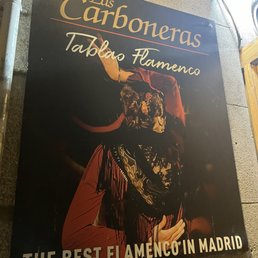
So when Alexis and I went to a 10 p.m. flamenco performance at Las Carboneras in Madrid, I thought I knew more or less what we were going to see.
I was wrong.
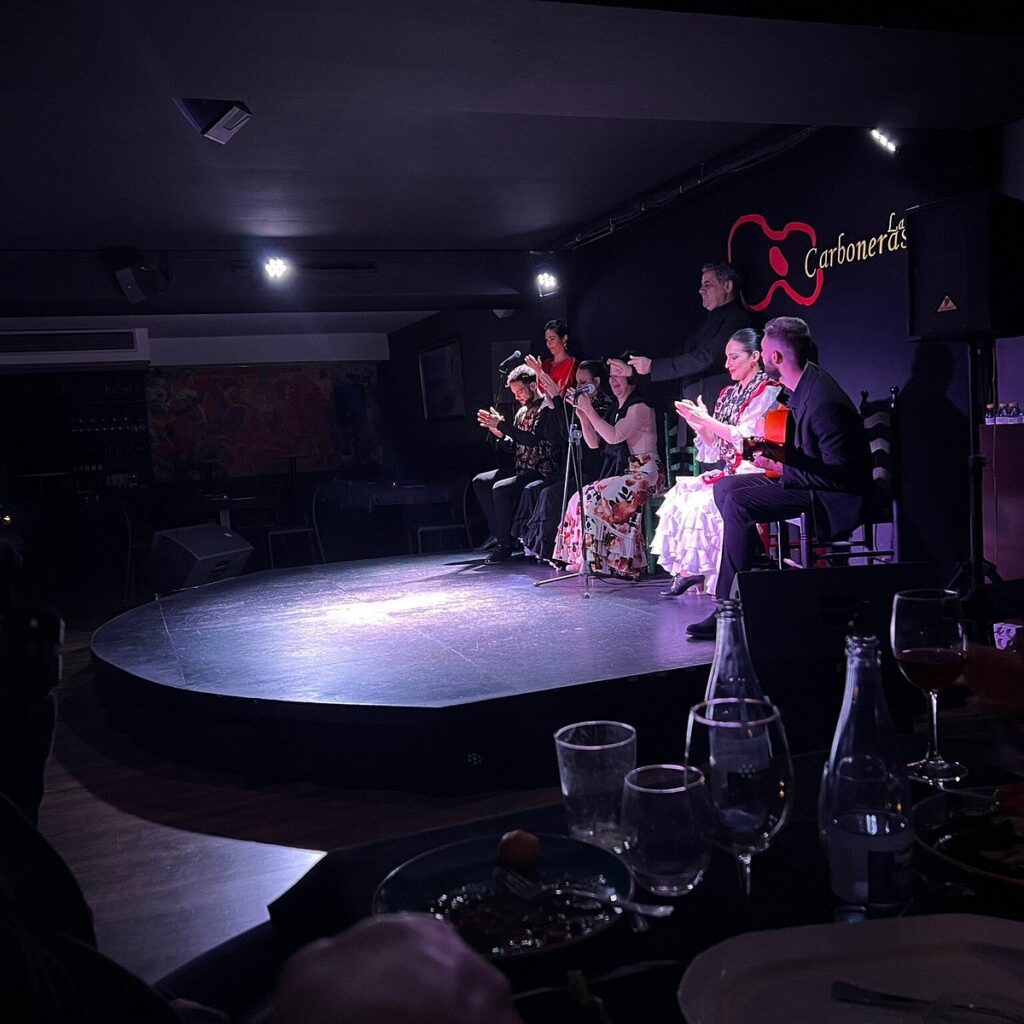
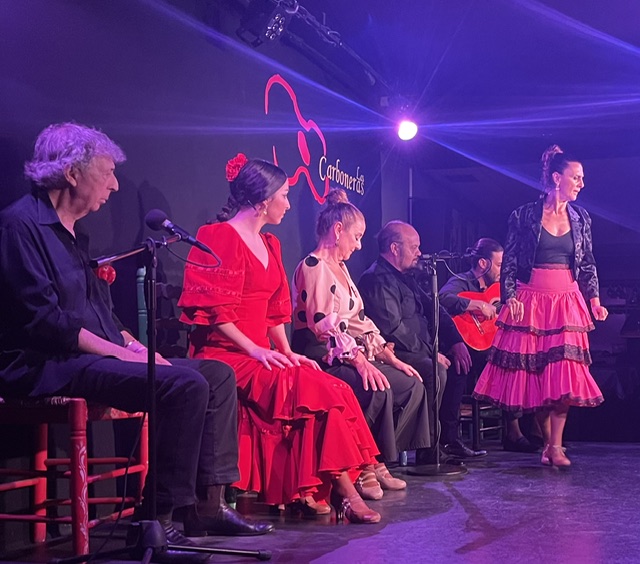
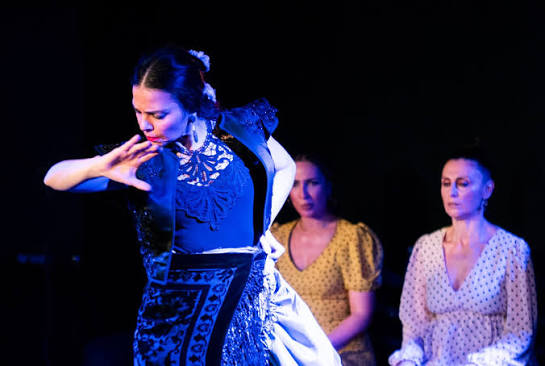
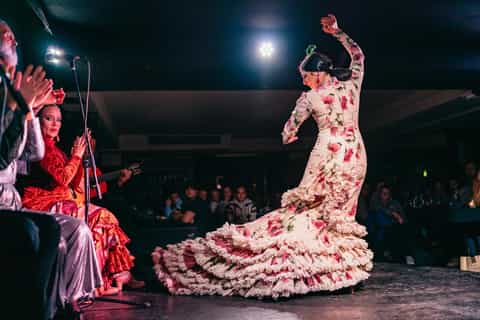
There were three women dancers, performing separately over the course of an hour.
There was one guitarist.
And there were two older men, dressed in black, who sat behind them and sang.
No castanets.
No chorus line.
No elaborate scenery.
No attempt to make the dancers look glamorous.
And yet, within a few minutes, the room seemed to be vibrating with energy.
The guitarist was extraordinary.
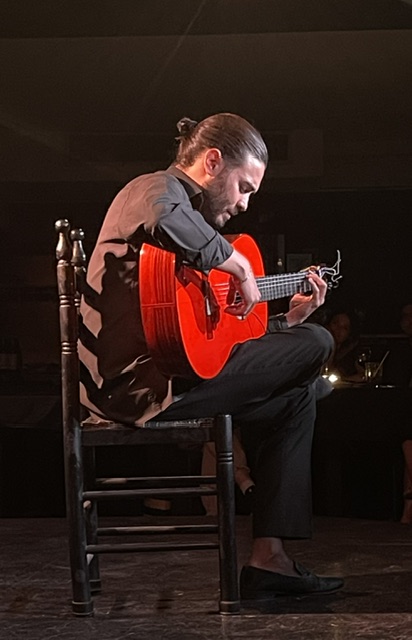
Not simply good. Extraordinary.
His hands moved so quickly that at times I found myself watching him rather than the dancer. But I soon realized that even calling him an accompanist was missing the point.
He was not accompanying the dancer.
Neither were the two singers.
They were all making the performance together.
That was my first discovery.
Flamenco is not really a dance.
Or at least it is not just a dance.
It is an art form built around three elements: the singing, called cante; the guitar, called toque; and the dancing, called baile.
Each one matters.
The dancer is not simply performing steps to music. She is listening to the singer. The guitarist is listening to both of them. The singer may stretch a phrase, repeat a line, intensify it, hold back.
And the dancer responds.
Sometimes with her feet.
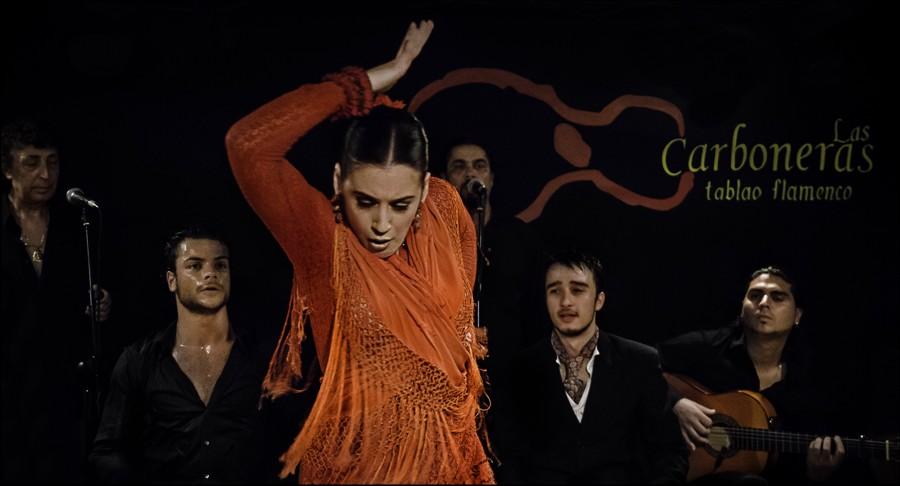
Sometimes with her arms.
Sometimes with her face.
And sometimes by doing almost nothing at all.
That may have been one of the most surprising things.
There were moments when a dancer simply stood there.
Still.
Watching.
Waiting.
Then suddenly the feet exploded.
The whole room seemed to change with her.
I had assumed flamenco was choreography.
I began to understand that it is closer to a conversation.
Or maybe even to jazz.
There is structure. There are recognizable forms. There are rhythms the performers know intimately.
But within that structure, they respond to one another in real time.
The singer pushes.
The guitarist answers.
The dancer listens.
Someone claps.
Someone shouts encouragement.
The tempo changes.
And something happens in that room that could not have happened in exactly the same way the night before.
That is a very different experience from watching people reproduce a carefully rehearsed routine.
I was also struck by the dancers themselves.
Two of the three women were not young.
And they did not seem remotely interested in looking pretty.
That surprised me.
I realized that somewhere in my head I had associated dance with youth, beauty and athleticism.
But these women were doing something else entirely.
They were commanding the room.
There was pride in the way they moved.
Anger at times.
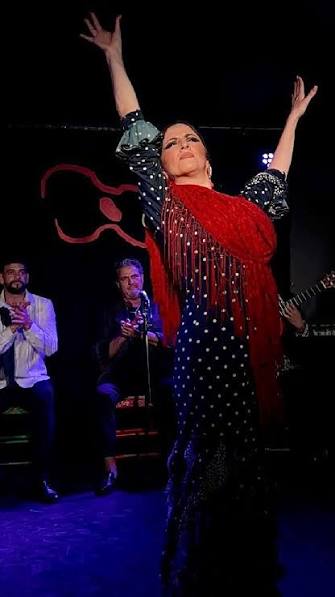
Defiance.
Sensuality.
Sadness.
Power.
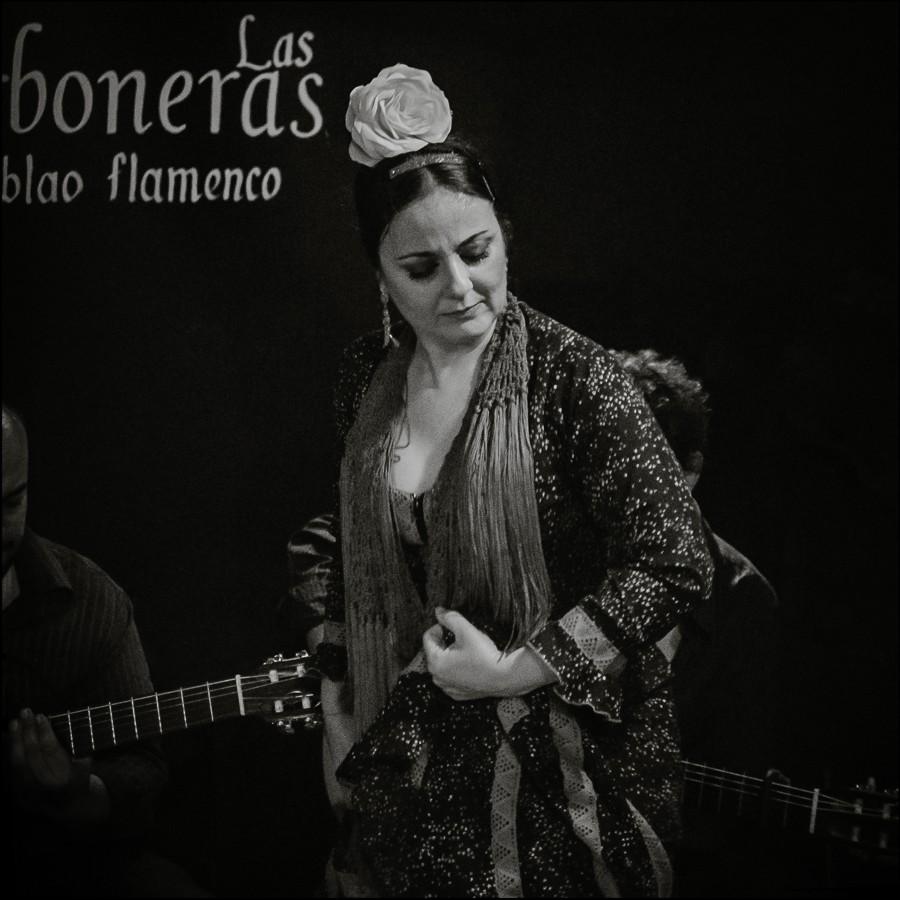
They were not asking us to admire them.
They were demanding that we pay attention.
And perhaps age actually added something.
A younger dancer might have had greater speed or athleticism.
But these women seemed to possess authority.
They knew when to move.
They knew when not to.
They could hold the room simply by standing still.
There is a word often associated with flamenco: duende.
It is difficult to translate.
It refers, roughly, to that moment when technique gives way to something rawer and deeper. When a performer is no longer simply demonstrating skill but seems to be reaching into some private place and pulling something out.
Pain.
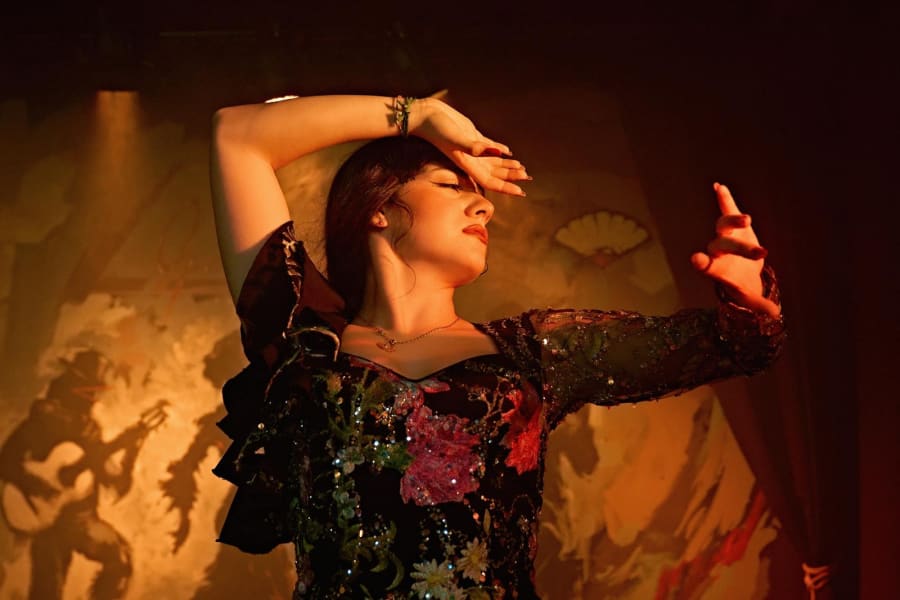
Longing.
Pride.
Grief.
Desire.
Whatever it is, you feel it.
I cannot tell you whether what we saw that night technically qualified as duende.
But I now understand why flamenco needs a word for it.
Then there were the two older men in black.
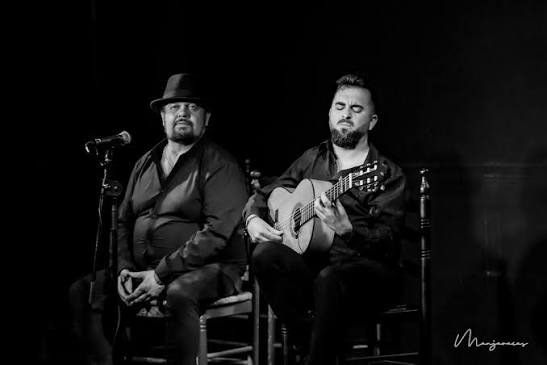
At first, I thought of them as singers providing music for the dancers.
That too was wrong.
Historically, the singing may actually be the oldest and deepest part of flamenco.
The songs can deal with love, betrayal, death, mothers, loneliness, hardship, jealousy, faith, imprisonment, pride and joy.
Sometimes the lyrics are only a few lines long.
The singer repeats them, stretches them, bends them, almost cries them out.
We could not understand the words.
Not one of them.
And strangely, that did not matter as much as I would have expected.
You could hear anguish without translating it.
You could hear longing.
You could hear celebration.
You could hear when something had become more intense.
And the dancer told you even more.
So there we were, listening to words we could not understand and somehow understanding what was being communicated.
That may have been the most powerful part of the evening.
I was also waiting for the castanets.
They never came.
I could have sworn I remembered castanets from the flamenco performance I saw in Madrid 60 years ago. Castanets can certainly be used in flamenco. But they are not essential.
The percussion was already there.
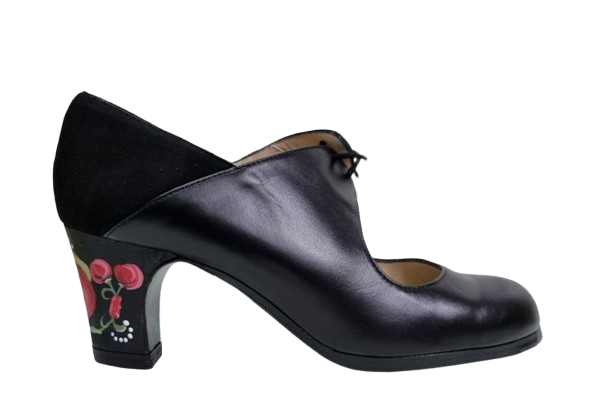
In the feet.
In the clapping.
In the rhythm of the guitar.
The dancer’s shoes were percussion instruments.
Her body was part of the music.
By the end of the hour, I realized how much of what I thought I knew about flamenco came from the surface of it.
The dresses.
The stomping.
The castanets.
The spectacle.
What I had missed was what lay underneath.
Flamenco is not really about showing off a dance.
It is about expressing something.
Sometimes something beautiful.
Sometimes something painful.
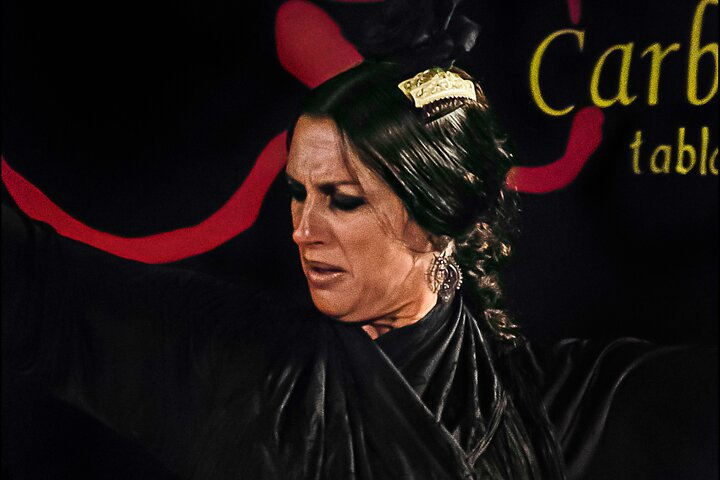
Sometimes something fierce.
And it takes all of them—the singer, the guitarist, the dancer, the clapping, even the shouts from the other performers—to create it.
I went into Las Carboneras thinking I was going to see flamenco dancing.
An hour later I understood that I had not seen a dance performance at all.
I had watched a group of people create something together, right in front of us, out of music, movement, rhythm, experience and emotion.
I couldn’t understand a word they were singing.
But I had absolutely no trouble understanding that they meant it.
Bravo, Neil! Bravo!
Through your writing, you take us deep within the event as we feel your experience along with you.
A moving account of the event and a beautiful tribute to the performers.
Such beautiful images created with your words. Wow.
Best description of Flamenco EVER! Wish I was there!
I’m glad you liked the Flamenco and realized it’s not there to make you think you should be watching a Vegas dance show; it’s more about passion and life. If you go to Sevilla during La Feria, you can see groups of families each performing their own version of Flamenco.
And, Flamenco does use castanets. I know because I took Flamenco dance lessons from a Flamenco Prima Ballerina in Madrid when I was there for my Junior Year in college. I still have those castanets. I learned the steps, but, at 20 years old, I didn’t have the passion!
linda,
thank you for letting us in on your earlier exploits. needless to say, the next time we all get togeher there will be a call from the crowd for you to perform “flamenco” given your training years ago!! can’t wait. we did not know!
neil