I know almost nothing about space.
That is not false modesty. It is simply true. I have spent very little of my life paying attention to space exploration. I have never been one of those people who could tell you the difference between this rocket and that one, or what each contractor does, or why one mission matters more than another.
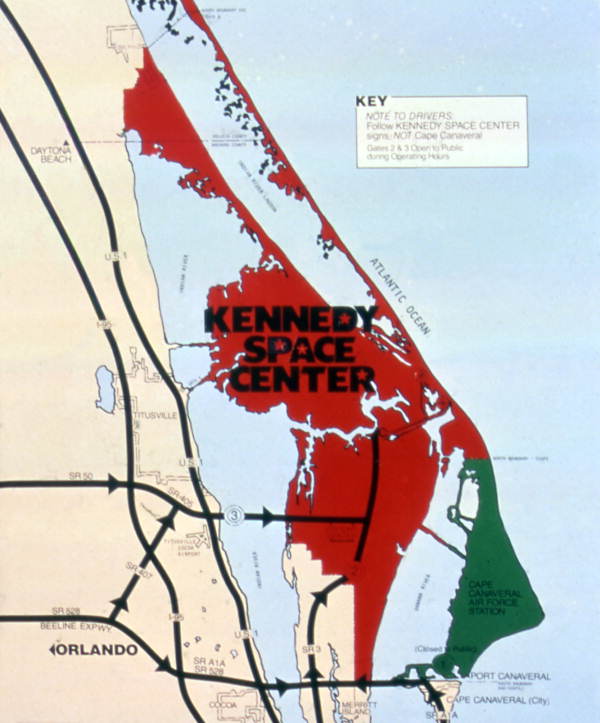
And yet, there I was this past week at Cape Kennedy and Cape Canaveral, immersed for three days in the world of Artemis II.
Why?
Precisely because I knew so little.
At this stage of life, there is something invigorating about stepping into a world that is almost entirely new. In fact, that was the attraction. This was a once-in-a-lifetime chance to see and experience something I have never been exposed to, and frankly know very little about. That was not a reason to stay away. That was the reason to come.
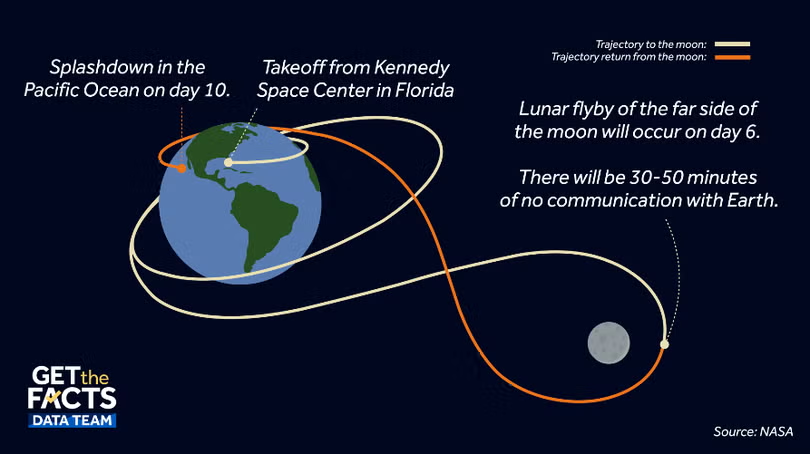
Alexis and I were there as guests of Lockheed Martin and several other contractors who work with NASA. We were part of a large invited group gathered for briefings, tours, and the launch itself. Artemis II lifted off last Wednesday, on April 1, 2026, the first crewed lunar mission in more than half a century, sending four astronauts on a roughly 10-day flight around the Moon and back.
But what struck me most was not the technology. It was the people.
I found myself sitting at tables with men and women who had devoted twenty or thirty years — in some cases more — to this world. This was not a passing interest for them. This was their life’s work. Each played some small or large role for some company supplying some small or large, but critically important, part of the mission. They spoke in a language that was clearly fluent to them and mostly foreign to me. I probably understood two or three words out of every ten.
But I understood enough.
I understood dedication.
I understood pride.
I understood what it means to spend years, even decades, helping build toward a moment that lasts only minutes.
And I understood, perhaps most movingly, how welcoming these people were to an outsider. No one made me feel foolish because I was a rookie. Quite the opposite. They seemed genuinely happy to share this world with someone seeing it with fresh eyes.
That, in itself, was a gift.
We live in a time when it is easy to stay in our lanes, to stick with what we already know, to gravitate toward the familiar and the comfortable. This trip reminded me of the value of doing the opposite. There is something deeply healthy about entering a room where you are not the expert, not the veteran, not the person who knows the language. There is something humbling about being the least informed person at the table and simply trying to absorb what is going on around you.
And what was going on around me was extraordinary.
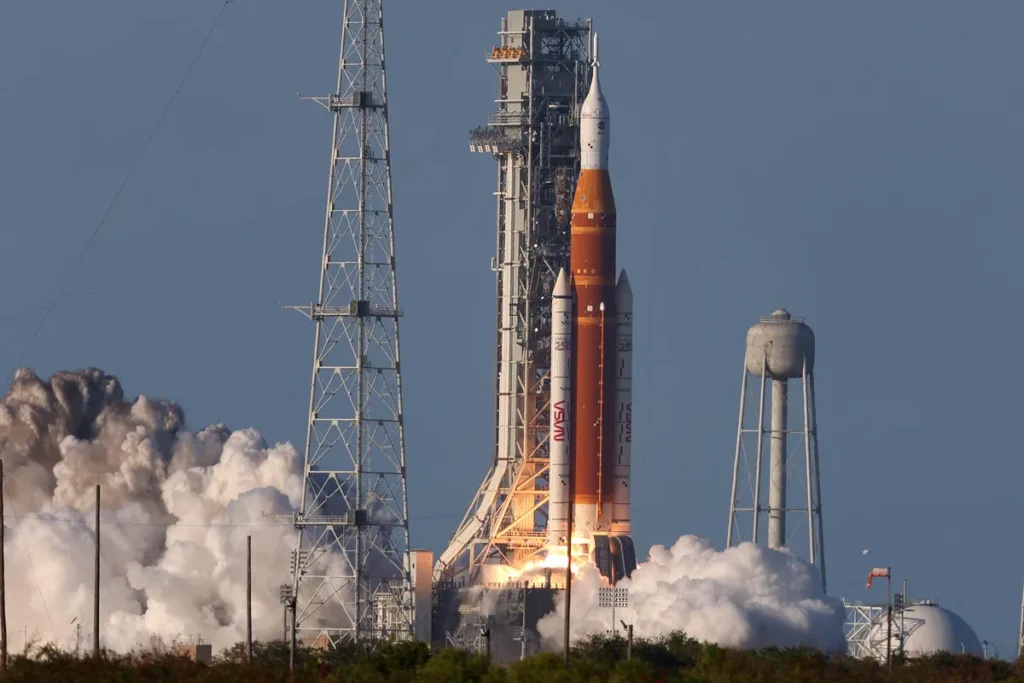
The launch itself was, of course, impressive and a little mind-blowing. Artemis II drew enormous public attention, with roads lined with cars, parks filled with people sitting in chairs for hours ahead of time, and thousands gathered at the Kennedy Space Center Visitor Complex,
where we were lucky enough to watch from relatively close by. It is the first crewed voyage to the Moon in 53 years, and one of the most consequential NASA launches in decades.
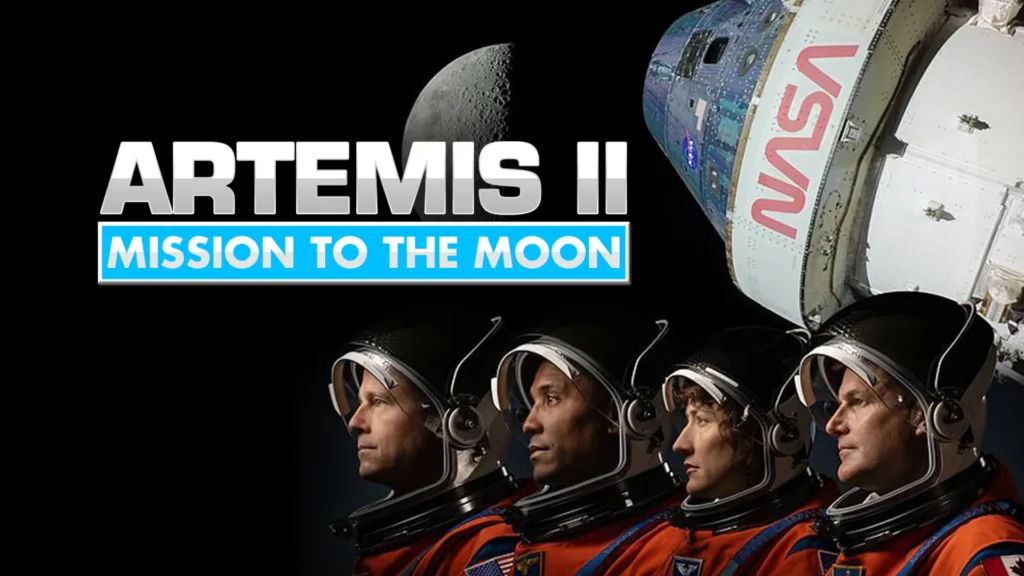
But even before the rocket went up, I found myself already moved by something else: the sheer scale of the human effort behind it. Not just the astronauts. Not just NASA. But the thousands of people, the years of preparation, the unbelievable safety checks, the technological precision, the financial commitment, and yes, the political commitment required to make something like this happen.
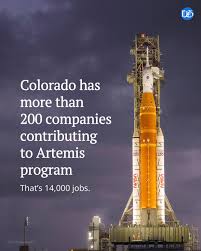
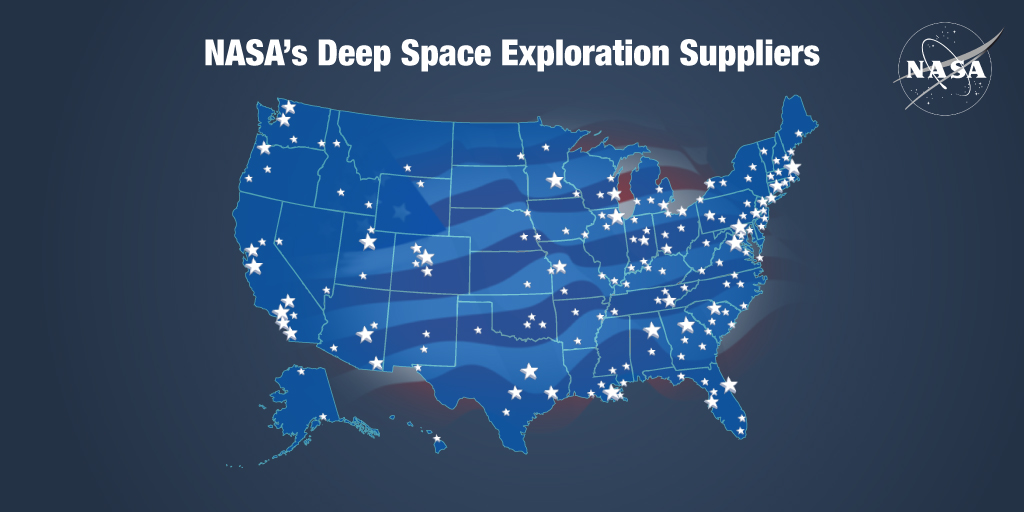
For example, the State of Colorado has over 200 companies and some 14,000 employees who have been working on Artemis II for years.
A rocket launch may last only a short time.
But it sits on top of a mountain of human effort.
That may be what I will remember most.
Not simply that I saw Artemis II leave the ground. But that I got to spend time among people who had helped make it possible — people whose work is mostly invisible to the rest of us, yet essential to something that captures the imagination of the world.
I came to Florida because this seemed like a once-in-a-lifetime opportunity.
I leave with a different thought.
Maybe one of the secrets to staying alive — truly alive — is to keep venturing into worlds we do not know.
Maybe it is good for the soul to be a rookie once in a while.

How you were able to be there for this moment in time? Thank you for sharing your insight into this wonderful adventure.
jennifer,
how were we able to be there at this moment in time? great question. the answer is that we said to ourselves that we have never been to a space launch in our lives, so this might be the only, once in a lifetime, opportunity to do so. so, let’s make a plan and effort to do so. in addition we have a friend who has been to a launch before who really encouraged us to do so. bottom line. where there is a will, there is a way.
neil
You neglected to mention Canada’s role. One of the Astronauts on board is Canadian. Ever since 29SEPT1962 when Canada launched satellite Allouette I into space, much of the technology with the space program originates in Canada (the Canada Arm is just the showiest but there’s way more). Actually my younger cousin Martin J. Andrusiak is a Principal Engineer at Lockeed Martin (the Martin name is just a coincidence) and he has several patents to his name used by the company. In fact when I lived on the farm in Manitoba my other cousin Ed and his best friend were hobby launching rockets (never reached space) a mile from my home 55 years ago. His pal went on to work for NASA in a crucial role before his untimely death.
Your map of suppliers stops at the 49th parallel which is not surprising given the current climate. I’ve previously visited the Cape on a couple of occasions and Canada’s role was clearly acknowledged throughout, but now with “America First” it’s probably all erased!, Sad to see a friendly neighbour and ally kicked in the teeth! We used to get along so nicely. Your press probably dampens news about the Haskell Free Library in VT or the Montana Border Road built by the USA yet maintained by Canada or the Stanstead Que/Derby Line VT, Google it.
It’s little wonder former Allies aren’t flocking to Hormuz to help!
A wonderful blog to read. You are such an inspiration to keep learning
Neil,
You are the most inquisitive person I know and now again a new experience. What an honour to be invited as a special guest, and seeing all right there..
This is weird, but just this morning as I was ensconced in my art room, contemplating my next monthly abstract painting project. Artemis popped into my head and i was visualizing all that power at liftoff, and thought I should somehow paint this scene. It’s relevant today, and in an abstract way, I’d love to do this. Next thing I know, Earl says-“did you read Neil’s post yet” (I hadn’t at that point)-so I looked at your post. The coincidence was amazing as there you are, complete with pictures. It seems to me, its a sign II can’t ignore.. There are times when i feel the power of the Lord, and this is one of them. Wish me luck . I love exploring on canvas, and letting go out of control, letting the canvas speak. After Thurs. (I host my “Other Group of 7” art group, at lunch, presenting our paintings and critiques after. So, for May, this will be my challenge-do the Artemis II. Happy you enjoyed your trip there. What is your next trip? Always interesting hearing from you.
I’m jealous!
They cannot bathe, the capsule starts to really smell and stink, to me it sounds dreadful to be an astronaut… imagine in 10 days no baths four people yuck Count your blessings.. home here on earth
Wow! Too bad the TV coverage we saw did not highlight the sound of the event instead of the ceaseless chatter of the talking heads. Neil your description brought the event to life for me. Well done!