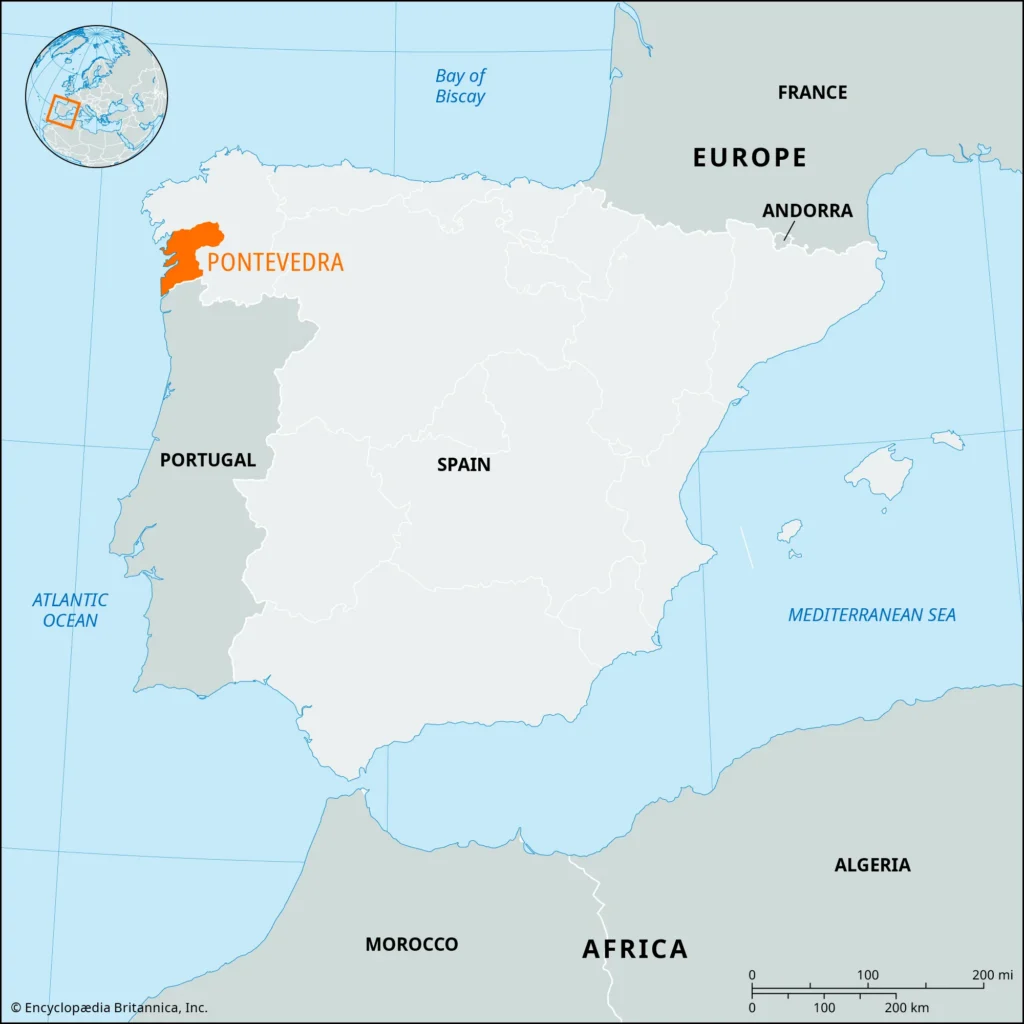
We had spent much of the day worrying about hills, rocks, bike paths, wrong turns and whether Alexis and I would get our electric bicycles safely into Pontevedra.
What we had not worried about was accidentally arriving in the fifteenth century.
But that is essentially what happened.
We rode into Pontevedra at the end of another day on the Camino de Santiago and checked into our hotel in the old city.
Almost immediately, it became obvious that this was not going to be an ordinary Saturday.
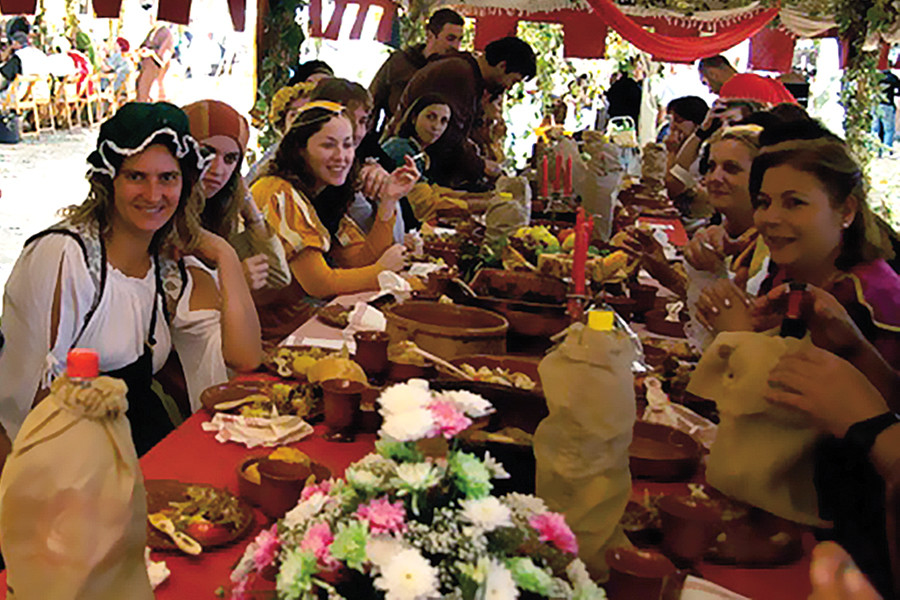
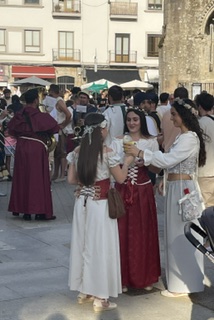
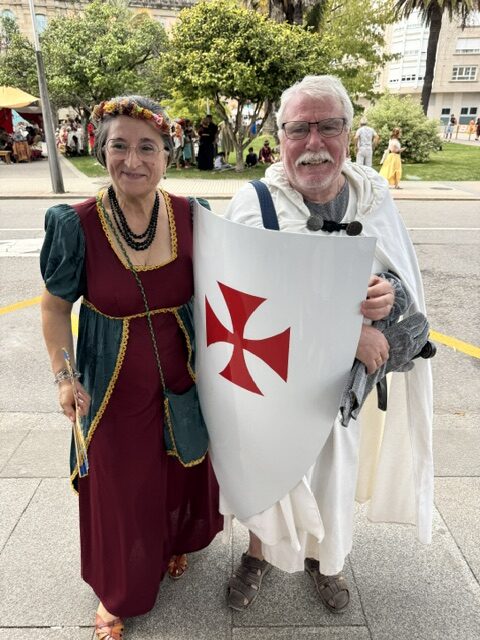
There were medieval costumes everywhere.
Not a few actors hired by the city.
Not a handful of people staffing booths.
Everybody.
Or at least it seemed that way.
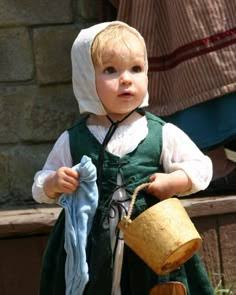
Children.
Teenagers.
Parents.
Grandparents.
Shopkeepers.
Restaurant workers.
Entire families.
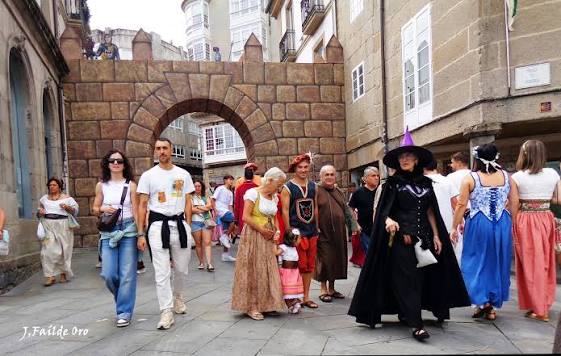
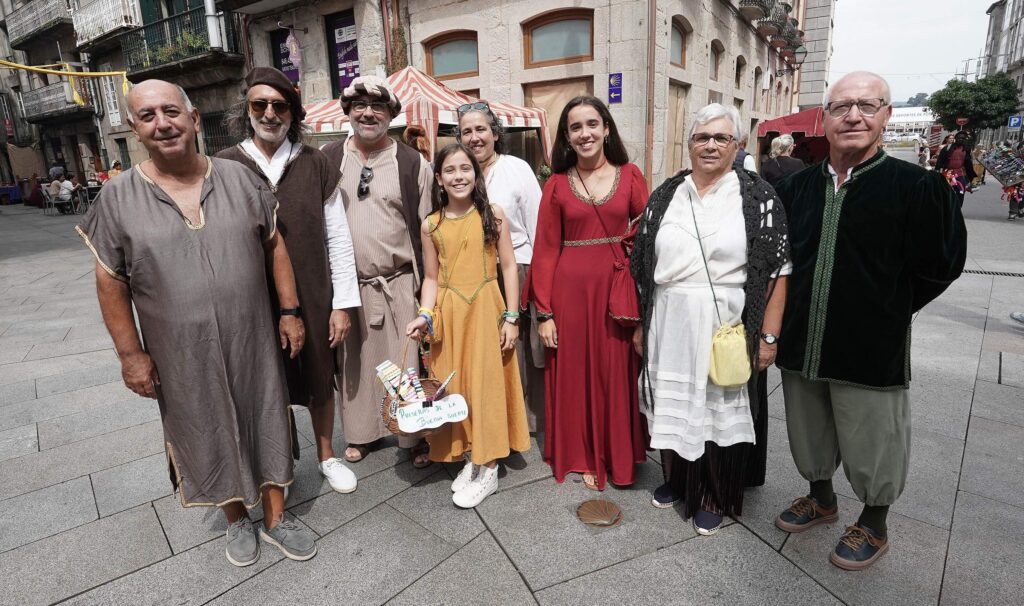
Men in tunics and cloaks. Women in flowing medieval dresses. Children dressed as knights, peasants, princesses and assorted fifteenth-century characters whose historical identities I could not begin to determine.
And they were everywhere.
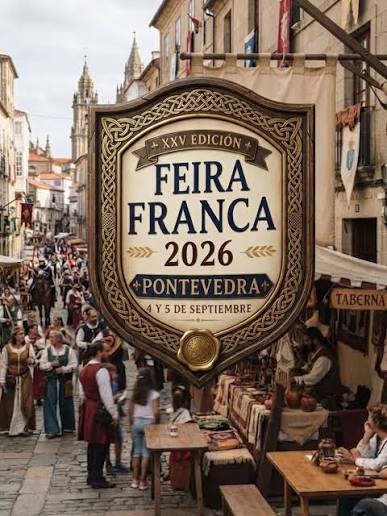
We had unknowingly arrived in Pontevedra on the single biggest day of its annual Feira Franca, a celebration that transforms virtually the entire historic center of the city into a medieval fair.
And we just happened to be there.
There is a real historical reason for all of this.
In 1467, King Henry IV of Castile granted Pontevedra the right to hold a month-long market free of taxes—fifteen days before and fifteen days after the feast of San Bartolomé.
At the time, Pontevedra was one of Galicia’s most important commercial and maritime cities.
The modern city revived that history in 2000, and every year on the first weekend of September, Pontevedra essentially turns the clock back more than five centuries.
The festival has become enormous. More than 100,000 visitors have attended recent editions, and thousands of local residents dress in period clothing and become part of the event rather than simply watching it.
That distinction may be the most remarkable thing about it.
The old town of Pontevedra is already almost entirely pedestrian, with narrow stone streets, plazas, old churches and historic buildings.
Remove the cars.
Add medieval banners.
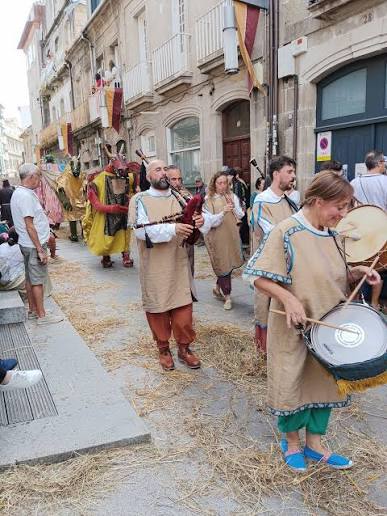
Fill the streets with merchants, musicians, craftsmen, food stalls, archers, swordsmen, horses and tens of thousands of people dressed as if Henry IV might appear around the next corner.
And suddenly the transformation is surprisingly convincing.
Everywhere we walked there was something happening.
Food.
Drink.
Music.
Crafts.
Games.
Archery.
Sword demonstrations.
Street performers.
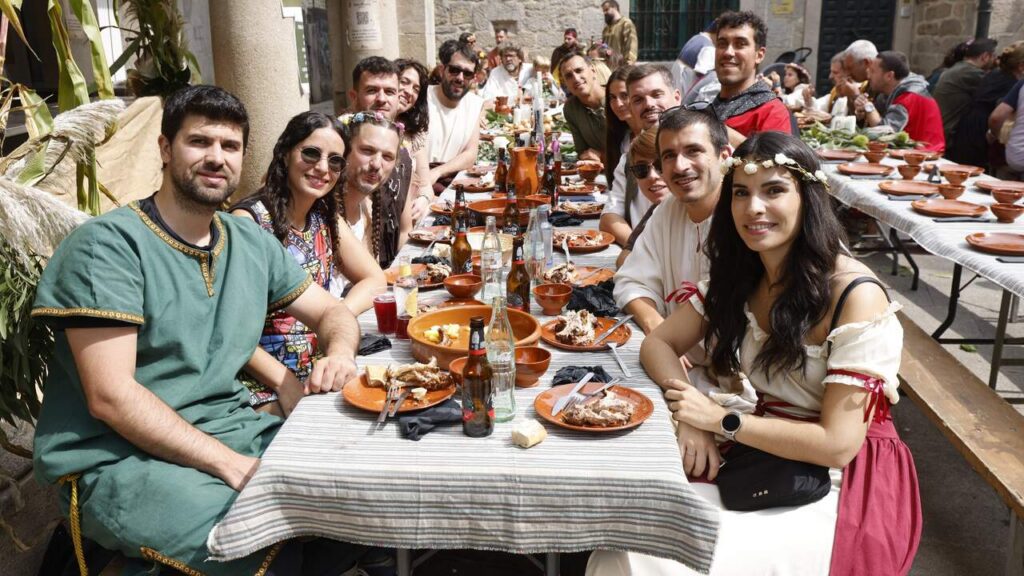
Families sitting together at long tables in the plazas and streets.
The city actually establishes rules for the festival requiring participating stalls, food vendors and even street dining areas to maintain the medieval appearance. Modern plastics and other obviously contemporary materials are discouraged or prohibited. The idea is not simply to hold a medieval-themed street fair.
It is to create, for a day, something approaching a fifteenth-century city.
Naturally, I decided I needed to participate.
I found a medieval game that involved standing perhaps ten feet away from a large metal frog with its mouth open.
The objective was to lob a heavy round metal disk into the frog’s mouth.
It looked easy.
It was not.
I tried.
And missed.
I tried again.
And missed again.
Alexis was highly entertained.
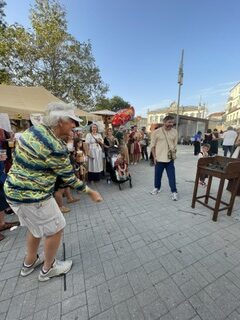
So were the growing number of strangers watching my efforts.
I never did get the disk into the frog’s mouth, but by then it hardly mattered.
I had become part of the entertainment.
Later in the afternoon, we made our way to Pontevedra’s bullring.
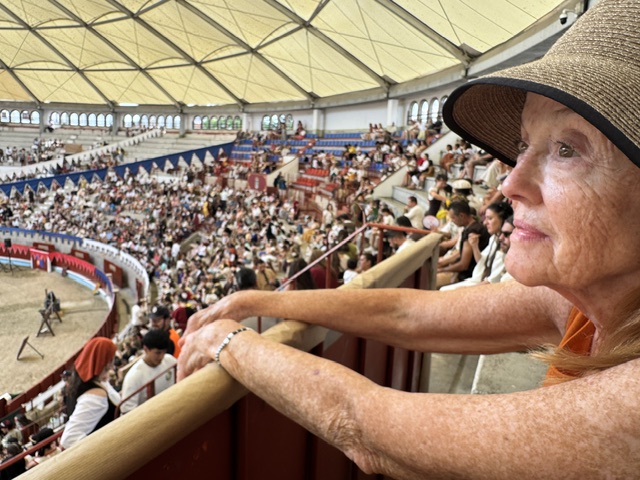
And yes, it really is still a bullring.
In fact, Pontevedra’s Plaza de Toros de San Roque is now the only operating bullring in Galicia, and actual bullfights are still held there. Two were held there as recently as August 8 and 9 of this year.
But on this day there were no bulls.
Instead, the arena had been transformed into the setting for the Gran Torneo Medieval, one of the centerpiece events of Feira Franca. Medieval tournaments, archery, fencing, falconry, music and dance are all part of the official celebration.
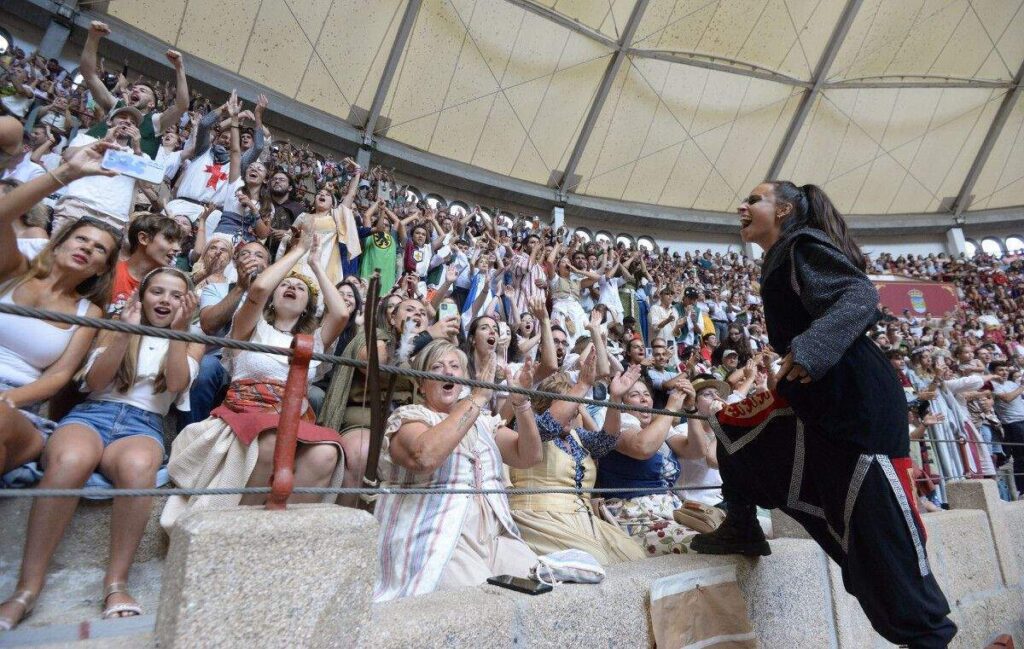
The place was packed.
Packed to the gills.
Thousands of people filled the seats around the arena.
For the next hour and a half we watched horses charge across the sand.
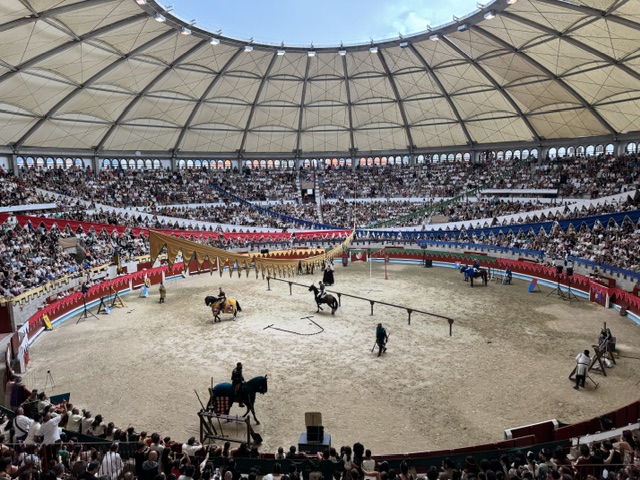
There was jousting.
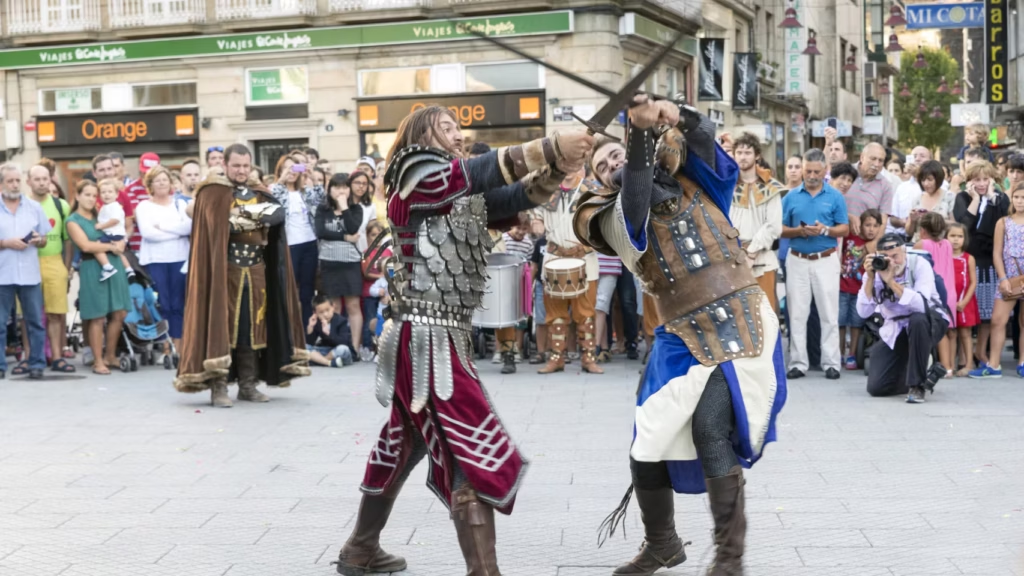
Hand-to-hand combat with enormous swords.
Riders trying to spear targets.
Horsemen demonstrating remarkable control at full speed.
Riders charging through obstacles and flames.
Competitors leaning from their horses to capture small rings as they raced past.
There was cheering.
There was booing.
There were heroes.
There were villains.
There was drama.
It was theatrical.
It was ridiculous.
It was spectacular.
And it was completely wonderful.
But when I thought about it later, the jousting wasn’t really what stayed with me.
Nor the swords.
Nor even the sight of thousands of people dressed in medieval clothing.
What stayed with me was the fact that an entire community had agreed to play together.
Adults were playing.
Not watching their children play.
Playing themselves.
Shopkeepers had become medieval merchants.
Restaurant owners had become innkeepers.
Ordinary residents had become peasants, nobles, knights, craftspeople and townsfolk.
Whole families had dressed together.
Thousands of people willingly entered the same enormous game of make-believe.
And nobody seemed embarrassed by it.
Quite the opposite.
They embraced it.
There was something wonderfully refreshing about that.
As adults, we tend to make almost everything purposeful.
Exercise is for our health.
Travel is educational.
Lunch becomes a meeting.
Leisure has to be scheduled.
Even recreation somehow acquires objectives, measurements and outcomes.
But for one day in Pontevedra, an entire city seemed to say:
Let’s play.
Of course, there was history behind it.
The original tax-free fair of 1467 was real.
The city’s medieval heritage is real.
But what made Feira Franca extraordinary wasn’t simply remembering history.
It was living it together.
Perhaps that was the real gift Alexis and I stumbled upon.
We hadn’t planned Feira Franca.
We hadn’t arranged our Camino itinerary around it.
We hadn’t even known until shortly beforehand that it was happening.
We were simply trying to get ourselves and two very heavy electric bicycles from Vigo to Pontevedra.
And then we arrived.
That may be one of the great pleasures of being a traveler.
You can plan where you are going.
You can reserve the hotel.
You can study the route.
You can calculate the mileage.
You can even spend an absurd amount of time worrying about whether the next section of the Camino is paved, rocky, sandy or covered with tree roots.
But you cannot plan everything.
And occasionally, the best part of a journey is the thing that wasn’t on the itinerary at all.
You turn a corner.
And find yourself in the fifteenth century.
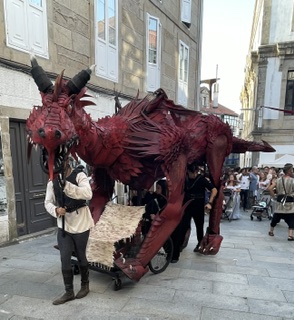
What a wonderful unexpected surprise!! Sounds like such fun!
For total authenticity did they do the strappado as they did during the Portuguese Inquisition? Did you partake? That would be truly memorable as well.
Another amazing adventure for you and Alexis! Fantastic! It sounds so wonderful, I’m surprised you even had a hotel room. You must have booked a year ago!