Don Quixote gets most of the attention.
He is the dreamer.
The man who sees giants where everyone else sees windmills.
The man who insists that the world can be nobler than it is.
But the more I think about the story, and particularly about Man of La Mancha, the more I realize that Don Quixote only really works because he is not alone.
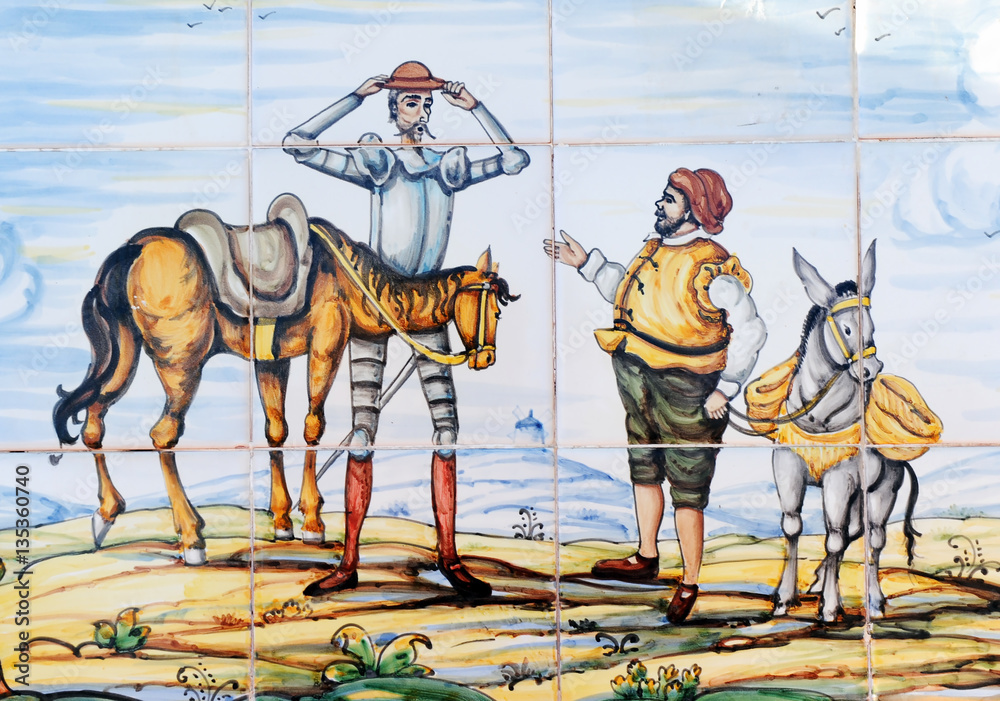
There is Sancho Panza.
And there is Dulcinea.
Or, in Man of La Mancha, Aldonza becoming Dulcinea.
They are not just supporting characters.
They are the people who make Don Quixote’s ideas about life more interesting.
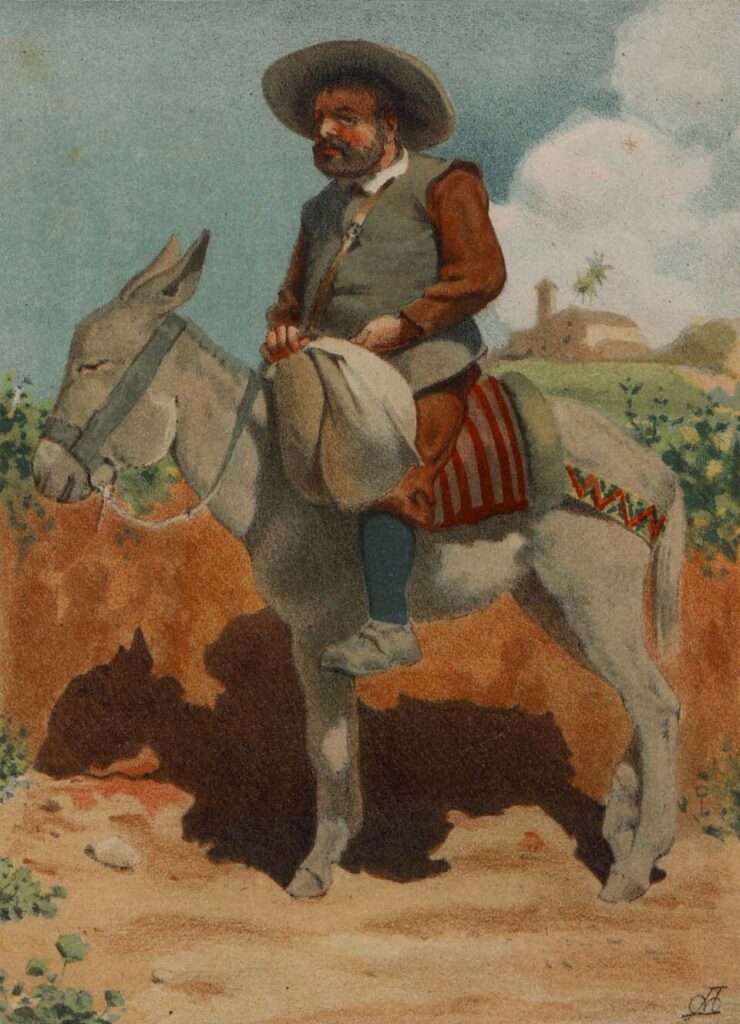
Sancho Panza is the realist.
He sees the windmill.
He knows it is a windmill.
He worries about food, sleep, money, comfort and whether any of this makes practical sense.
He is, in many ways, the voice most of us recognize.
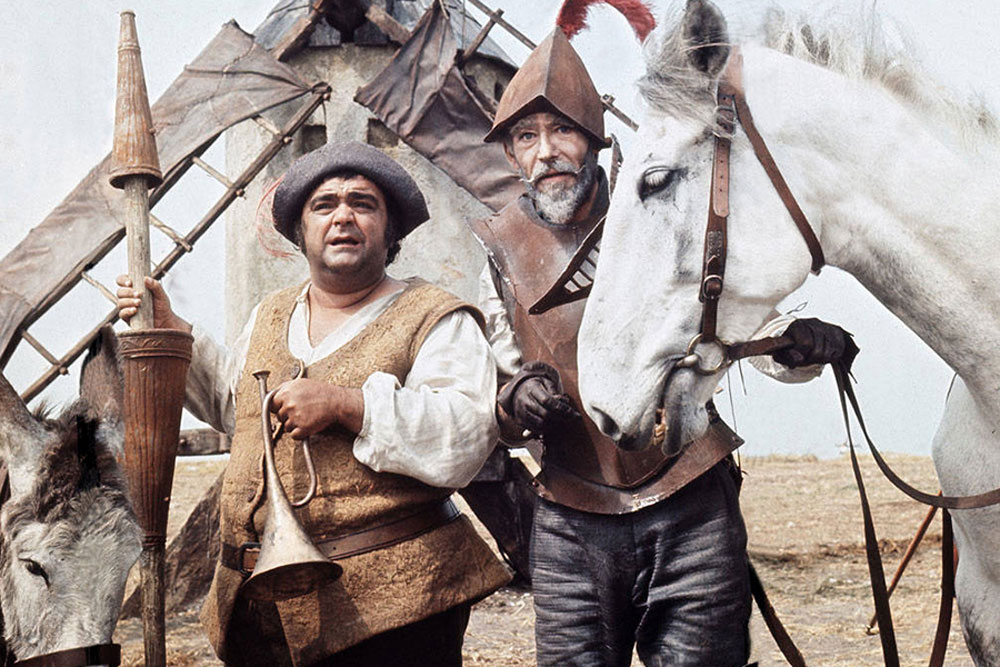
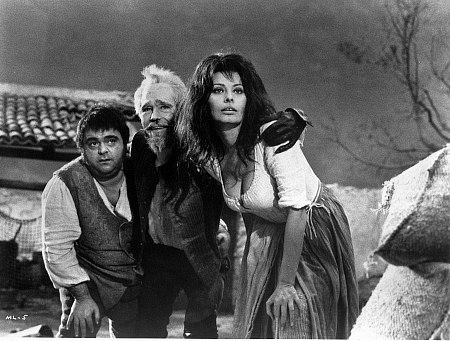
And I have to admit that part of my affection for Sancho probably comes from James Coco’s wonderful performance in the movie Man of La Mancha. He made Sancho funny, loyal, skeptical and lovable all at once. He could see perfectly well that Don Quixote was out of his mind much of the time — and yet he stayed beside him.
That is what fascinates me.
Why?
Why does the practical man stay with the impractical one?
Maybe because Sancho sees something in Don Quixote that he cannot quite dismiss.
Maybe because realism by itself is not enough.
Sancho keeps Quixote grounded.
But Quixote gives Sancho something too.
Possibility.
Adventure.
Imagination.
A larger world.
Over time, the two begin to change each other.
Sancho becomes a little less earthbound.
Quixote becomes, at moments, a little more aware of reality.
The dreamer needs the realist.
But perhaps the realist needs the dreamer just as much.
Then there is Dulcinea.
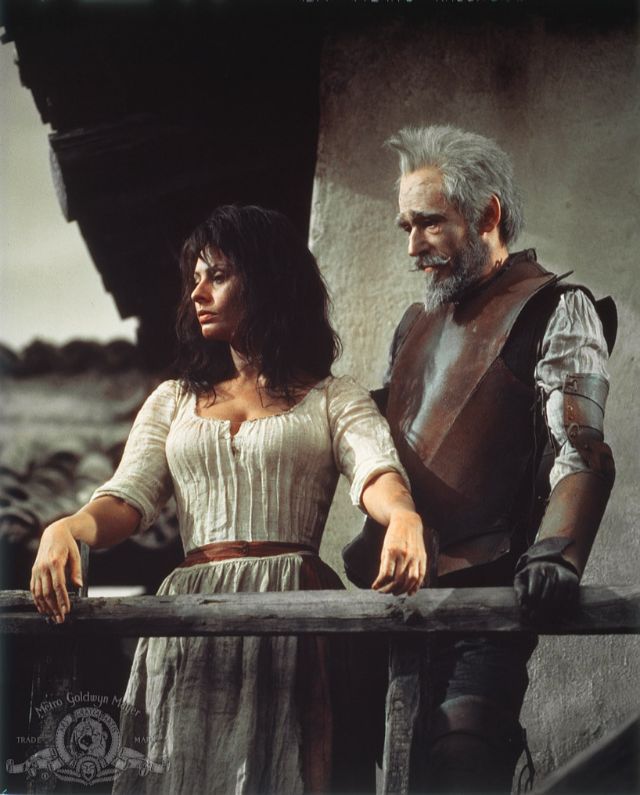
And how could I not have been affected by Sophia Loren as Aldonza in Man of La Mancha?
She is tough.
Angry.
Wounded.
Cynical.
She knows how men have treated her, and she has no illusions about who she is or how the world sees her.
Then Don Quixote comes along and calls her Dulcinea.
Not Aldonza.
Dulcinea.
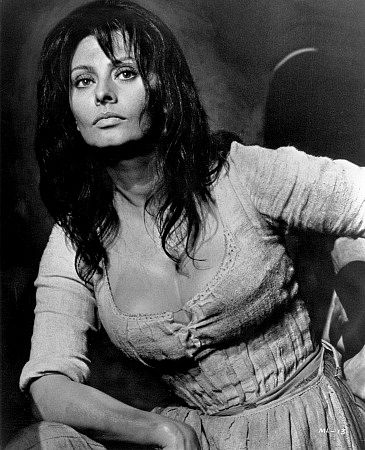
He sees something entirely different.
That is what makes the song “Dulcinea” so beautiful.
Quixote does not merely tell her that she is attractive.
He sings to her as though she is someone he has been searching for all his life.
“I see heaven when I see thee, Dulcinea.”
Her very name, to him, is almost a prayer.
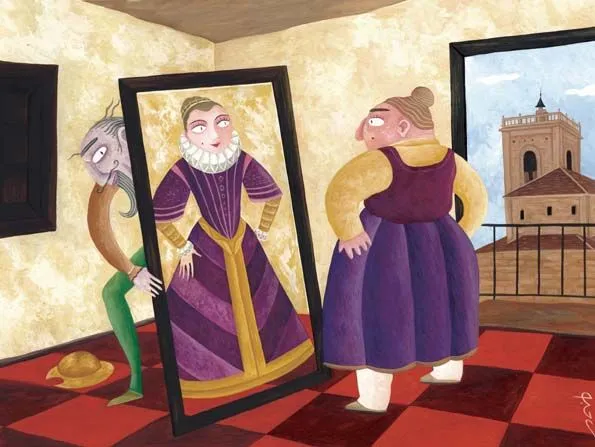
And Aldonza cannot understand it.
Why is this strange old man talking to her this way?
She knows herself.
Or thinks she does.
She knows the life she has lived.
She knows how other men see her.
She knows how she sees herself.
And suddenly here is someone looking at exactly the same woman and seeing dignity.
Beauty.
Worth.
Something almost sacred.
At first it seems absurd.
He is seeing someone who is not there.
Or is he?
That is where the story becomes much more interesting.
Because Quixote is not simply pretending that Aldonza is someone else.
He is seeing something in her that she cannot see in herself.
And gradually, almost painfully, his vision begins to affect her.
That may be one of the most moving ideas in the entire story.
We usually think that being realistic about another person means seeing them exactly as they are.
But sometimes “realism” can trap people inside the worst version of themselves.
You are what you have done.
You are what has happened to you.
You are what other people have decided you are.
Quixote refuses to accept that.
He looks at Aldonza and says, in effect:
That is not all you are.
You are more than that.
And perhaps most remarkably, eventually she begins to wonder whether he might be right.
We all know people who have done something like that for us.
A parent.
A teacher.
A coach.
A friend.
Someone who saw something in us before we could quite see it ourselves.
Sometimes that kind of vision can be unrealistic.
But sometimes it can also be transformative.
Sometimes people grow toward the person another human being believes they can become.
That is what makes Dulcinea so much more than Quixote’s fantasy.
She begins as something he imagines.
But the idea of Dulcinea eventually begins to matter to Aldonza herself.
Maybe identity is not only something we discover.
Maybe sometimes it is something another person helps us imagine.
And that brings me back to Sancho.
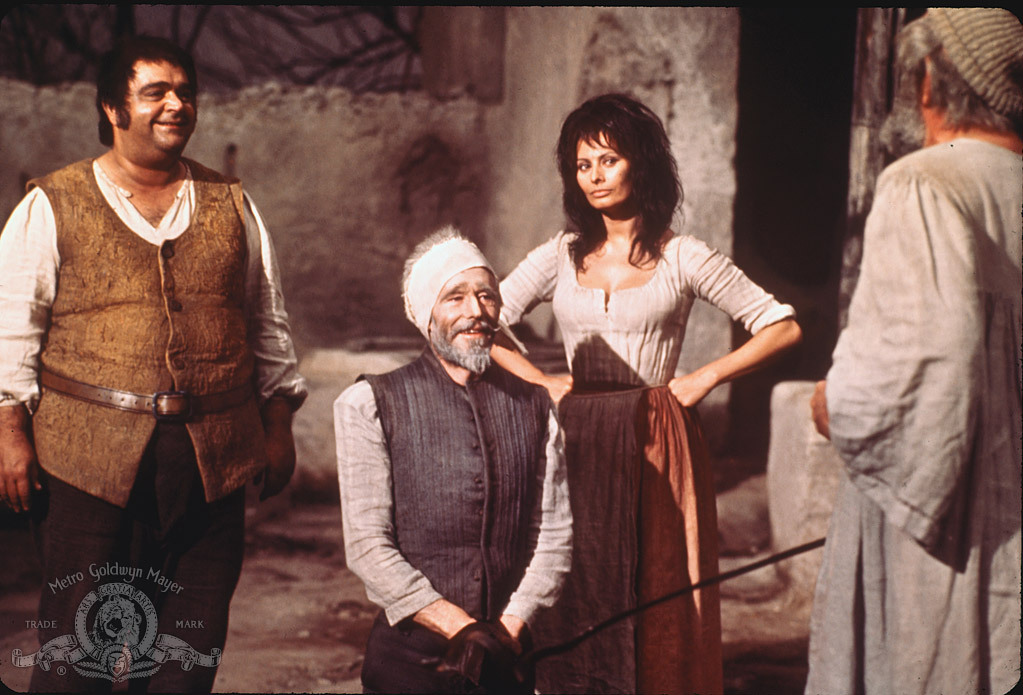
Sancho and Dulcinea pull Don Quixote in two very different directions.
Sancho reminds him of the world as it is.
Dulcinea represents the world as he believes it could be.
Reality on one side.
Possibility on the other.
And Don Quixote lives somewhere between them.
Maybe that is where most of us live too.
We need someone who will tell us when the windmill really is a windmill.
But perhaps we also need someone who will look at us and see something we have stopped seeing in ourselves.
Too much realism and we stop dreaming.
Too much imagination and we lose contact with the ground.
Perhaps the answer is not to choose between them.
Perhaps we need both.
Someone willing to say:
That is only a windmill.
And someone willing to say:
You are more than you think you are.
The dreamer.
The realist.
And the woman who begins to become something more because someone dared to see it first.
Don Quixote was never really alone.
Maybe none of us should be.
You made me want to reread Cervantes before I leave for Spain in October. I once read part of it in Spanish when I took a summer Spanish reading course.
And listen to the Broadway recording.
Definitely inspired to watch Man of La Mancha again and agree that we are not meant to be alone
Bravo!
Who do YOU identify with, Neil?