I Decided to Find Out
I have a confession to make.
I have always had a weakness for redheads.
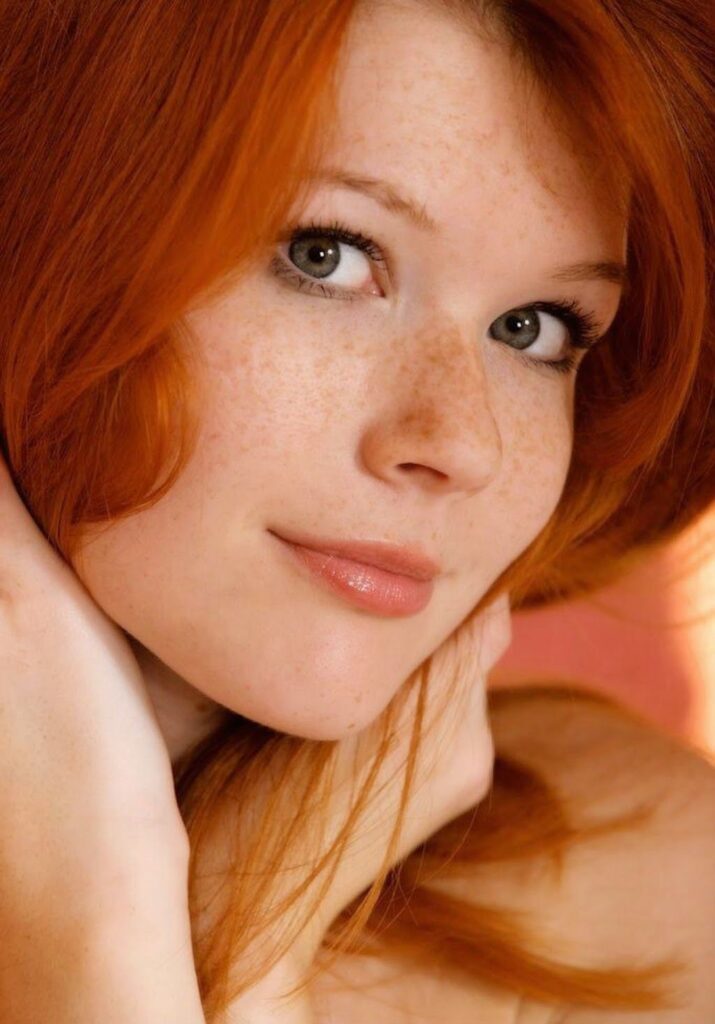
I’m not exactly sure why. It wasn’t a conscious decision.
Somewhere along the way I simply noticed that when a redhead walks into the room, my attention tends to follow.
My significant other happens to be a redhead.
And yes, I am absolutely in love.
Recently, however, I heard something that made me stop and think.
Someone mentioned—very casually—that redheads require more anesthesia during surgery than the rest of us.

Then he added something even more dramatic.
He said that in some hospitals it’s considered common knowledge that when a redhead is coming out of anesthesia, an extra staff person is assigned to their room—just in case the patient wakes up swinging.
That sounded like one of those stories that might have grown a little larger in the telling.
But it was intriguing enough that I decided to look into it.
And it turns out there really is some science behind redheads.
The Rarity of Redheads
First of all, redheads are rare.

Only about one or two percent of the world’s population has natural red hair.
Interestingly, scientists estimate that 30–40% of people may carry the red-hair gene, even though their own hair isn’t red.
The reason is genetic. Most natural redheads carry a variation of something called the MC1R gene, which affects the type of pigment the body produces.
Instead of darker pigments, their bodies produce more of a reddish pigment called pheomelanin.
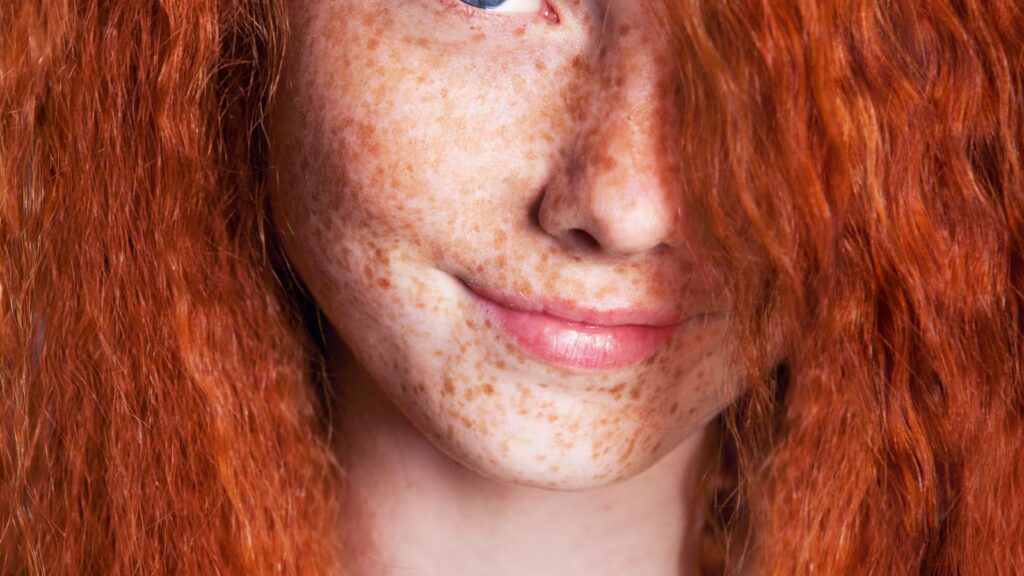
That’s what creates the copper color of their hair—and often the freckles and fair skin that accompany it.
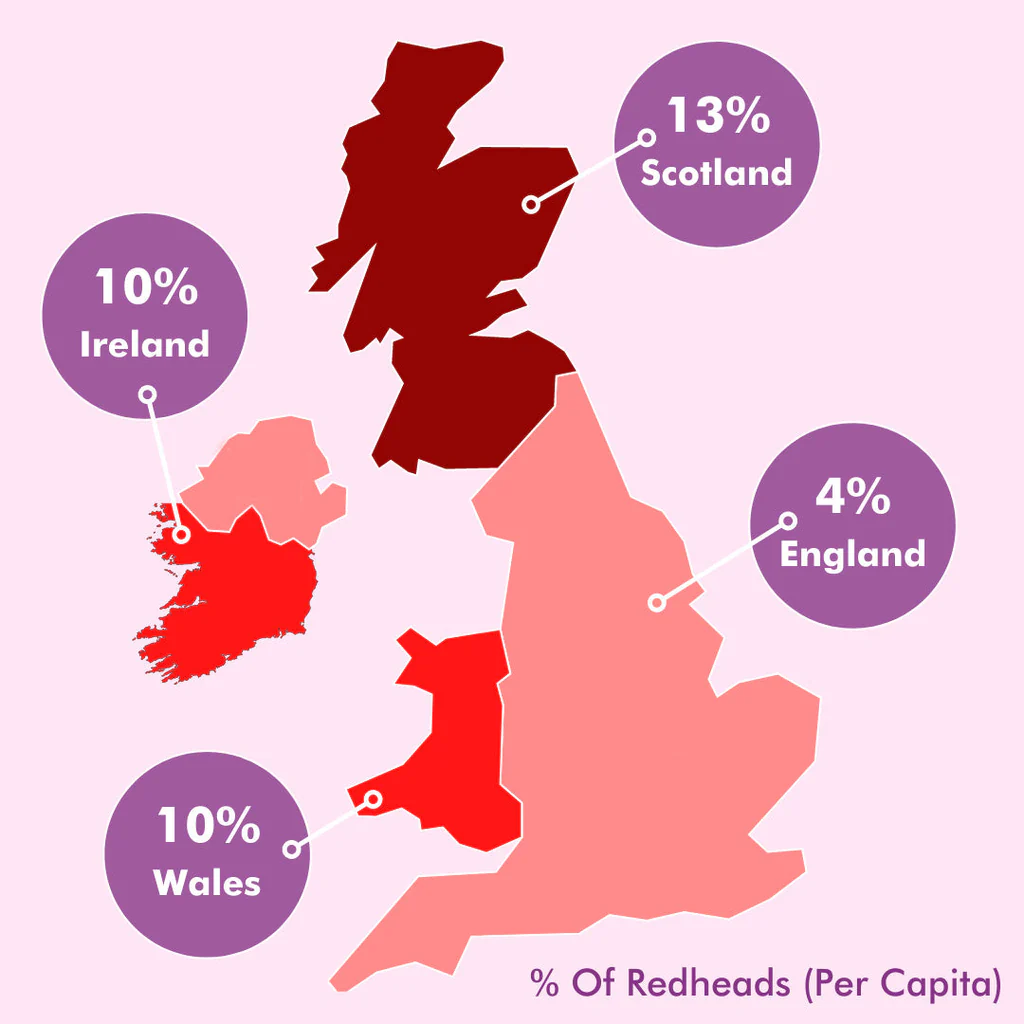
Interestingly, the highest concentration of redheads in the world is found in Scotland and Ireland, where roughly one in ten people may have red hair.
When only one or two people in a hundred share a trait, it probably shouldn’t surprise us that scientists have taken an interest in them.
The Anesthesia Surprise
Now back to the strange thing I heard.
Several medical studies have found that natural redheads may require about 15–20% more anesthesia to achieve the same level of sedation as people with other hair colors.
Researchers believe this difference may be connected to that same MC1R gene, which appears to influence certain pain and sensory pathways in the body.
So while hospitals are not exactly assigning bodyguards to every redhead in recovery, there may be a small grain of truth hidden inside the story.
Which makes the whole thing even more fascinating.
Pain and the Redhead Gene
The story gets even more interesting.
Some research suggests that redheads may experience certain kinds of pain differently than the rest of us.
Scientists are still trying to understand exactly why, but again the MC1R gene seems to play a role.
The more I read, the more I realized that redheads are not just visually distinctive.
They may actually be biologically distinctive as well.
A Long History of Fascination
Redheads have fascinated people for centuries.
In ancient Rome, red hair was considered so exotic that wealthy Roman women sometimes bought wigs made from the hair of northern Europeans.
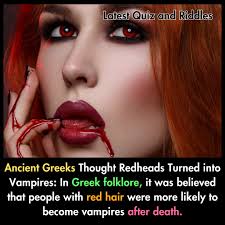
In ancient Greece, there was even a curious belief that redheaded people might become vampires after death. Red hair was rare in the Mediterranean world, and unusual traits often became the subject of superstition.

During parts of the Middle Ages, red hair picked up yet another reputation. People sometimes associated redheads with fiery tempers, strong personalities, or mysterious powers.
The stereotype of the “fiery redhead” may actually trace its roots back to those old beliefs.
It’s strange to think that the same trait could be admired in one era and feared in another.
Which may simply prove that humans have always been intrigued by what is rare.
Built for Northern Climates
Scientists believe red hair may have evolved for a practical reason.
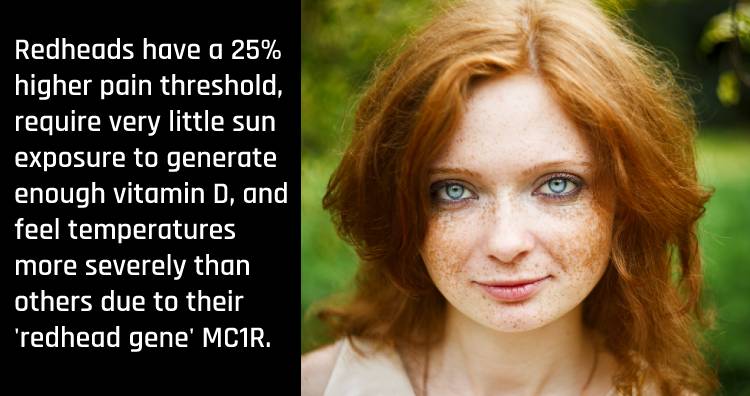
Because people with red hair typically have very fair skin, their bodies can produce vitamin D more efficiently in low sunlight.
That would have been a real advantage in cloudy northern climates such as Scotland and Ireland.
In other words, nature may have designed redheads to thrive where the sun doesn’t shine very often.
My Conclusion
When you think about it, redheads make up only a tiny fraction of humanity.
Just one or two people out of every hundred.
Yet they have captured an outsized place in our imagination—appearing in history, mythology, literature, and now even in scientific research.
Maybe it’s their rarity.
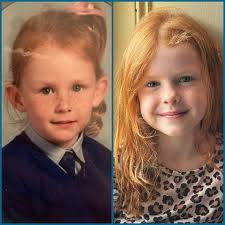
Maybe it’s their striking appearance.
Or maybe nature simply decided to add a little extra intrigue to the human species.
All I know is this.
I began this little exploration by admitting that I have always had a weakness for redheads.
After learning a bit more about them, I’m happy to report that my weakness remains completely intact.
And now I even have a little science to back it up.