There are three bottles of Jertaris sitting on my desk as I write this.
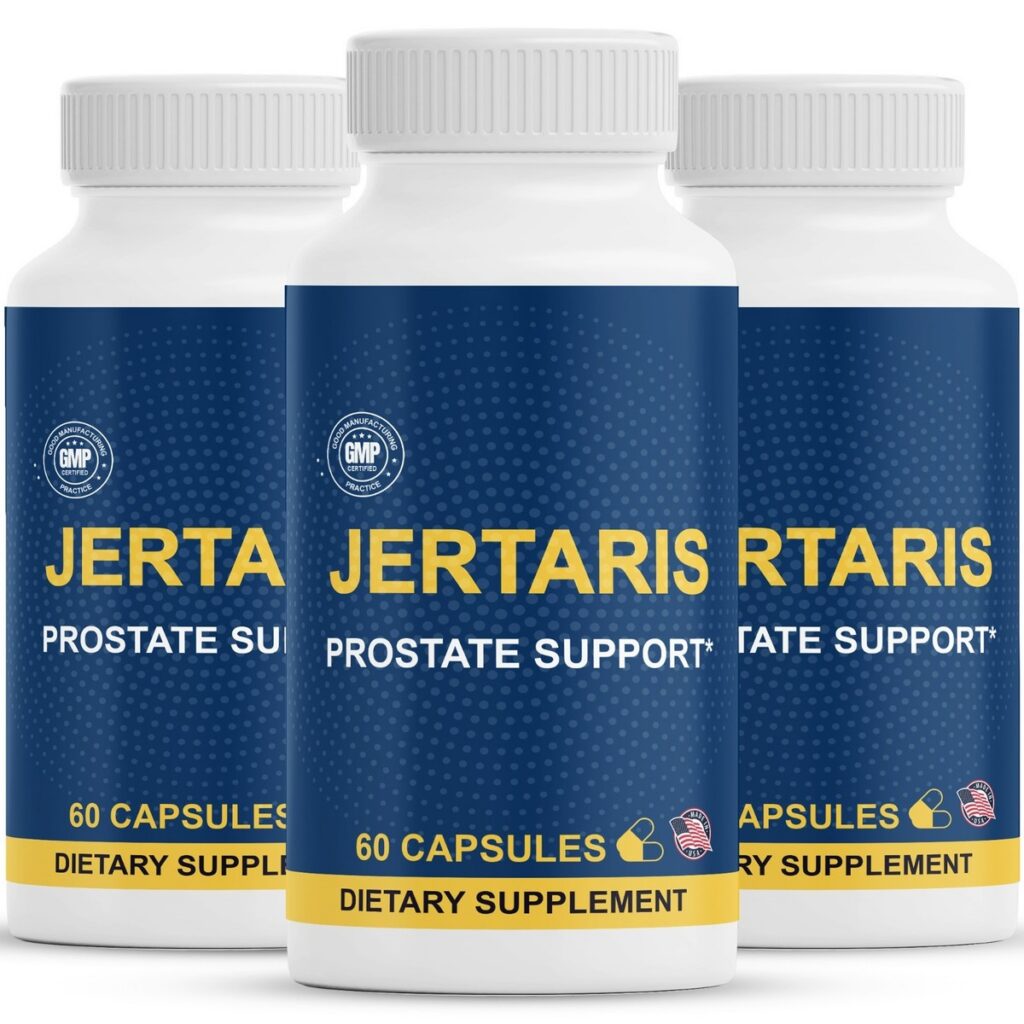
I bought them after Alexis and I watched what appeared to be a serious 45-minute news presentation about enlarged prostates.
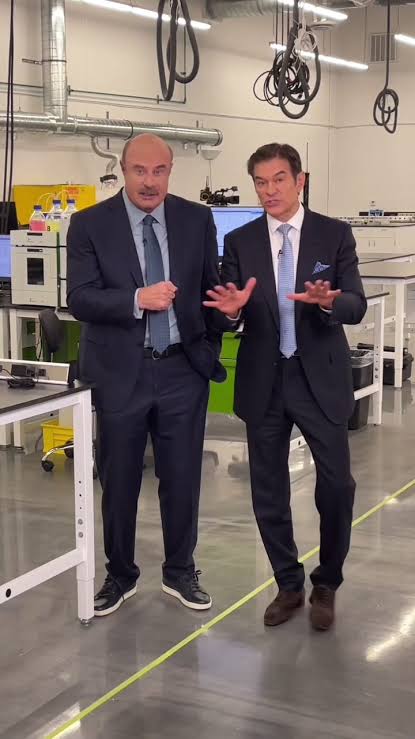
It featured what appeared to be Dr. Phil, Dr. Oz, Oprah Winfrey, Robert De Niro and Harrison Ford.
Apparently, none of them was really selling me anything.
I have always thought of myself as a reasonably intelligent person.
Not brilliant, perhaps. But reasonably intelligent.
I have lived a long time. I have run organizations. I have founded companies. I have dealt with governors, mayors, corporate executives, doctors, lawyers, investment bankers and all kinds of people trying to persuade me to do all kinds of things.
I am skeptical.
I ask questions.
I do not consider myself easily fooled.
And yet, apparently, I was.
The subject was my prostate.
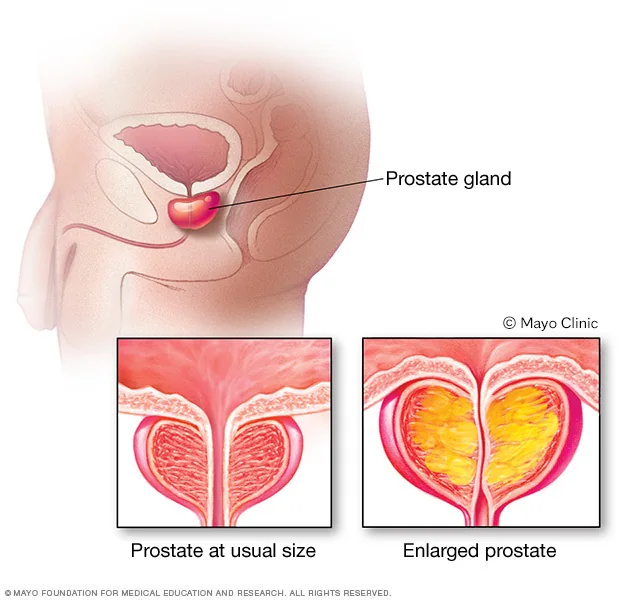
Like many older men, I have an enlarged prostate. It is not exactly the subject I most enjoy discussing at cocktail parties, but it is real. It can affect urination, sleep and quality of life.
And when you have a genuine problem, you naturally pay attention when someone tells you there may be important new information about it.
That is what Alexis and I thought we were watching.
Not an advertisement.
Had it appeared to be an advertisement, I probably would have moved on.
I do not sit through advertisements.
This was presented as news.
It appeared to be new medical information for men with enlarged prostates. It seemed to explain what was wrong with the conventional medical understanding of the problem. It suggested that doctors were treating symptoms while missing the underlying cause.
It raised questions about medications.
It raised concerns about side effects.
It suggested that the medical establishment had failed to understand how to reduce the size of the prostate.
And it promised that a better answer existed.
A natural answer.
A newly understood answer.
An answer that supposedly addressed the real problem.
The presentation did not feel like a commercial.
It felt like a medical documentary, an investigative report or a public-service program.
It explained.
It warned.
It challenged conventional wisdom.
It offered supposedly important new information.
And it presented an extraordinary collection of apparently credible supporters.
Dr. Phil appeared to be involved.
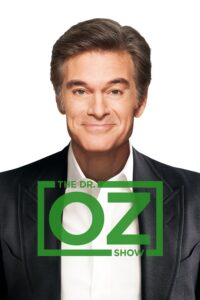
Dr. Oz appeared to be involved.

Oprah appeared on video.

So did Robert De Niro.

So did Harrison Ford.
These were not anonymous internet personalities.
These were people whose faces and voices Alexis and I had known for decades.
We watched them.
We listened to them.
And we believed them.
Or, more accurately, we believed what appeared to be them.
But there was one thing about the presentation that drove us crazy.
It went on and on without telling us the name of the supposed solution.
Twenty minutes passed.
Then thirty.
Then forty.
Still, no one had said what the product was.
Alexis and I became increasingly frustrated.
At one point, I said to her:
“These guys don’t know how to sell. Almost no one is going to sit through 45 minutes before they are even told what they might want to buy.”
I remember feeling almost superior to the people who had produced the program.
I thought I understood sales.
I thought they did not.
Can you believe that?
Looking back, I now realize how completely I misunderstood what was happening.
The delay may not have been poor selling.
It may have been the essence of the selling.
By withholding the product name, the presentation prevented us from researching it while we watched.
It made us wait for the promised revelation.
It encouraged us to keep watching because we had already invested so much time.
It allowed the program to spend 45 minutes defining the problem, undermining conventional medicine, introducing supposedly trusted authorities and building anticipation for the answer.
I thought they were failing to make the sale.
In reality, the sale was being made the entire time.
By the time the product name was finally revealed, the real work had already been done.
The problem had been established.
The conventional treatments had been questioned.
The supposed experts had been introduced.
The celebrities had appeared.
The mystery had been built.
The answer had been made to feel important.
And only then were we told the name:
Jertaris.
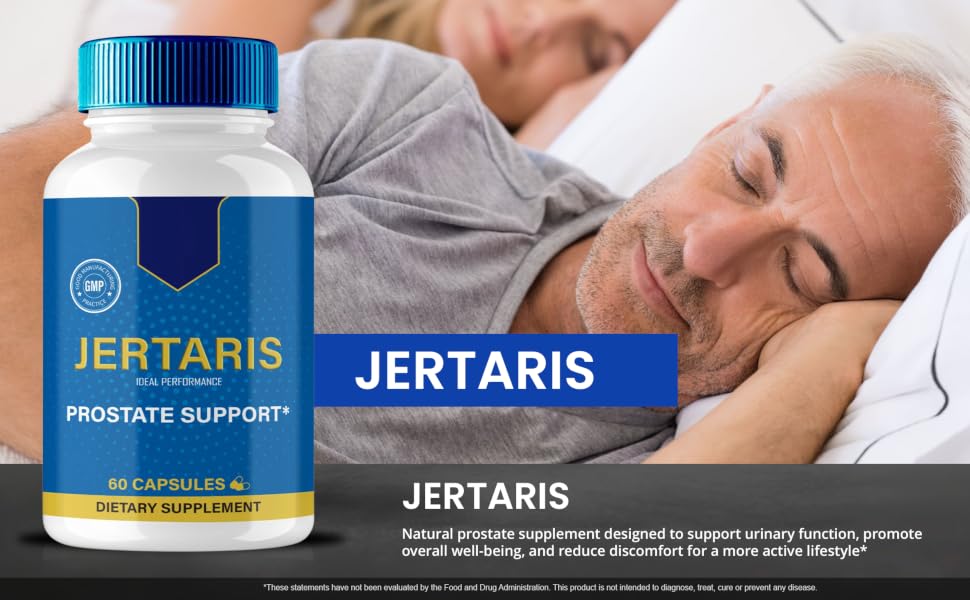
By that point, it did not feel like a product being pitched.
It felt like the conclusion of an investigation.
That distinction matters.
I did not begin by deciding to trust a commercial.
I began by deciding to listen to what appeared to be important health news.
The product came later.
The selling came first.
And I bought three bottles.
The fact that the product was also listed on Amazon added another layer of legitimacy. I assumed that if it was available through a company as large and familiar as Amazon, it must have passed through some meaningful filter.
That assumption was apparently wrong too.
Then, almost as an afterthought, I asked ChatGPT what Jertaris might do for me.
The answer stopped me cold.
I photographed the bottle.
Then I turned it around.
The front said:
PROSTATE SUPPORT.
The back told a very different story.
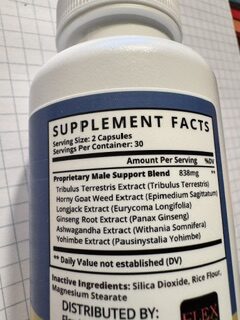
The supplement contained a proprietary blend of tribulus terrestris, horny goat weed, longjack—or tongkat ali—ginseng, ashwagandha and yohimbe.
That sounds less like a scientifically established treatment for an enlarged prostate and more like a collection of herbs commonly promoted for male energy, libido and sexual performance.
More troublingly, the label did not tell me how much of each ingredient was in the capsules.
It simply described the contents as:
“Proprietary Male Support Blend — 838 mg.”
Six active ingredients.
One combined number.
No indication of how much yohimbe.
No indication of how much ginseng.
No indication of how much of anything.
So there I was, holding a bottle of pills supposedly presented as a way to reduce the size of my prostate, while having no idea how much of any of its six ingredients I would actually be swallowing.
And one of those ingredients was yohimbe.

That got my attention.
Yohimbe can affect blood pressure and heart rhythm. It can cause dizziness, agitation and other potentially serious reactions.
That is not an insignificant matter for me.
I have atrial fibrillation.
I take several blood-pressure medications.
I have experienced dizziness and lightheadedness.
I recently received a pacemaker after my heart stopped pumping for 12 seconds.
The people behind the presentation knew exactly whom they were trying to reach.
They knew the concerns of older men.
They knew that an enlarged prostate is personal, frustrating and sometimes frightening.
They knew that many of us would skip an obvious advertisement but stop for what appeared to be a serious medical report.
But they knew nothing about my heart.
At that point, the issue was no longer merely whether I had wasted money.
The issue was whether I might have taken something that was particularly inappropriate—or potentially dangerous—for me.
I began looking more closely at the supposed celebrity endorsements.
I could find no credible evidence that Dr. Phil, Dr. Oz, Oprah Winfrey, Robert De Niro or Harrison Ford had ever endorsed Jertaris.
None.
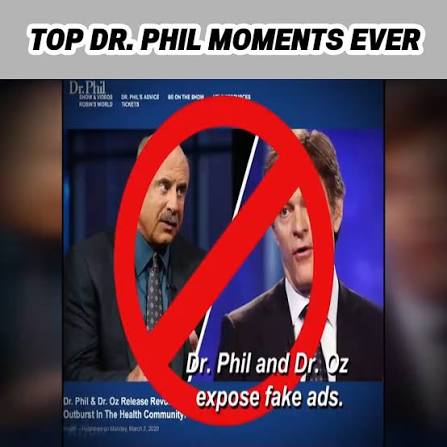
Dr. Oz has publicly warned that scammers use his name, face and voice to sell health products he has never endorsed.
Oprah’s image has been used without her permission to promote supplements.
Consumer authorities have warned that artificial intelligence can now be used to create fake celebrity endorsements through altered video, cloned voices and manipulated images.
There have also been public warnings about fraudulent advertisements making Dr. Phil appear to promote products he did not endorse.

I have not yet been able to recover the exact 45-minute program Alexis and I watched on Tik Tok, so I cannot state with certainty how every part of it was created.
Perhaps some of it was generated by artificial intelligence.
Perhaps authentic television clips were cut apart and reassembled.
Perhaps voices were cloned.
Perhaps mouths were digitally altered to say words these people never spoke.
Perhaps it was a combination of all of those things.
But I can find no reliable indication that any of the celebrities who appeared in the presentation actually approved or participated in it.
Which leaves me with a very uncomfortable conclusion.
The people I watched for 45 minutes may not have been the people I thought I was watching at all.
And I fell for it.
I confess that I am embarrassed.
Very embarrassed.
I can hear the obvious responses.
“You should have known better.”
“You should never believe something you see on TikTok.”
“You should have checked with your doctor.”
“You should have researched the product first.”
“You should not trust celebrity endorsements.”
All true.
I should have known better.
I should have checked.
I should have stopped before entering my credit-card information.
But that explanation is also too simple.
This was not an email from a supposed Nigerian prince asking me to wire money.
The voices sounded real.
The faces looked real.
The presentation was long, calm, detailed and apparently medical.
It anticipated doubts and answered them.
It created the impression that it was educating us, not selling to us.
It used recognizable doctors and celebrities to create trust.
It addressed a health concern that I actually have.
And it concealed its commercial purpose until the groundwork had been laid.
Looking back, I can now see the architecture of the deception.
It began with a genuine problem.
It told me that conventional medicine had failed to understand the real cause.
It suggested that important information was being ignored or withheld.
It offered what appeared to be hidden or newly discovered knowledge.
It surrounded that knowledge with familiar faces.
It took its time.
It withheld the product name.
It made us wait.
And then, after the case had been built, it presented three bottles of pills as the logical next step.
It was not designed to fool a fool.
It was designed to fool someone exactly like me.
Someone with a real concern.
Someone willing to listen.
Someone who recognized and trusted the people who appeared to be speaking.
Someone who believed that watching carefully for 45 minutes was the opposite of acting impulsively.
That may be the most disturbing part.
I did not feel pressured.
I felt educated.
I did not feel manipulated.
I felt persuaded.
I did not feel that I was trusting a stranger on the internet.
I felt that I was listening to Dr. Phil, Dr. Oz, Oprah Winfrey, Robert De Niro and Harrison Ford.
But apparently, I was not.
I have since gone back to TikTok and searched.
I searched for Jertaris.
I searched for Dr. Phil products.
I searched for Dr. Phil and Jertaris.
I searched for Dr. Oz.
I searched for Dr. Oz and Jertaris.
A great deal appeared.
But not the program Alexis and I had watched.
That may be another feature of this new form of deception.
The presentation arrives in your personal feed.
It finds you at exactly the right moment.
It looks like news.
It persuades you to buy.
And then it disappears.
There is no newspaper advertisement to clip.
No television commercial to record.
No salesperson whose business card you kept.
Just three bottles on my desk and a program I can no longer find.
So what can we trust anymore?
A photograph can be fabricated.
A familiar voice can be cloned.
A video can show a person saying something that person never said.
A famous doctor can appear to recommend a pill he has never heard of.
A respected celebrity can appear to offer a testimonial without ever having seen the product.
A sales presentation can disguise itself as a news report.
And a long, sober, intelligent-sounding program can be a technologically sophisticated con.
I am writing this not because I enjoy admitting that I was taken.
I do not.
I am writing it because other intelligent people will be taken too.
Perhaps they already have been.
The old advice was:
Seeing is believing.
That advice is now obsolete.
My eyes saw Dr. Phil.
My ears heard Dr. Oz.
Alexis saw and heard them too.
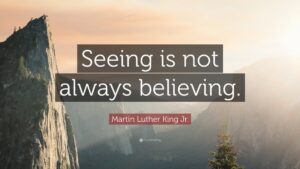
But seeing and hearing are no longer proof.
In the age of artificial intelligence, perhaps the rule must be reversed:
The more astonishing the claim, the more familiar the face and the more carefully the program conceals that it is selling something, the less we should believe what we see.
Perhaps we now need a different routine.
Stop the video.
Leave the platform.
Search for the endorsement independently.
Go to the celebrity’s verified website.
Look for credible medical evidence.
Read the label.
Photograph the ingredients.
Ask a doctor or pharmacist.
And do all of that before entering a credit-card number.
I wish I had.
Instead, I have three bottles of Jertaris sitting on my desk.
I will not be taking them.
They may remain there for a while as an expensive reminder.
A reminder that artificial intelligence is not merely changing how we write, work, learn and communicate.
It is also changing how we are deceived.
And it is becoming frighteningly good at it.
I thought the producers did not know how to sell.
It turns out they may have known exactly how.
And I am still left with the question:
How are any of us going to know what is real?
If your trusted people are Gavin Newsom and deNiro the trouble goes deeper my friend! Believing Newsom, who’s as useless as a screen door on a submarine is laughable. De Nero great actor, full stop. Otherwise he constantly shows himself as a complete idiot purporting to know about other things showing that he really knows as much as a fish knows about bicycles.
Dr Oz, if I recall correctly even Newsom sued him or some such regarding some hospice fraud issue.
Oprah-prostate—huh? I give my head a shake!
Regarding the prostate, as Larry the Cable Guy sez “get er done’!
2o years ago I had the issue and got tired of getting up several times a nite to hit the bathroom. My Dr offered 3 choices, radical prostatectomy, a TURP or cryotherapy. I’m no expert, he is, so I asked him which of the 3 he’d done the most of—it was radical prostatectomy so I said go for it. 6 weeks later I was all healed up and good to go and I’ve never looked back. I now sleep 7 hours straight! Best thing I ever did, ask LIZ. In fact Neil if you want more personal info give me a call. By the way 10 years ago I had a pacemaker jammed in down at the Eisenhower, 2nd best medical thing I did (after the prostatectomy)!
Horny goat-longjack, you say—hummm!
Neil, they should have used RFK, Jr. just think of all the nitwits they would have captured!
P.S. glad you got the pacemaker!
Neil please never buy anything as a supplement nor take it BEFORE you call and get your Cardiologist approval! Hope you are feeling better soon. AND get off of TikTok you lovely silly man!
AI tracks you. … You have heard about the enormous noisy data centers, that take all the power …consequently they know you…don’t believe those 45 minute videos… They are selling you whatever..🐼🐽 try the mayo clinic, ask Philip L trust recognized knowledge…
That is the same approach taken with weight loss supplements–MELT AWAY DROPS.
I only bought 2 bottles (resisted the reduction in price if you bought more bottles)–then answered the persistent text and email messages to have a voice to voice conversation.
All good sound advice from the medical person at other end of the phone–I have been through the very extreme first version of weight watchers, so I know the meal plans and the support a coach can provide.
But the hook here was the counseling sessions recommended–I had to PULL THE PRICE OUT OF THE COUNSELOR. $1,000-$3,000–on top of the $200 I had already spent.
Uh, NO–i FEEL YOUR PAIN, BROTHER!
Same program for anti diabetes that I fell for. I don’t think you can trust anything online! Hope the cooling mat I just ordered for my kitty is real (I did research though)