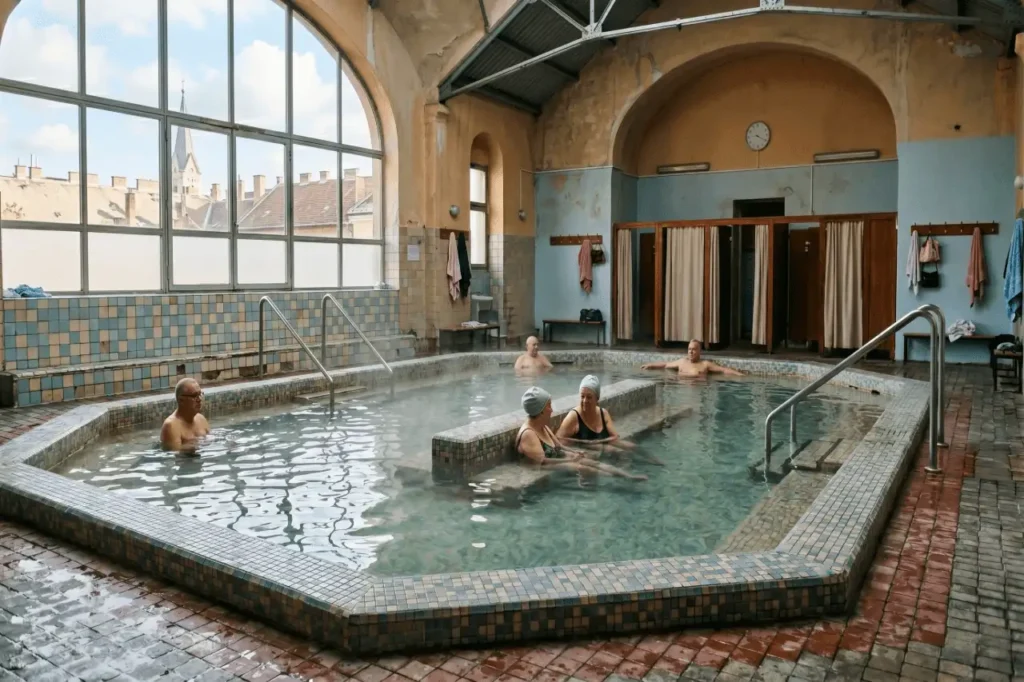
You start in a 500-year-old Turkish bath.
Stone walls.
Dim light.
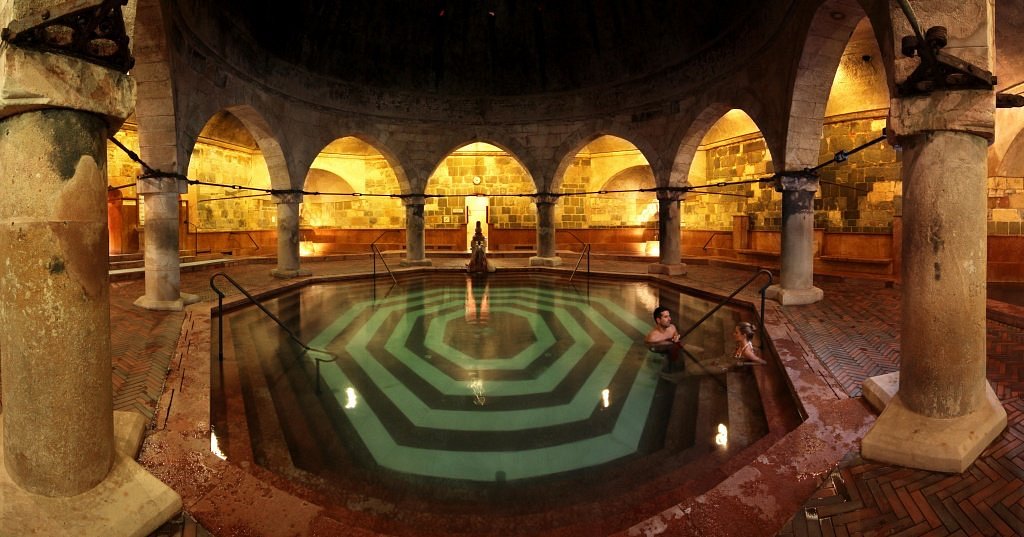
A sense that not much has changed for centuries.
A few minutes later, you’re sitting in a circular pool—water at 100 degrees—leaning back against the wall as if you’ve done this your whole life.
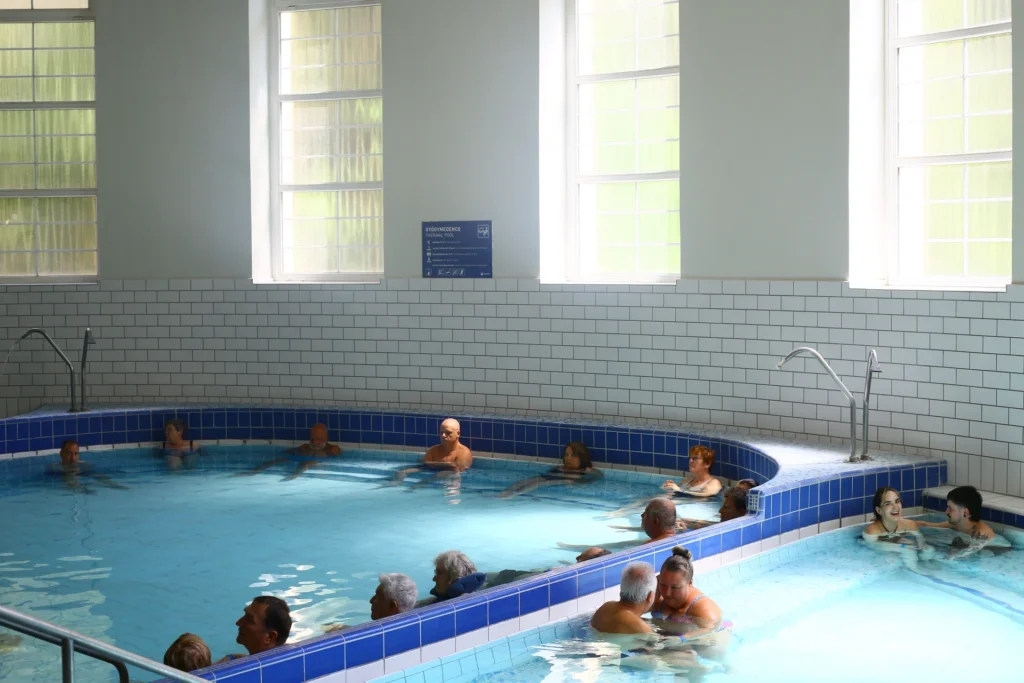
Then into another pool.
104 degrees this time.
Hotter.
Quieter.
More intense.
Then, without much warning, you step into a cold plunge.
And immediately step out.
That was not for us.
And that’s just the first hour.
I went to my first thermal bath in Budapest.
And almost immediately, one thought came to mind:
This is a great idea.
Not just a good experience.
Not just something unique to do while traveling.
A genuinely good idea.
Budapest sits on more than 100 natural thermal springs.
Hot water rising from deep underground.
And over time, this has shaped the culture of the city in a very specific way.
There are roughly two dozen thermal baths across Budapest.
And they’re not just for tourists.
They’re part of everyday life.
Everyone goes.
Locals.
Visitors.
Young.
Old.
Alone.
Together.
In many ways, they function like a hometown swimming pool.
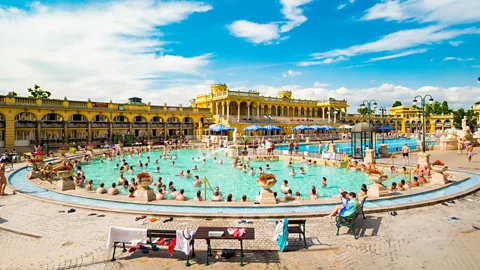
A place where people gather.
Relax.
Talk.
Exchange ideas.
But they go further than that.
These baths are run by public authorities.
And in a very real sense, they’re part of the healthcare system.
Doctors prescribe treatments that include:
Soaking in pools of varying temperatures and mineral compositions.
Massage therapy.
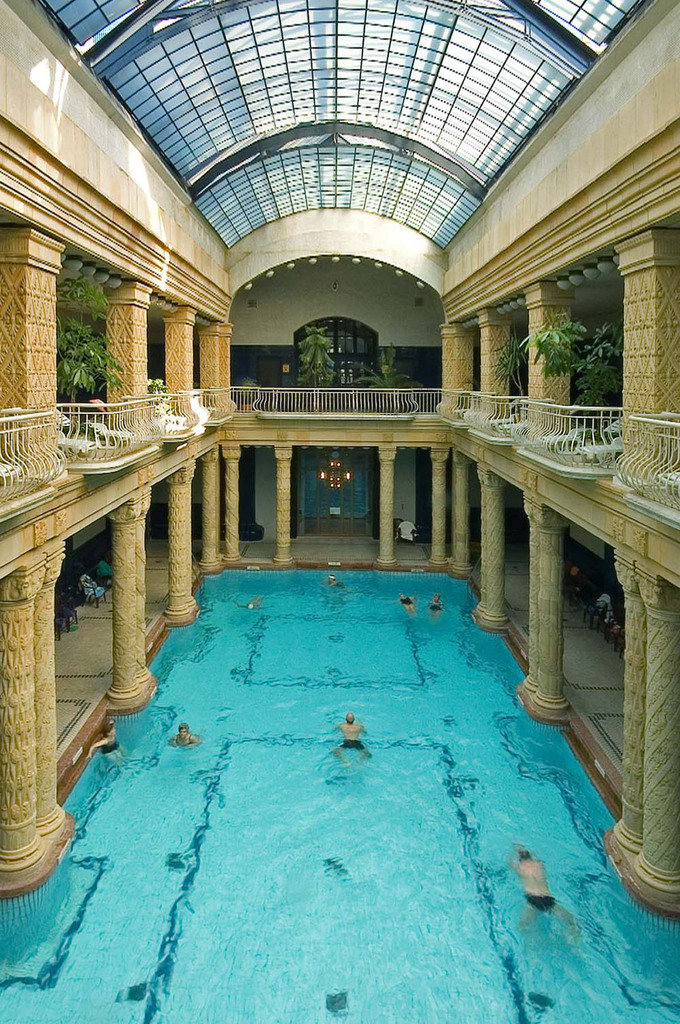
Swimming.
For those receiving treatment, the experience is subsidized.
Think about that.
A place you go to relax…
Is also a place you go to heal.
We visited two of them.
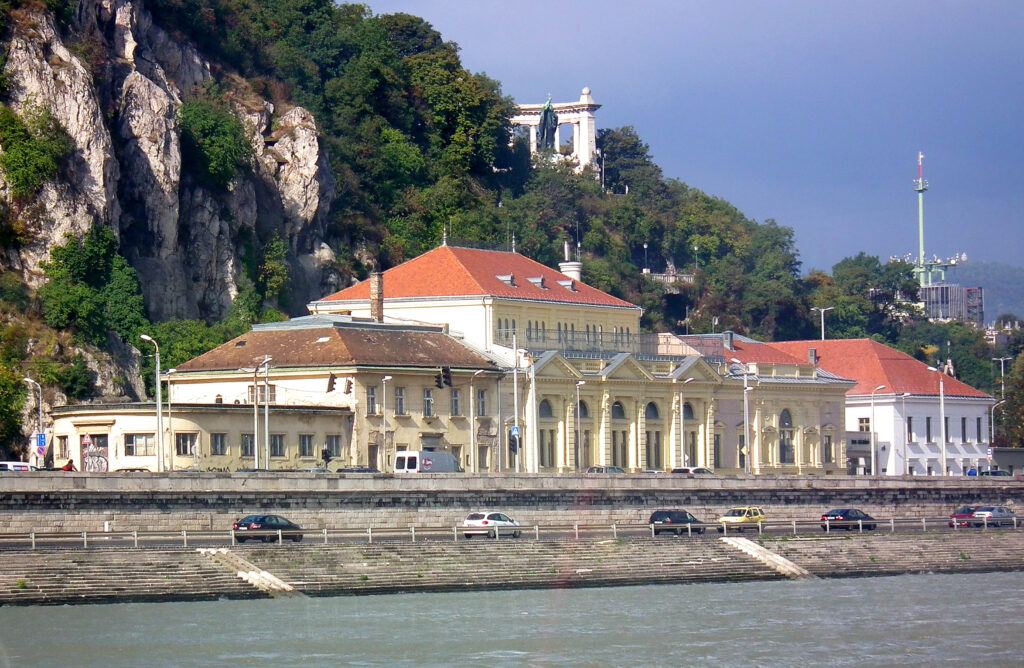
Rudas Baths.
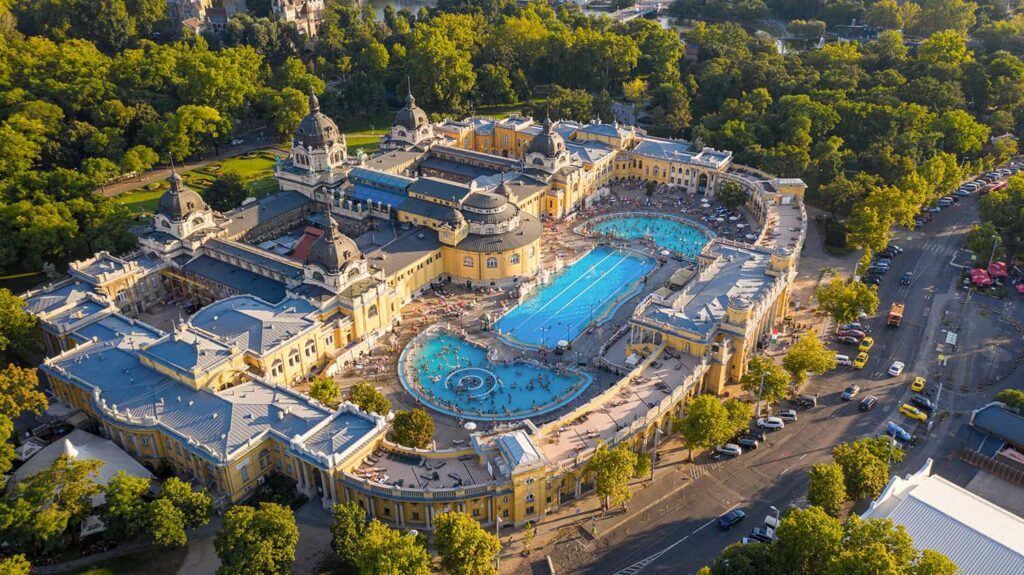
And the Széchenyi Baths.
Each one different.
But each offering the same underlying idea.
You enter…
And suddenly you’re in a world of options.
Pools of different temperatures.
Indoor and outdoor spaces.
Small, quiet pools.
Large, social ones.
You move from heat to heat.
Or heat to cold—if you’re braver than we were.
The saunas add another layer.
One mild.
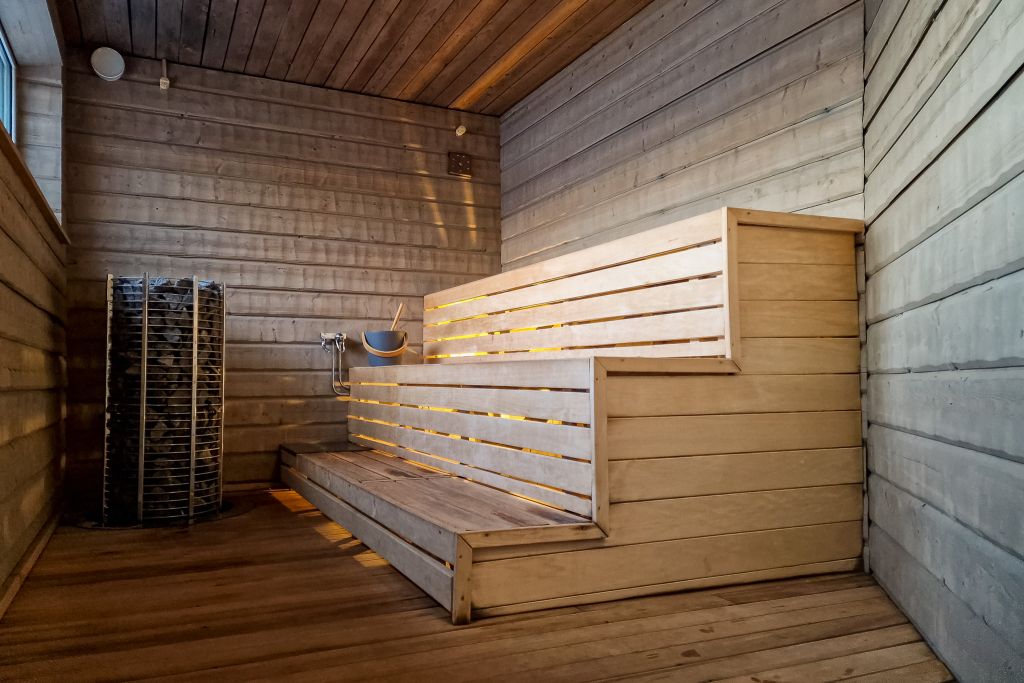
Another—a Finnish sauna—so hot we couldn’t even stand on the floorboards.
We turned around almost immediately.
And then an aroma sauna.
Salt-infused.
Different again.
You don’t “complete” the experience.
You move through it.
You sit.
You shift.
You pause.
You move again.
You can be alone.
Or you can be social.
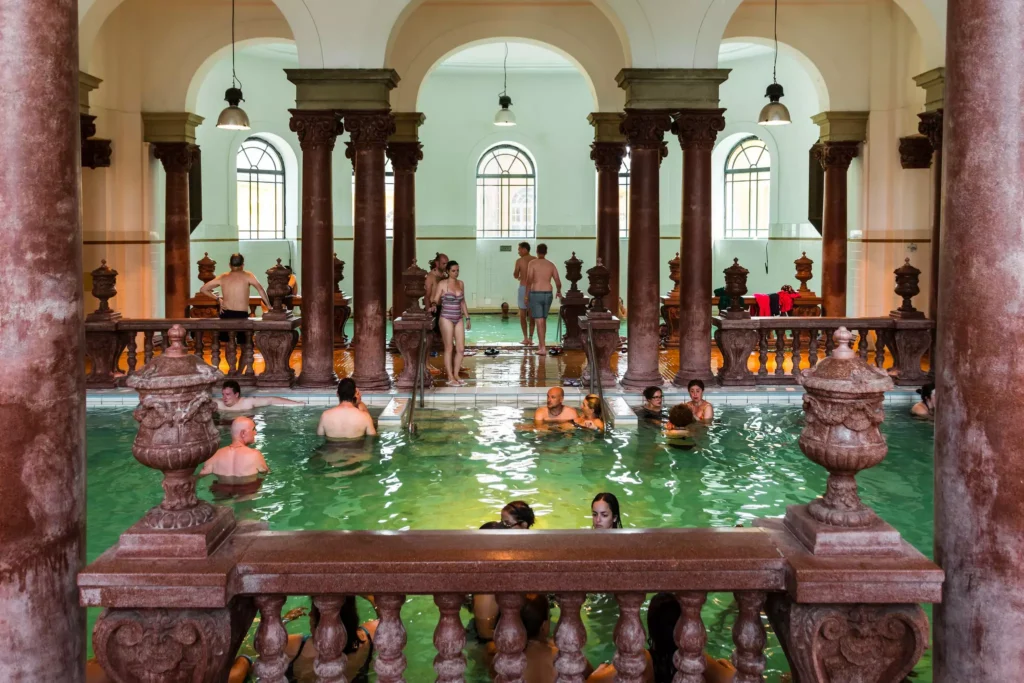
Your choice.
The first day, we spent three hours.
The second day…
We went back.
That tells you something.
It reminded me of Iceland.
Small towns.
Outdoor pools.
Different temperatures.
And everywhere—people.
Talking.
Relaxing.
Sharing space.
It’s not just about the water.
It’s about community.
Because in both places—Budapest and Iceland—you see something we don’t have enough of.
Shared spaces that bring people together naturally.
Not scheduled.
Not programmed.
Not forced.
Just there.
If I were running for mayor of a city in the United States, I would put this in my platform.
Community thermal baths.
Not as a luxury.
But as infrastructure.
For health.
For relaxation.
For something we seem to be losing.
Connection.
We spend so much time trying to create community.
Designing it.
Encouraging it.
Talking about it.
And here…
It already exists.
Warm water.
Shared space.
People sitting next to each other.
Talking.
Or not talking.
But together.
I loved it.
And I couldn’t help but think:
We should do this.
Not because it’s interesting.
Not because it’s different.
But because it works.
In Finland they say all people are equals but even more so in a sauna! Neil for Mayor! Yes! New York and LA need you—badly!
Nice to see you sampled the baths in Buda and Pest, both sides of the Danube. In Buda Liz and I came very close to being pickpocketed while visiting the castle up the hill from your Rudas Bath.
my German maternal grandparents went to thermal springs in Germany Bavaria….rich in minerals …different baths had different minerals to cure whatever ailment ….rheumatism arthritis digestion etc.