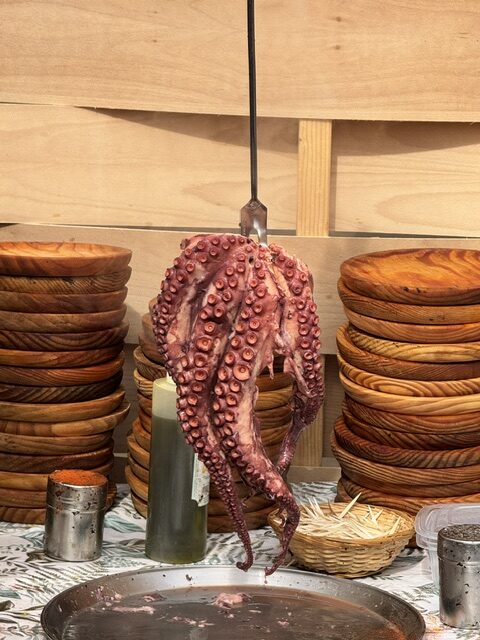
There are not many foods I would happily eat for lunch and then order again for dinner.
Pulpo is one of them.
Pulpo is octopus.
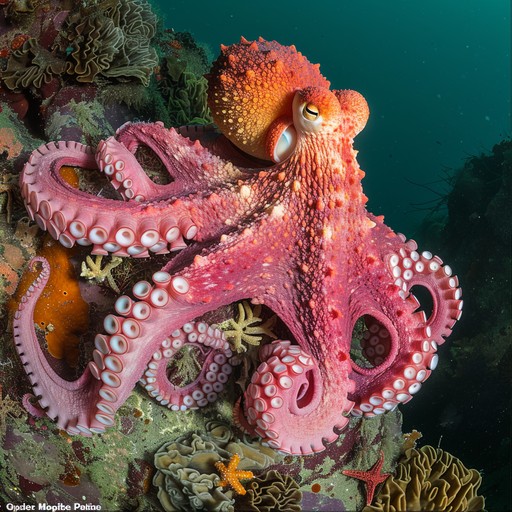
And if the thought of eating an octopus causes you to hesitate for a moment, I understand.
Consider the creature.
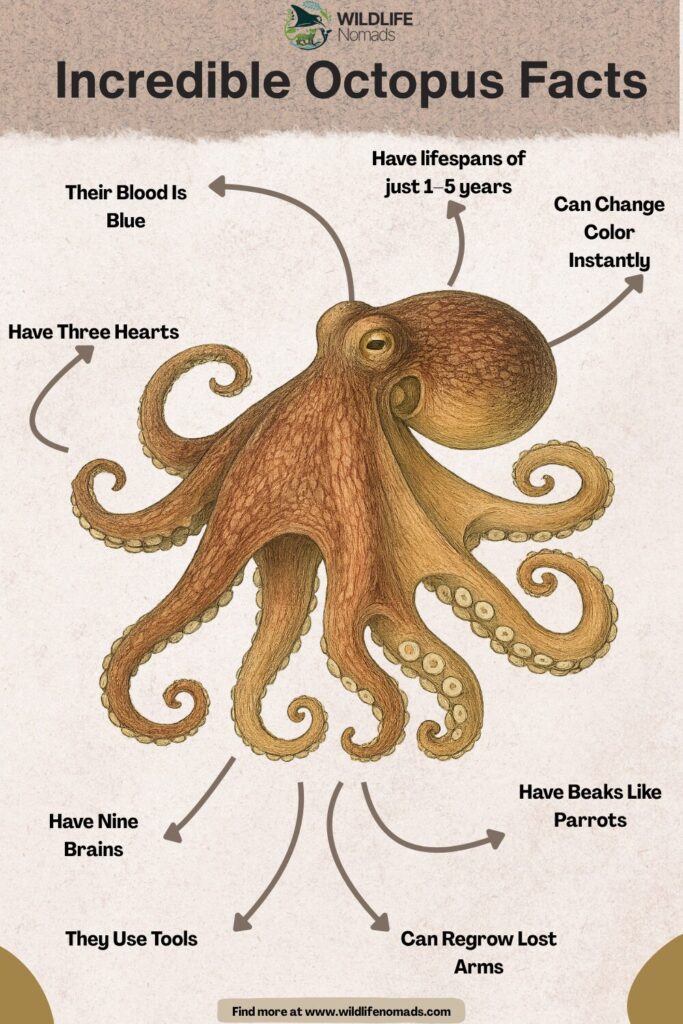
Eight arms. Hundreds of suction cups. A completely soft body. No bones. No internal shell. Three hearts. Blue blood. And, by almost every account, an extraordinarily intelligent animal.
Not exactly the sort of thing you look at swimming around the ocean and immediately think:
That would taste wonderful with olive oil and paprika.
But it does.
Oh, does it ever.
Alexis and I were reminded of that yesterday in Vigo, on the northwestern coast of Spain.
We happened, quite by accident, upon the Festa do Marisco de Vigo at the port.
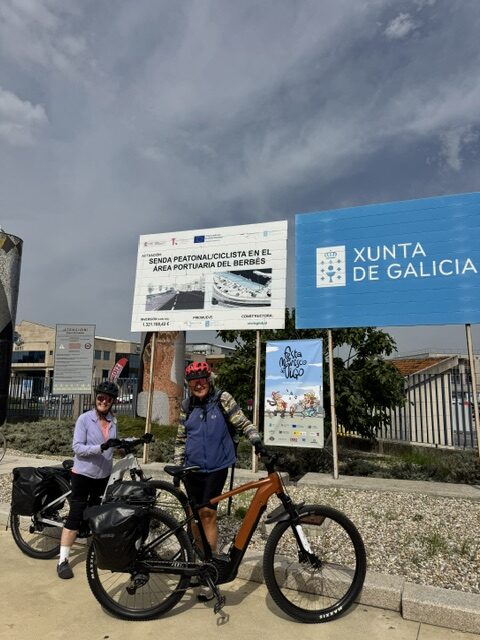
It was lunchtime—which in Spain means something considerably more serious than the sandwich-at-your-desk affair that lunch often becomes in the United States.
Lunch is the big meal of the day.
So we sat down.
And ordered pulpo.
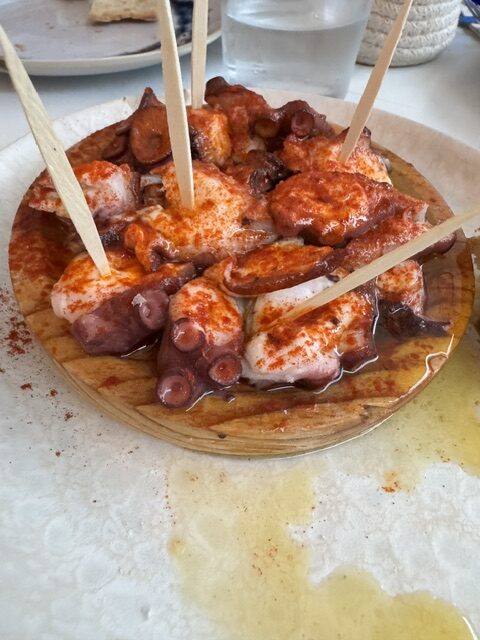
It arrived exactly as I remembered it from my first Camino eleven years ago: chunks of tender octopus, sliced into bite-size pieces, the suction cups still plainly visible, glistening with olive oil and dusted with paprika and coarse salt.
No sauce trying to disguise it.
No elaborate presentation.
Just octopus.
And it was unbelievably good.
Tender, but with just enough resistance to remind you that you are eating something substantial. Slightly sweet. Slightly briny. Rich with olive oil. Smoky from the paprika.
And somehow all of those very simple ingredients combine into something far greater than the sum of their parts.
We loved it.
Several hours later, we found ourselves sitting in the old-town square of Vigo looking at a dinner menu.
Pulpo was on it.
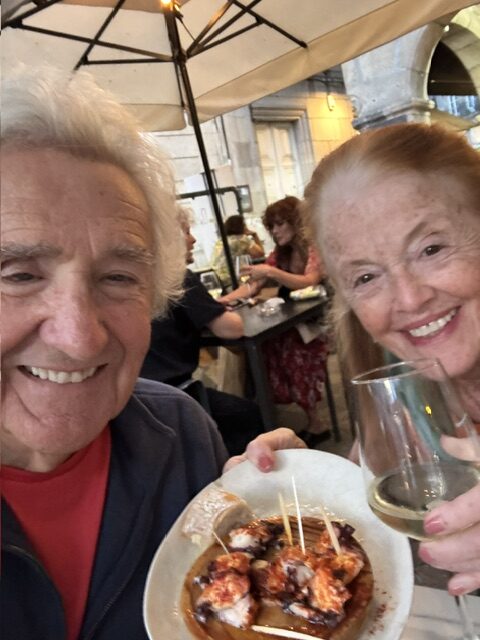
So naturally, we ordered it again.
And loved it again.
This was not entirely new territory for me.
Eleven years ago, when I rode my first Camino de Santiago, I became almost obsessed with pulpo. I seemed to find it in the central square of one little Galician town after another.
I would stop riding, find a table, order a plate and marvel that something so simple could taste so good.
Now I was back.
And so was the pulpo.
There is a reason Galicia and pulpo are so closely associated.
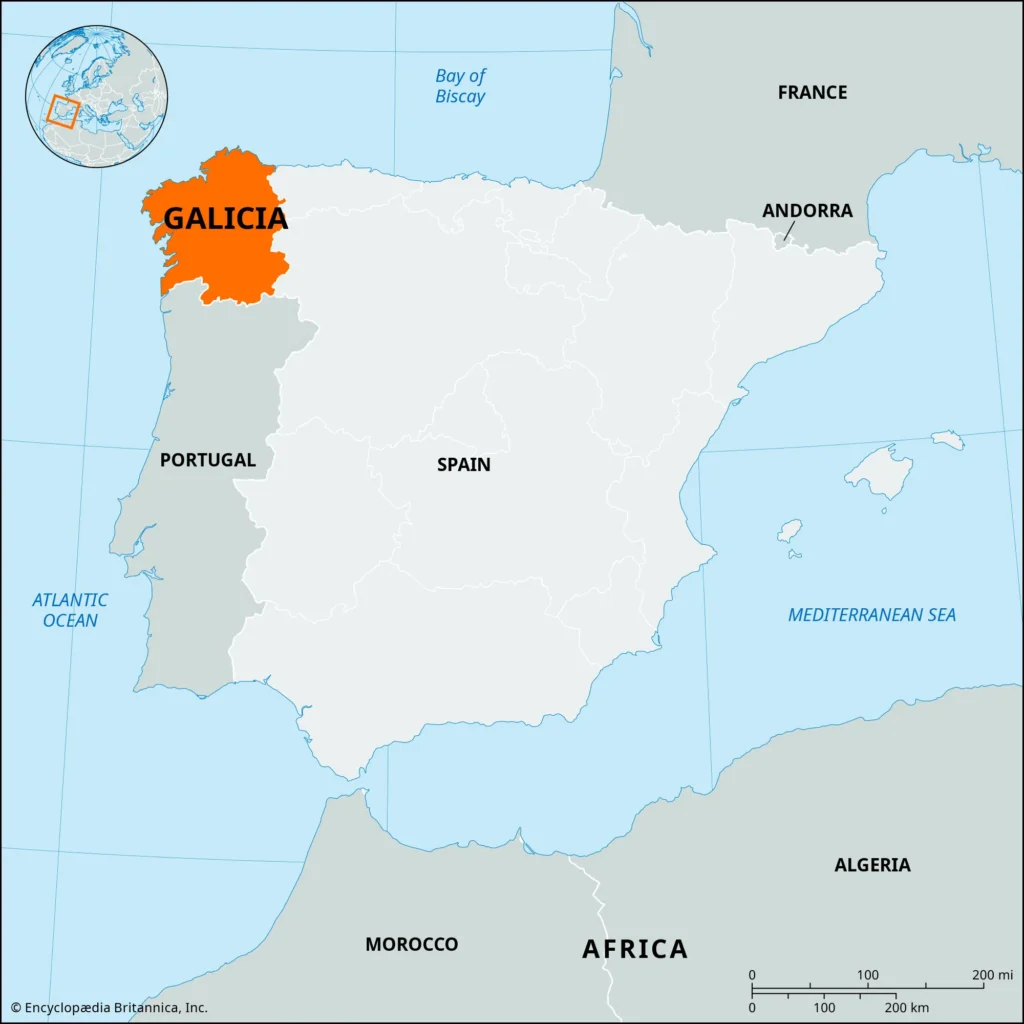
Galicia sits directly above Portugal in Spain’s far northwest corner, and in many ways it feels quite different from the Spain many Americans picture.
It is Atlantic rather than Mediterranean.
Green and lush rather than dry.
Its coastline is cut deeply by great estuaries called rías. Fishing and shellfishing have shaped both its economy and its culture for centuries. The sea is everywhere here.
Galicia also has its own language, Galician, which is spoken alongside Spanish.
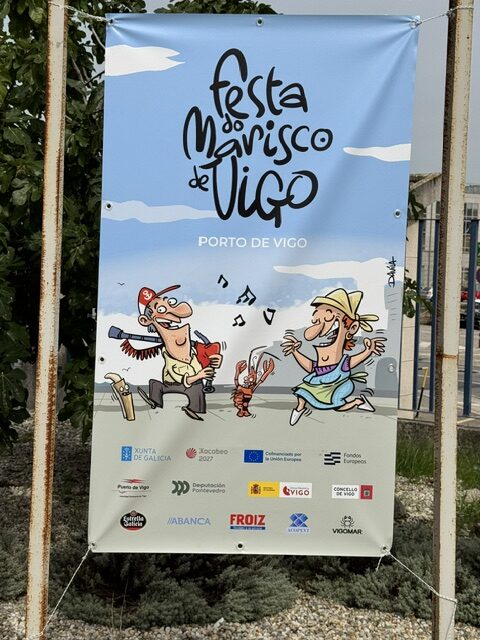
Even the name of the festival we stumbled upon—Festa do Marisco—is Galician.
And seafood is central to the region.
Mussels.
Clams.
Oysters.
Scallops.
Shrimp.
Percebes—the strange-looking goose barnacles that are another Galician delicacy.
And pulpo.
The most traditional preparation is called pulpo á feira, which roughly means “fair-style octopus.”
The preparation itself is almost as interesting as the eating.
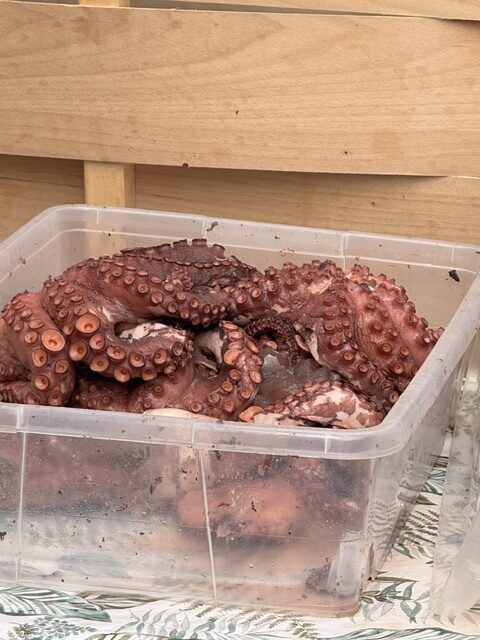
Traditionally, a fresh octopus was first beaten—sometimes quite vigorously against a hard surface—to help tenderize its remarkably muscular flesh. Today, freezing and thawing often accomplishes the same thing, so the old-fashioned pounding is less necessary.
Then comes the cooking.
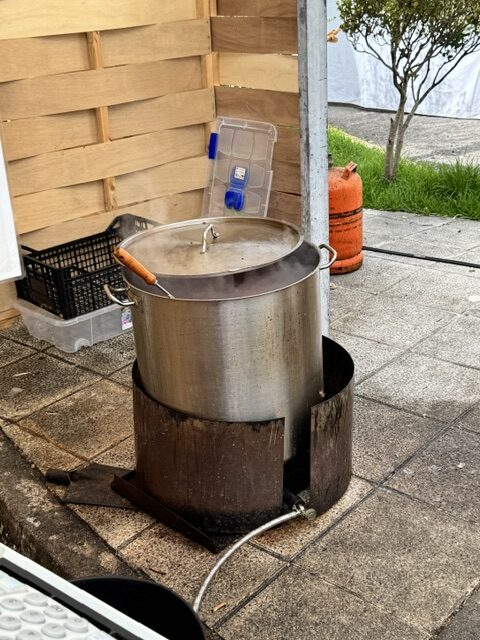
At fairs and festivals, huge copper pots or cauldrons sit over the heat, filled with boiling water. The pulpeira—the person preparing the pulpo—holds the octopus by its head and dips it into the boiling water several times before finally lowering it in to cook. The tentacles curl almost immediately.
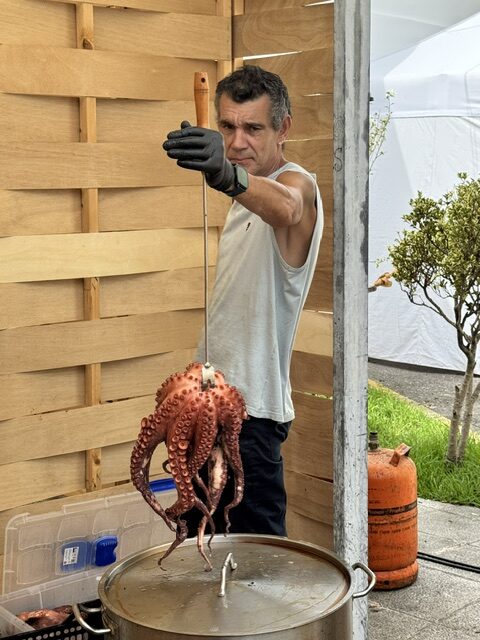
When it is perfectly tender, out it comes.
Then the scissors appear.
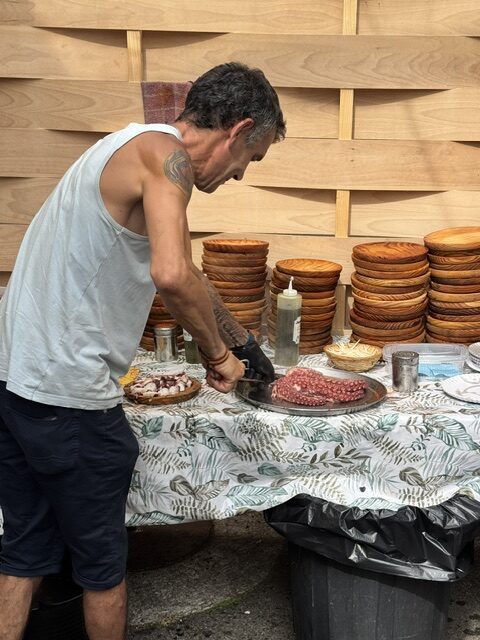
The tentacles are snipped directly into bite-size rounds onto a traditional round wooden plate, suction cups and all.
Then comes coarse salt.
Paprika—usually sweet, sometimes with a little hot paprika as well.
And a generous drizzle of good olive oil.
That’s about it.
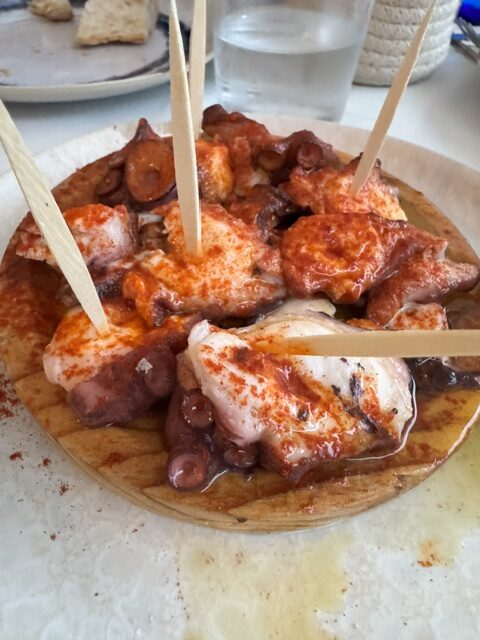
Traditionally, you don’t even need a fork. At the fairs, people spear the pieces with little wooden toothpicks and eat them directly from the shared wooden plate.
No complicated sauce.
No dozen ingredients.
Nothing to hide behind.
Which raises another question I find fascinating.
Why does octopus occupy such completely different places in Spanish and American food culture?
Here in Galicia, pulpo is celebratory food.
Comfort food.
Festival food.
Family food.
People gather around enormous copper pots and watch it being prepared. They order plate after plate. Children grow up eating it.
Nobody seems remotely troubled by the fact that it still very obviously looks like an octopus.
In the United States, the reaction can be quite different.
“Octopus?”
“You eat the tentacles?”
“Are those suction cups?”
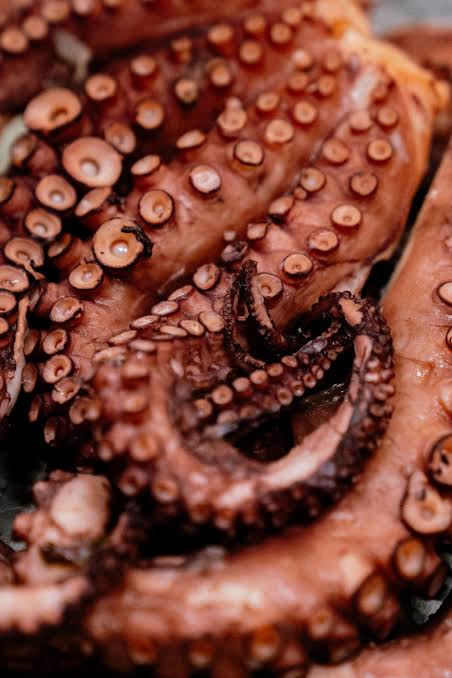
For many Americans, eating octopus still feels exotic, perhaps even slightly daring.
And perhaps that is the part of this story I find most interesting.
The octopus itself hasn’t changed.
What changes is the way we look at it.
In one place, those curled tentacles and suction cups may make someone recoil.
In another, they mean a village fair, a family meal, a wooden plate passed around the table and something people have loved eating for generations.
That may be one of the great gifts of travel.
You arrive somewhere carrying all sorts of assumptions about what is normal, what is strange, what looks appealing and what decidedly does not.
And every so often, another culture persuades you to reconsider.
Eleven years ago, on my first Camino, Galicia introduced me to pulpo.
Eleven years later, I came back and discovered that I hadn’t forgotten the lesson.
Sometimes the unfamiliar deserves a second look.
And sometimes, apparently, it deserves a second plate.
Even on the same day.