My Day in Traffic Court in Indio, California
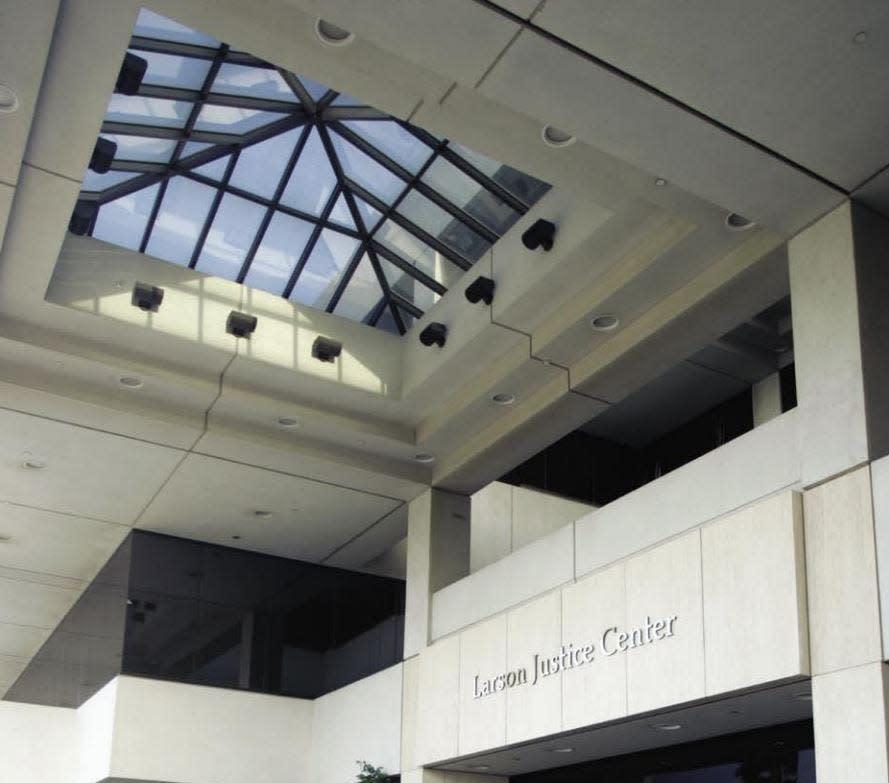
I went to court today looking for justice.
Instead, I was offered a pretty good deal.
I’m still not sure how I feel about it.
Some of you may remember my brief and unsuccessful career as an illegal Uber driver during the Coachella Music Festival last April. If not, you can read about it here.

The short version is that I received two traffic tickets for driving my golf cart where I apparently shouldn’t have been driving it, and for not wearing a seat belt in a golf cart that doesn’t have seat belts.
Nearly $500 in fines.
I was indignant. I decided to fight the tickets.
More than six months later, my day in court finally arrived.
Or so I thought.
I showed up at the Riverside County courthouse in Indio at 1:30 p.m., prepared to argue my case.
There was just one problem.
Apparently, 125 other people had also been summoned for 1:30 p.m.
And we weren’t there to argue our cases. We were there to declare whether we wanted to argue our cases at some unspecified date in the future.
Welcome to traffic court.
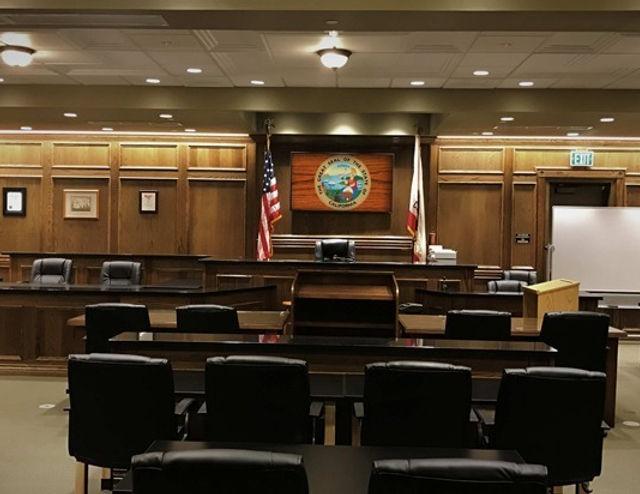
125 People and One Judge
We were instructed to sit quietly and wait for our names to be called.
The woman presiding liked to proceed alphabetically. Peterson, as you might imagine, is not an especially advantageous name in such circumstances.
Ninety minutes later, my turn finally came.
Meanwhile, I had plenty of time to observe what was going on around me.
The courtroom was filled with an interesting cross section of people, although many of those summoned never appeared.
A large proportion were Hispanic. Many were young. Several needed Spanish interpreters. And a surprising number appeared to have very limited financial resources.
The offenses were fairly ordinary. Driving without a license. No insurance. Speeding. Obscured license plates. And various other traffic violations.
But what was most interesting was how the cases were handled.
The woman presiding was not a regular judge. She was a judge pro tempore, a temporary judicial officer authorized to preside over certain proceedings.
She told us she had gotten up at 4 a.m. and driven three hours to be there. And apparently, she was volunteering her time.
Now that is dedication.
And I must say, she was terrific. Competent, patient, kind, and genuinely interested in helping people resolve their problems.
She also appeared to be something of a master negotiator.
Justice at a Discount
The choices, as she explained them, were fairly straightforward.
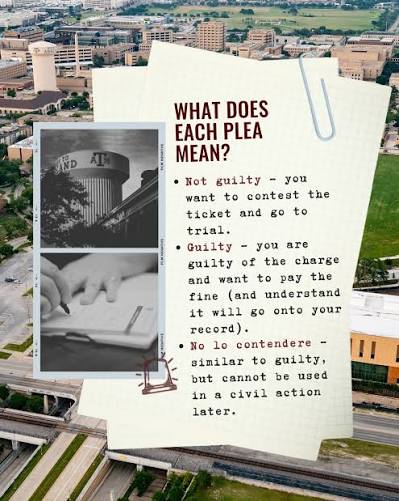
You could plead not guilty and have a trial scheduled for some future date.
Or you could plead guilty or no contest, and she would generally reduce your fine by 50 percent. In many cases, you could also attend traffic school, at an additional cost of approximately $50.
Occasionally, she would dismiss charges while requiring a $25 court appearance fee per violation.
I watched this process unfold again and again.
Someone would approach the bench. The judge would explain the options. A little discussion would follow. And frequently, the defendant would walk away with a substantially reduced fine.
It was almost like watching a marketplace.
Except the merchandise was traffic violations.
And the discounts were being offered by the court.
I found myself wondering: Was this justice? Was it efficient administration? Was it compassion? Or was it simply the most practical way to process an enormous number of cases?
Perhaps all four.
The People Who Couldn’t Pay
What particularly struck me was how many people couldn’t afford even the reduced fines.
Several asked for payment plans. Others explained their financial difficulties.
And I began thinking about the differences between their circumstances and mine.
For me, a $500 ticket was an irritation. An expensive irritation, to be sure, but hardly a financial catastrophe.
For someone struggling to pay rent, support children, or keep a job, the same fine might be devastating.
And what about the time involved?
It had taken me more than six months to get this court appearance. I had already devoted much of an afternoon to it. If I wanted to contest the charges, I would have to come back again.
What if I were paid by the hour? What if missing work meant losing wages, or even losing my job? What if I needed childcare? What if I couldn’t afford the gasoline or transportation to get to the courthouse?
And what if I didn’t speak English?
I watched the interpreters working with defendants, the judge patiently explaining their options, and people trying to figure out which choice would cost them the least.
It was a side of the justice system I hadn’t thought much about before.
I have spent a good part of my professional life running public agencies. I know how difficult it can be to deliver services efficiently, fairly, and compassionately.
But this afternoon, I wasn’t running anything.
I was simply another person waiting for my name to be called.
And I began to wonder what this experience must be like for people who have far fewer choices than I do.
My Turn
Finally, Peterson was called.
I approached the bench, ready to explain the circumstances of my infamous five-foot journey in the golf cart.
I never got the chance.
The judge didn’t ask what happened. She didn’t ask whether I thought the tickets were justified. She didn’t ask anything about the incident.
Instead, she looked at me and offered another option.

Because of my age, I could attend a one-hour California Highway Patrol class called “Age Well Drive Smart.”
Then, a week after completing the class, I could return to court.
If I did those things, she would dismiss both charges and eliminate all the fines.
All $500 or so.
Gone.
Now that’s a deal.
It is hard to argue with a 100 percent discount.
And, frankly, I didn’t.
But there was something almost comical about the whole thing.
I had spent six months waiting to defend myself against charges I considered ridiculous. I had arrived prepared to confront the officer who had written the tickets. I wanted to tell my story, explain the circumstances, and make the case that I had been treated unfairly.
Instead, I was offered a driving class.
For old people.
I suppose I should be grateful that she didn’t ask me to surrender my golf cart.
So What Was This All About?
As I left the courthouse, I found myself experiencing several contradictory emotions.
I was pleased. Who wouldn’t be? My nearly $500 fine was on its way to disappearing.
I was frustrated. It had taken six months, two hours at the courthouse, and would still require a driving class and another court appearance to resolve two relatively minor traffic violations.
I was disappointed. I never got my opportunity to argue the case.
And I was impressed by the woman presiding, who managed to combine efficiency, compassion, and a good deal of common sense in dealing with a parade of people and problems.
But mostly, I was left thinking about the other people in that courtroom.
For me, the afternoon was an interesting experience, perhaps even an amusing one.
For others, it may have been anything but amusing.
I don’t know whether the justice system worked well that afternoon or poorly. I saw plenty of evidence for both conclusions.
I saw an extraordinarily cumbersome process. I saw people waiting for hours. I saw fines that could create genuine hardships.
But I also saw a thoughtful judicial officer trying to help people, reducing penalties, and finding practical ways to resolve cases without putting everyone through a trial.
I went to court wanting to prove that I was right.
Instead, I got a lesson in how the justice system works.
And I’m still not sure what I learned.
Nice article Neil. You can see this kind of justice anytime on YouTube with Judge Frank Caprio, known as the “nicest judge in the world,”
I had been wondering about this incident. Another very interesting blog with your many observations. I realize we are blessed in so many ways after reading the hardships you describe.
What an experience you had. I have never challenged a traffic violation and simply paid it immediately but as you say, what a luxury that is. The part that also struck me was that the presiding judge was a volunteer.. She is definitely giving back in an impactful way.
Another somewhat comical but definitely thoughtful blog Neil!
A wonderful look into our justice system. Truly makes you wonder where this country and it people are going. Does anyone know any more? Where are peoples values and responsibilities?