I just spent a little more than two days in London. Again.
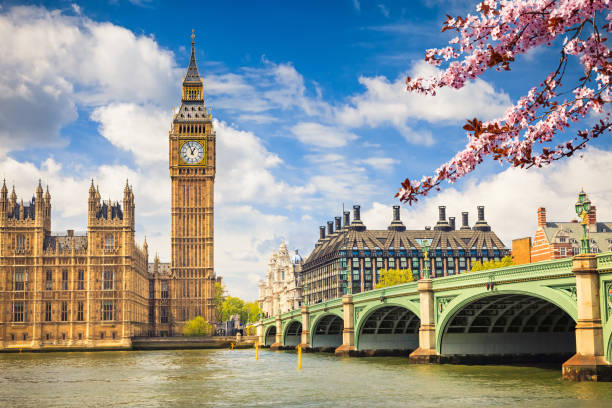
And once again, I came away loving the city.
We managed to pack an unreasonable amount into those two days: three musicals, the British Museum, the National Gallery, a trip down the Thames to Greenwich, some very good meals, and a lot of walking. Most importantly, we got to spend two days with my oldest step daughter Cynthia who is married to a Brit and lives in England.
But one of the things I have been thinking about most since leaving London has nothing to do with a particular painting, musical or building.
It is this:
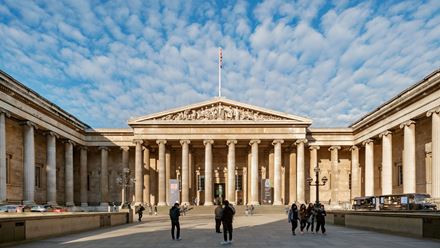
Nobody asked me to pay to enter the British Museum.
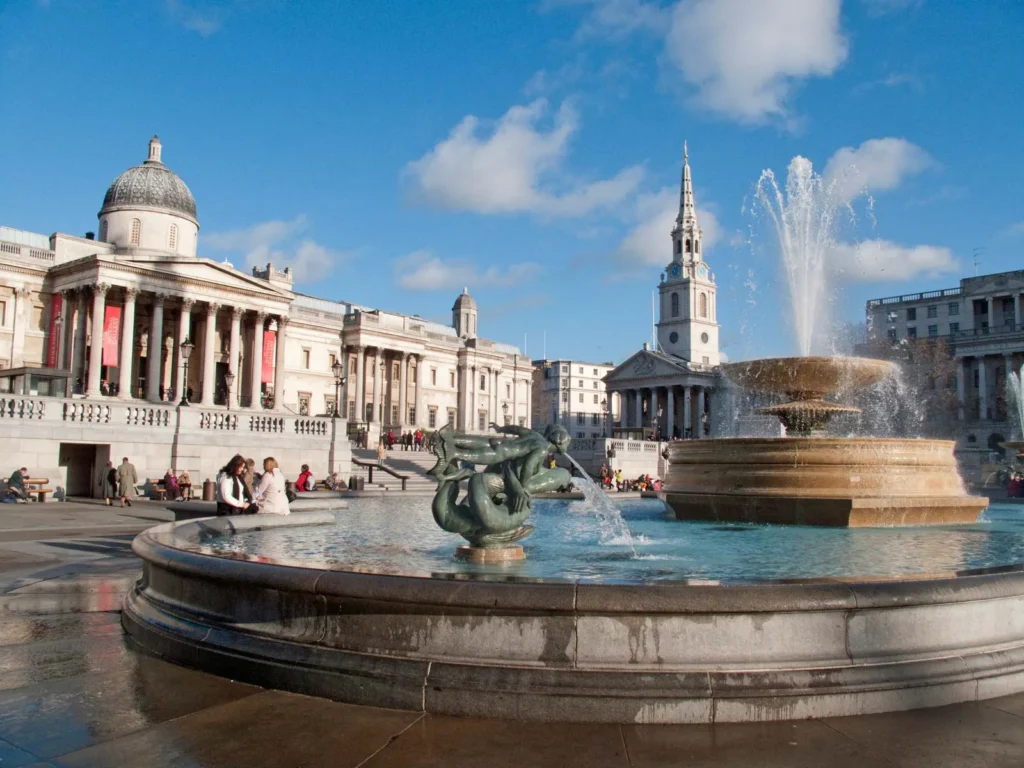
And nobody asked me to pay to enter the National Gallery either.
Free.
Think about that for a moment.
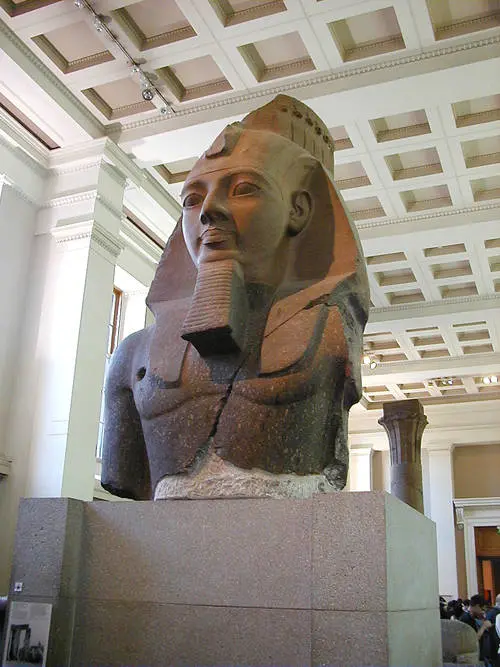
Two of the great museums of the world. The British Museum contains some eight million objects representing thousands of years of human civilization. The National Gallery has paintings by Leonardo, Rembrandt, Vermeer, Velázquez, Turner, Monet, Van Gogh and just about everyone else whose name you encountered in Art History 101.
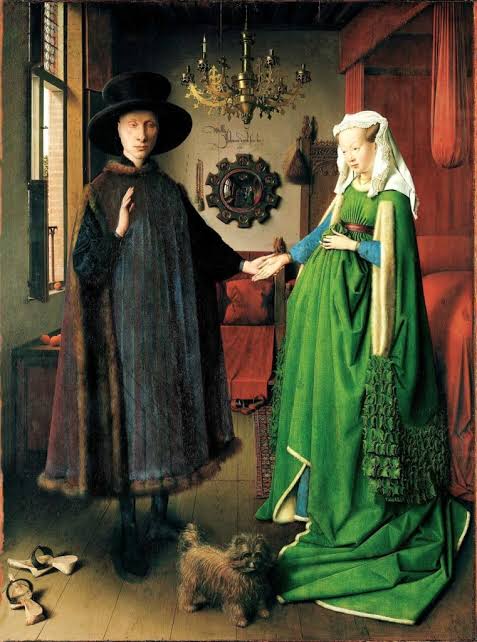
And you can simply walk in.
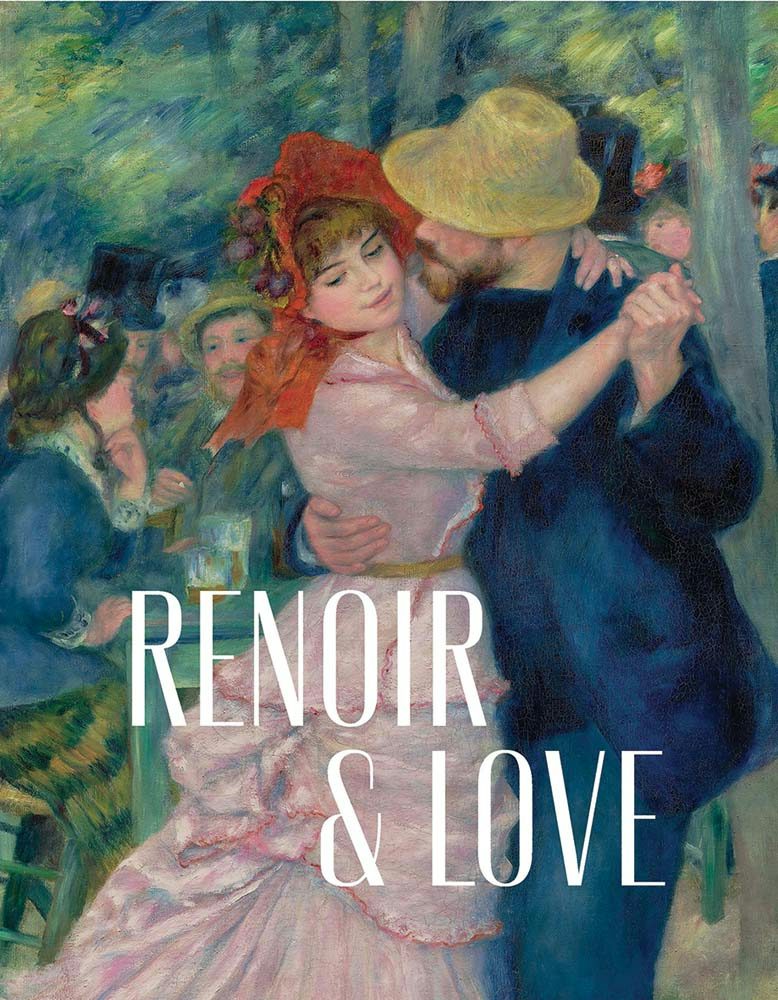
In our case, we did pay for something special. The National Gallery had a major new exhibition, Renoir and Love, opening to the general public on October 3. We were able to see it the day before it opened to the general public by purchasing a membership that allowed us to see the exhibition during the members’ preview day.
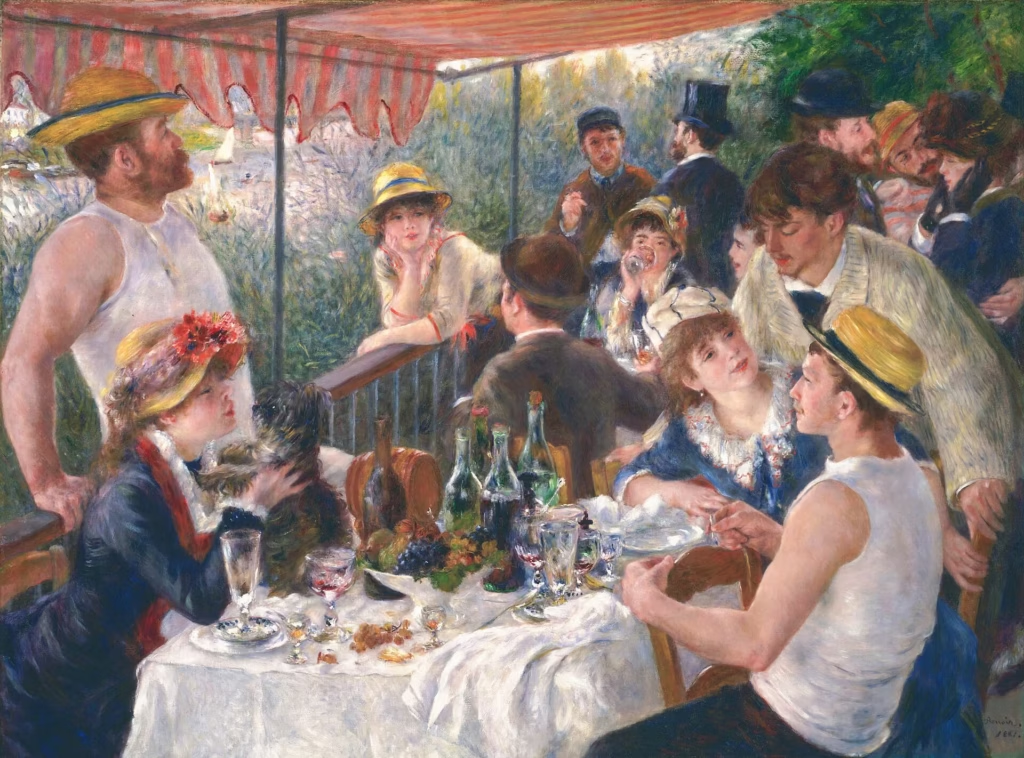
It was wonderful.
But the National Gallery itself?
Free.
That isn’t an accident. It is public policy.
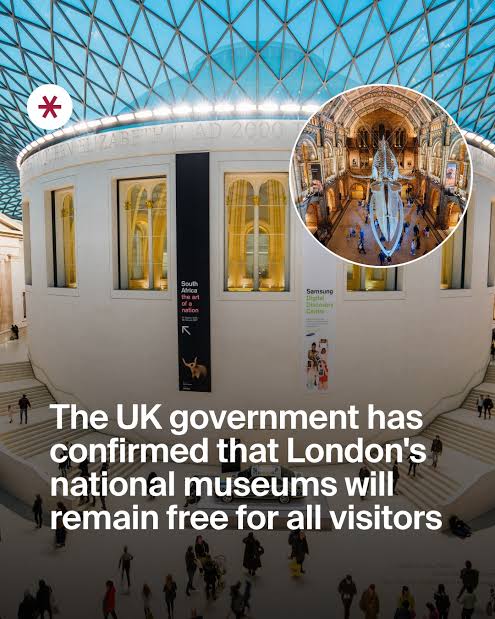
Since 2001, England has maintained free general admission to its major national museums. And just a few days before I wrote this, on September 29, the British government reaffirmed the policy after considering whether foreign visitors like me should be charged. It decided against doing so. England’s national museums will remain free to everyone, British or not.
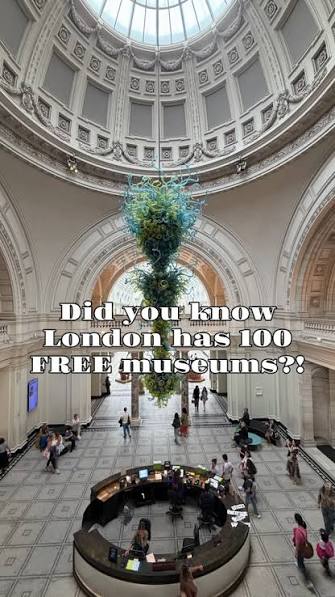
The National Gallery puts the principle rather beautifully in its own admissions policy: its collection “belongs to the nation” and is open free of charge 361 days a year. Some temporary exhibitions, such as the Renoir exhibition we saw, carry a separate charge.
I love that phrase:
It belongs to the nation.
Because that changes the way you think about a museum.
If admission costs $25 or $30, going to a museum becomes an event. A couple thinks about whether it is worth $50 or $60. A family of four thinks about it even more. And once you have paid, you feel some obligation to stay long enough to “get your money’s worth.”
But suppose the museum is free.
You can walk in for half an hour.
You can take your granddaughter in to look at one Monet.
You can stop by because you happen to be walking past.
You can return three times instead of trying to absorb 500 years of Western painting in one exhausting afternoon.
A teenager can wander in without asking a parent for money.
Someone who has never thought of himself as a “museum person” can walk through the same door as the art historian.
Removing the price does more than save people money.
It changes who feels invited.
And I think there is something important in that.
What does a country say about itself when it makes its great collections freely available?
It says that history isn’t just for historians.
Art isn’t just for people who can afford art.
Science isn’t just for scientists.
The accumulated inheritance of civilization belongs to all of us.
In that sense, perhaps museums aren’t so different from public libraries.
Nobody stands at the entrance to a public library and says, “That will be $27, please.”
We have made a collective decision that books, information and knowledge should be available to everyone because an educated and curious population is good for the entire society.
Why isn’t the same argument true of art, history and science?
Of course, London’s museums aren’t actually free to operate.
Someone pays.
The British government provides substantial support to the national museums. Museums supplement that with donations, memberships, restaurants, shops, philanthropy and charges for special exhibitions.
So “free” really means something more precise:
We have decided not to make the person walking through the front door responsible for paying the cost of admission.
That is a public-policy choice.
And before we Americans dismiss this as something Europeans do because they have a different relationship with government, we should take a walk around Washington, D.C.
We already do it.
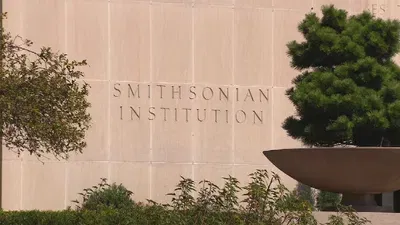
The Smithsonian museums are free. Roughly 62 percent of the Smithsonian’s funding currently comes from federal sources, with philanthropy, endowment income and other private revenue supplying the remainder.
The National Gallery of Art in Washington is free too—not only its permanent collection but its exhibitions and guided tours. The federal government supports basic operations while private philanthropy supports acquisitions, exhibitions, education, research and conservation.
So America doesn’t have to ask whether this idea could work here.
It already does.
The question is why we have largely confined the idea to Washington DC.
What would happen if we decided that access to America’s great museums should become part of our national cultural infrastructure?
There are several ways we could approach it.
One would be a federal matching program. Museums that agreed to eliminate general admission could receive federal funding replacing some portion of the revenue they gave up, provided state, local or private sources matched it.
Another would be a public-private partnership, following the model we already use at the Smithsonian and National Gallery of Art. Government could guarantee basic public access while philanthropy supported exhibitions, acquisitions and special programming.
There is also an opportunity here for philanthropy.
We name museum wings, galleries and buildings after donors all the time. Why not let a donor endow the front door?
Imagine arriving at the Denver Art Museum, Seattle Art Museum or another major American museum and seeing:
Admission is free for everyone, forever, thanks to the Smith Family Endowment.
What a legacy.
A $25 million gift that puts someone’s name on another building is certainly generous.
But a gift that means a child who otherwise would never have entered the building can walk through its doors for the next 50 years?
That strikes me as an extraordinary use of philanthropy.
And if universal free admission everywhere seems too ambitious initially, we could experiment.
Free admission for everyone under 25.
Free admission for families with children.
Federal matching grants for participating museums.
Free admission supported by corporate sponsors.
Citywide cultural passes.
Or pilot programs in a dozen cities to see what happens to attendance, particularly among people who historically haven’t visited museums.
There are legitimate questions about cost, government support, donor priorities and whether already crowded institutions could accommodate significantly larger audiences. Different museums have very different financial circumstances. Britain’s policy itself applies principally to its nationally funded museums, not every museum in the country.
But those are questions about how.
They don’t answer the more interesting question of why not?
I kept thinking about this as we walked through the National Gallery.
There were schoolchildren. Tourists. Retirees. People who clearly knew exactly which paintings they had come to see. Others seemed simply to have wandered in.
Rich or poor, knowledgeable or completely uninformed, everyone entered through exactly the same door.
No velvet rope.
No economic test.
No ticket required.
And hanging on the other side were paintings created hundreds of years ago that somehow still have something to say to us today.
Maybe that is what Britain has gotten right.
A museum shouldn’t feel as though somebody is allowing us to see their treasures.
It should feel as though we are coming to see our treasures.
I left London wondering why we don’t make more of America’s great museums work that way.
We already know how.
Maybe the next question is whether we have the imagination—and the will—to open more of those doors.
Neil,
Britain does the same with health care. It’s free to all because Health Belongs to the Nation. It’s not free to provide but no one wants an elderly person to be unable to get checked after a fall or a parent with a small paycheck to avoid taking a sick baby to the doctor. UK taxes cover the National Health Service (though at less cost than Americans pays for healthcare) and there are waiting lists for knee replacements and similar surgeries (but not for cancer), It’s been 38 years since 5 people died in the UK of measles in any year.
Totally agree on all counts. Liz being an artist we’ve visited over 200 art museums gunkholing by motorhome thru 9 Provinces and 48 States and visiting 41 European and Asian countries as well as 17 Caribbean territories.
Sometimes free can be second rate. Thinking we’d seen it all, a pleasant surprise awaited in Youngstown, Ohio. The Butler Intst of American Art is a free hidden gem with several items we’d never seen anywhere. Even parking was FREE.!
Visiting the spectacular Getty in LA and the Art Museums of Chicago and Cleveland were also free.
For value, the very compelling Hermitage in St Petersburg Russia only charges $6.00, a tenth of what the Louvre does. We’ve visited both on 2 occasions and the Hermitage is a bargain with 500% more items than the Louvre!
Biggest surprise was Boston’s Isabella Stuart, we’d not heard of the art heist and seeing the empty frames was jarring!
Being in Bentonville AR a year too early we missed the free Crystal Bridges Museum of American Art—something to look forward to!
So much to see, so little time-eh!
As Proust said “the real voyage of discovery consists not in seeking new landscapes, but in having new eyes”.
BTW Neil do you still have Liz’s Cape Cod painting?
As they say in “Jolly Old”, keep an eye out for more snip!