During our three weeks in Calpe, on Spain’s Costa Blanca, I kept finding myself asking the same question.
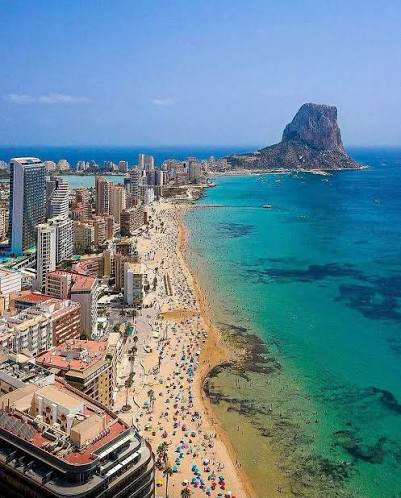
Where are all the Americans?
There were foreigners everywhere.
British.
Germans.
Dutch.
Belgians.
Swiss.
Scandinavians.
Russians.
Ukrainians.
Chinese.
People who had come here for very different reasons and stayed for very different lengths of time.
Just today I talked with a Belgian, a Swiss and a Brit.
Some of the foreigners we have met have lived here full time for 20 years.
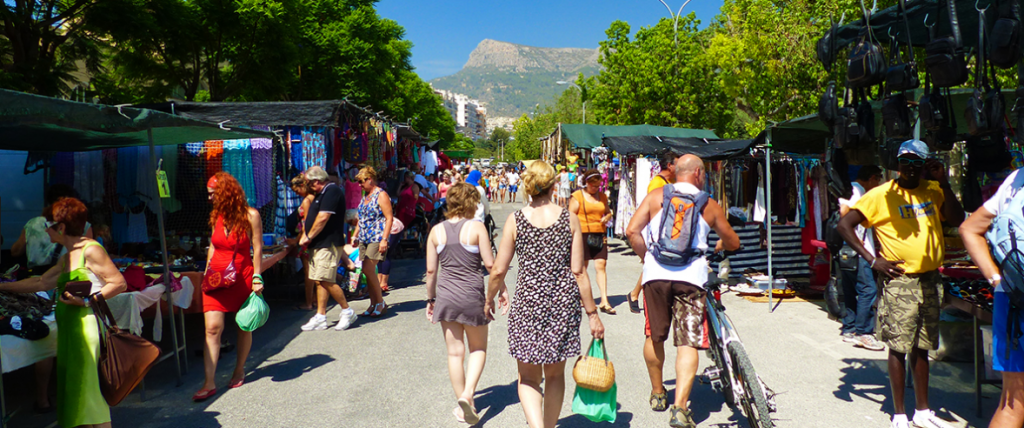
Others spend perhaps eight months of the year here and disappear during the hottest summer months.
There is nothing tentative about the expatriate community in Calpe.
It is alive and well.
In fact, I subsequently learned something that surprised me even more.
Foreigners are not simply a noticeable minority here.
They are the majority.
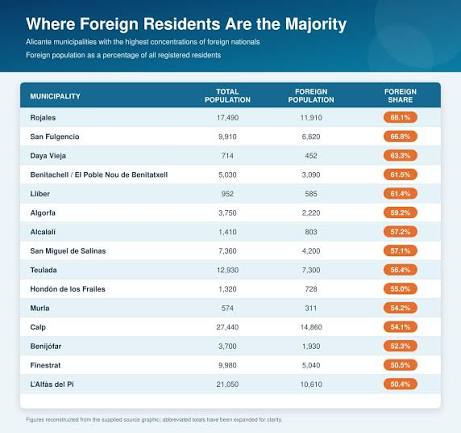
According to the city, 54 percent of Calpe’s registered residents are foreign nationals.
Think about that.
This is a Spanish town where more than half of the people officially living here are not Spanish.
And yet, among all those foreigners, Alexis and I have encountered remarkably few Americans.
At first I wondered whether Americans simply don’t come to Spain in significant numbers.
Wrong.
Americans love Spain.
Spain received about 4.45 million American tourists in 2025.
And Spain itself certainly has no shortage of visitors. Nearly 97 million international tourists came here that year.
The largest groups were British, French and German.
So Spain is hardly undiscovered.
And neither is this part of Spain.

Calpe, Altea, Alicante, Valencia and the Costa Blanca are enormously popular with Europeans.
They just don’t seem to occupy the same place in the American travel imagination.
That got me wondering whether Americans and Europeans have developed very different mental maps of Spain.
Ask an American planning a trip to Spain where he or she is going, and I suspect you are likely to hear some familiar answers.
Madrid.
Barcelona.
Sevilla.
Granada.
Maybe Mallorca.
Maybe San Sebastián.
All wonderful choices.
But Calpe?
Altea?
Alicante?
Valencia?
The Costa Blanca?
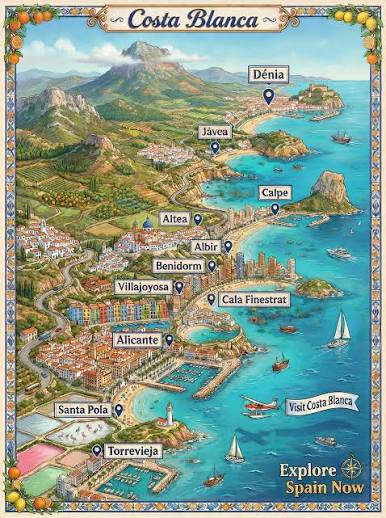
Much less often.
Europeans seem to know a different Spain.
For someone living in London, Brussels, Amsterdam, Zurich or Frankfurt, the Mediterranean coast of Spain can be an easy getaway.
Come for a week.
Come for a winter.
Buy an apartment.
Come back every year.
Or simply move here.
Apparently a great many people have.
People we met told us the international population has continued changing in recent years.
There are Ukrainians who came as refugees.
We were told of increasing numbers of Russians arriving since the war began, although undoubtedly for a variety of reasons.
There are Chinese residents.
Northern Europeans who have been here for decades.
British residents for whom the Costa Blanca has practically become a second home.
It is a remarkably international place.
Just not particularly American.
Someone recently told me that the explanation was obvious:
“Americans go to Portugal.”
That made me curious.
It turns out that Americans certainly do love Portugal.
In 2025 Americans were Portugal’s second-largest foreign market measured by the number of guests, accounting for about 12 percent of its international guests.
So Americans are very visible there.
But more Americans actually travel to Spain.
Spain recorded roughly 4.45 million American tourists in 2025, compared with about 2.4 million American guests reported by Portugal’s tourist accommodations.
The numbers are measured somewhat differently, so I would not pretend this is a perfect apples-to-apples comparison.
But the broad point seems pretty clear.
Portugal may feel more American.
Spain actually receives more Americans.
So where are we?
Maybe the answer has something to do with geography.
Europeans can treat Spain rather differently than Americans can.
For us, getting here generally means crossing an ocean.
Once we arrive, perhaps we feel some pressure to make the trip count.
Madrid.
Then Barcelona.
Then Sevilla.
Maybe Granada.
Three nights here.
Two nights there.
Get on the train.
See the cathedral.
See the museum.
Take the picture.
Move on.
There is nothing wrong with that.
I have traveled that way myself many times.
But someone from Britain, Belgium, Germany, Switzerland or the Netherlands does not necessarily need to experience Spain that way.
Spain can be more like Florida or Arizona might be to an American.
Somewhere to escape to.
Somewhere to return to.
Somewhere to spend the winter.
Somewhere where you already know which grocery store to use and which restaurant has your favorite table.
Somewhere where you don’t necessarily have to see anything at all.
That distinction became particularly noticeable during our three weeks here.
We weren’t checking famous Spanish sights off a list.
We were taking Spanish lessons.
Taking salsa and bachata lessons.
Trying padel.
Playing golf.
Hiking.

Going to Rotary.
Cooking paella.
Driving into the mountains.
Going to local festivals.

Walking along the Mediterranean after dinner.
And, remarkably, waiting until our second week before actually spending a day at the beach.
We were beginning to use the Costa Blanca more like many of the Europeans around us seem to use it.
Not as a place to see.
As a place to be.
Maybe that explains part of the mystery.
Americans certainly visit Spain.
Millions of us do.
But I wonder whether we tend to concentrate disproportionately in the places we already know we are supposed to visit.
Europeans, because Spain is so much closer, have had generations to discover the places in between.
The beach towns.
The mountain villages.
Valencia and Alicante.
The long stretches of Mediterranean coast whose names many Americans would have difficulty locating on a map.
I was one of them.
This is my fifth trip to Spain.
And until this trip, I knew almost nothing about Calpe.
Or Altea.
Or much of the Costa Blanca.
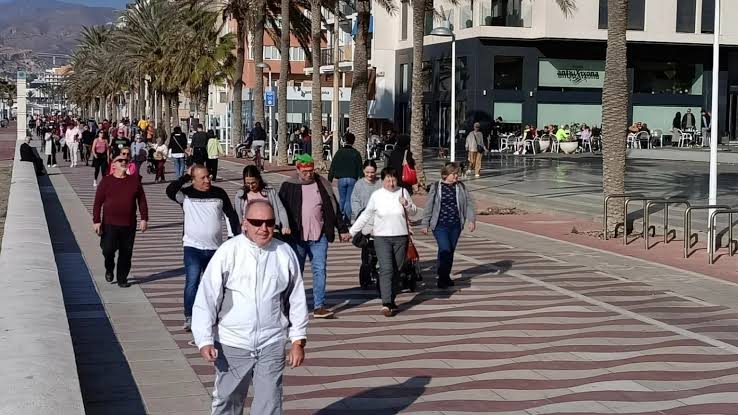
Now I find myself surrounded by Belgians, Brits, Swiss, Germans, Dutch and others who seem slightly puzzled that it took me so long to discover the place.
Perhaps they have a point.
So I am still left with my original question.
Where are all the Americans?
Maybe the better question is:
What have all these Europeans figured out about this part of Spain that we haven’t?
By Americans I take it you do not mean North Americans. Canadians are flocking to the Iberian Peninsula, Mexico and Asia for the past couple of winters since the USA via DC has been trash talking us and threatening to push us into becoming the 51st State either by economic sanctions, tariffs or militarily. That is not at all well received up here! Nor is the disrespectful name calling of our Prime Minister appreciated. As a result scads of us have sold our places in the Sunbelt and are avoiding travel to the USA. Many are now going to the IB Peninsula but it seems that Portugal gets the bulk of Canucks, at least the ones I know.
To Earl. I hope the wonderful Canadian people come back to the US after the current-ignoramus occupying the White House is gone! There are many many Americans that stand with Canada and are very embarrassed by what’s going on!
They are all flooding Japan.
Thanks for your kind comments Bonnie. I always knew you as a sensitive empathetic person. Trump has done many good things but kicking a.very friendly neighbour country in the teeth and mocking us while doing so is beyond the pale. So much for the world’s longest undefended border!