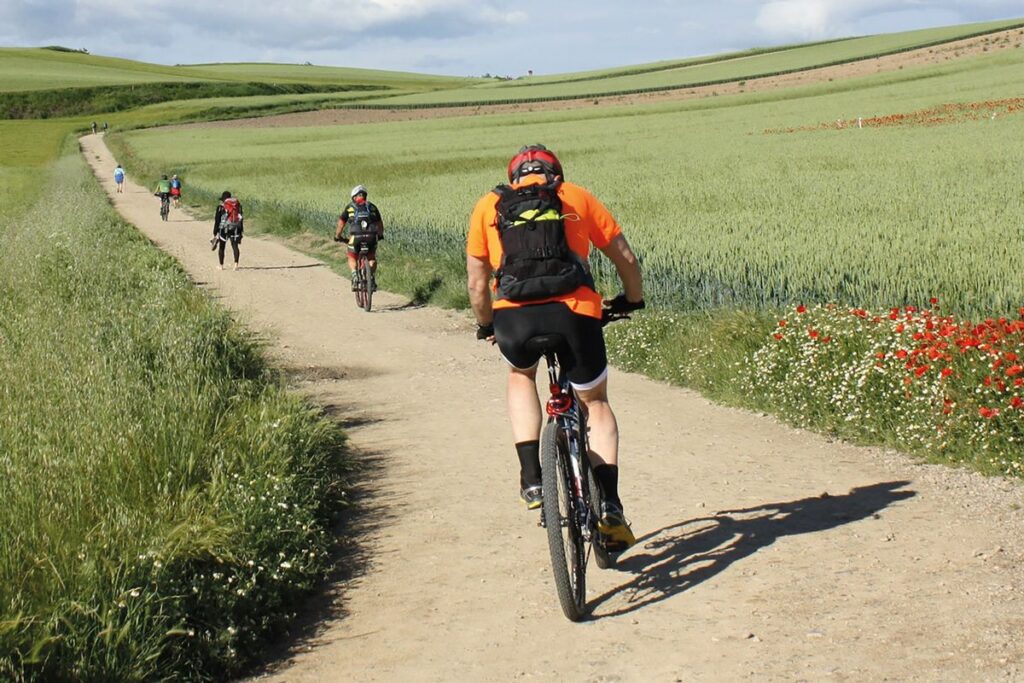
Eleven years ago, I rode all 500 miles of the French Route of the El Camino de Santiago on a bicycle.
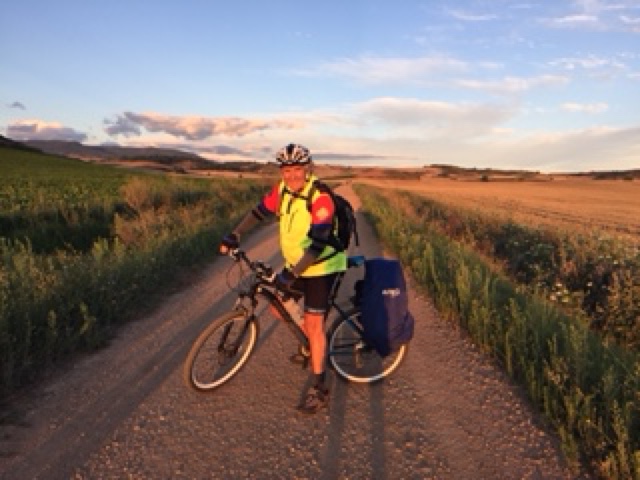
This Saturday, I am going back.
But before I get into that, perhaps a little background is in order for those who have never heard of the Camino—or who have heard the name but aren’t quite sure what it is.
The Camino de Santiago, or Way of St. James, is one of the world’s great historic pilgrimages.
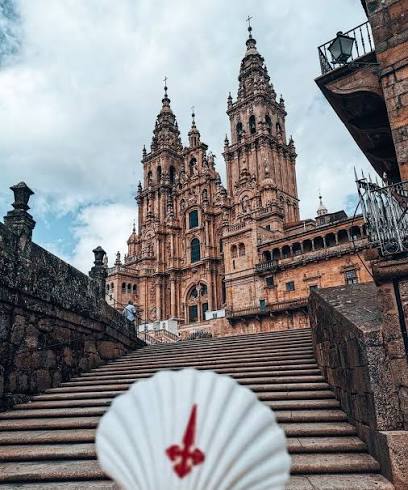
Its origins go back more than a thousand years. In the early ninth century, a tomb was discovered in northwestern Spain that was believed to contain the remains of St. James the Apostle. Pilgrims began making their way there, and by the Middle Ages Santiago de Compostela had become, along with Jerusalem and Rome, one of the great pilgrimage destinations of Christianity.
And somehow, more than a thousand years later, people are still going.
A lot of people.
In 2025, more than 530,000 pilgrims arrived in Santiago and received the Compostela, the traditional certificate recognizing completion of the pilgrimage. That was an all-time record.
And despite all the changes of the modern world, most pilgrims still do it the old-fashioned way.
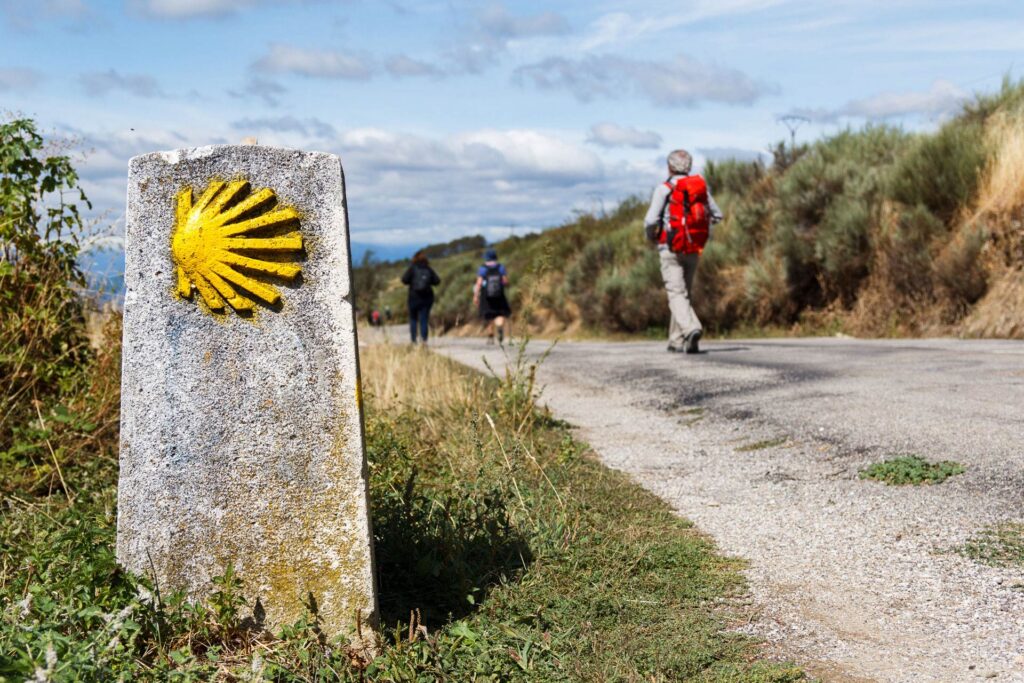
They walk.
More than 93% of today’s pilgrims travel on foot. About 4% do it by bicycle.
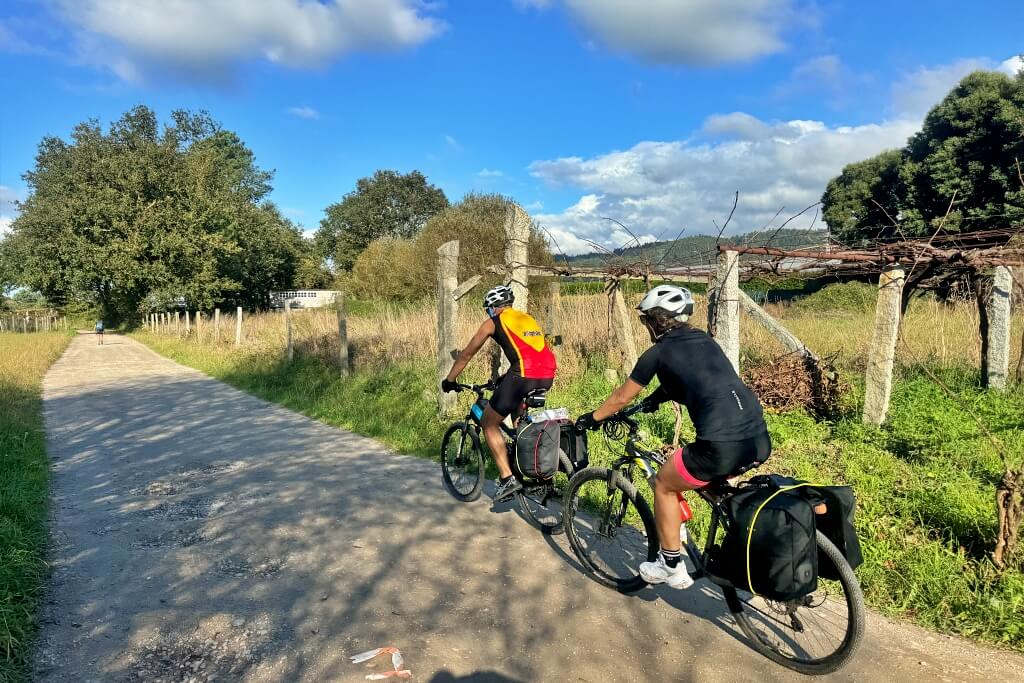
And then there are a very few hardy souls who arrive on horseback or by other means.
I am obviously in the bicycle crowd.
There isn’t just one Camino, either.
There is a whole network of ancient routes leading toward Santiago from different parts of Spain, Portugal, France and beyond.
The best known and still the most traveled is the Camino Francés—the French Way.
That is the one I rode eleven years ago.
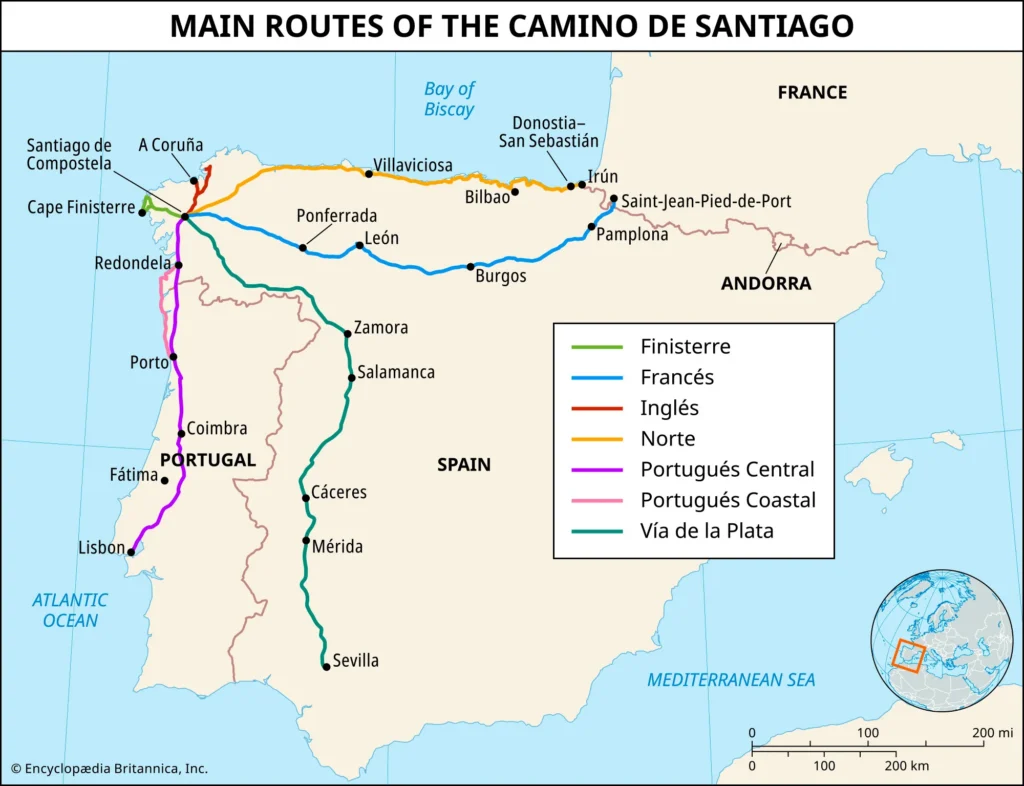
I began in St. Jean Pied de Port in France, crossed the Pyrenees into Spain, and then worked my way roughly 500 miles across northern Spain to Santiago de Compostela.
Today, about 46% of pilgrims who receive the Compostela travel some portion of that French route.
This time, Alexis and I are taking a different Camino.
We will begin in Porto, Portugal, and follow the Portuguese Way, trying to stay as close to the Atlantic coast as possible before eventually heading inland toward Santiago.
The Portuguese routes have grown dramatically in popularity. The Central and Coastal Portuguese routes together now account for roughly 36% of all Camino pilgrims, making the Portuguese Camino second only to the French Way.
Why do all these people do it?
Originally, of course, it was a religious pilgrimage.
And for many people it still is.
But today people undertake the Camino for all sorts of reasons.
Some are there because of their faith.
Some are searching for something spiritual.
Some are at a transition point in their lives.
Some want solitude and reflection.
Some want the physical challenge.
Some want the adventure.
Some are trying to figure something out.
Some may be trying to leave something behind.
And some probably don’t completely know why they are there until they get there.
That may be one of the things that makes the Camino so fascinating.
Eleven years ago, I wrote about 50 blogs while I was doing it.
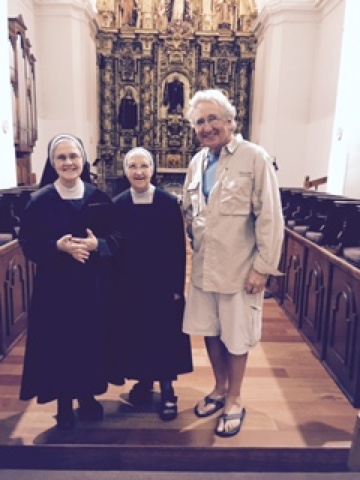
Some were about the difficulty of the ride. Some were about the people I met. Some were about churches, villages, food, weather, aching muscles, unexpected kindnesses, and the sheer craziness of deciding to ride a bicycle across northern Spain.
But as I reread some of those blogs now, I realize that the Camino became about something much bigger than the trip itself.
It became a lesson in how to live.
By the end of that journey, I had written about several takeaways that seemed important to me then.
That the extraordinary is often found in the ordinary.
That simplicity gives us room to notice things.
That a simpler life makes it easier to think about other people, give to other people, and love other people.
That happiness has a great deal to do with giving, loving, and loving what we are doing.
That enthusiasm matters.
And that sometimes what we call luck—or even a miracle—may have something to do with being open to people and to what is happening around us.
Pretty good lessons for a bicycle trip.
Now, eleven years later, I get to find out whether I actually learned them.
This Camino will be quite different.
The route is different.
The distance is shorter.
The bicycle has a battery.
I am eleven years older.
And, perhaps most importantly, this time I will not be doing it alone.
I will be doing it with Alexis.
So I find myself wondering what, exactly, I should expect from the Camino this time.
Will I rediscover the same lessons?
Will I discover that I never really learned them in the first place?
Will the Camino itself feel different now that more than half a million people a year are doing it?
Will its enormous growth take something away from the intimacy and spontaneity I remember?
Or will more pilgrims simply mean more interesting people to meet?
There is one question I wrote about eleven years ago that particularly jumped out at me as I reread those blogs.
I wished I had asked every pilgrim I met:
Why are you doing the Camino?
I think I am going to try to do that this time.
Not as a research project. Not as an assignment.
Just out of curiosity.
Why are you here?
What brought you all this way?
What are you looking for?
What are you hoping to leave behind?
I suspect the answers may be far more interesting than anything I can write about mileage, hotels, hills, batteries or weather.
I am also curious about something else.
Eleven years ago, one of the lessons I took from the Camino was the importance of slowing down.
That seems almost funny now.
My life certainly has not become simpler over the last eleven years.
There are always projects. Emails. Phones. Plans. Obligations. Trips. Ideas. People to call. Things to do.
So perhaps one of my challenges on this Camino will be to see whether I can still slow down.
Not physically.
The electric bike ought to take care of that problem.
Mentally.
Can I ride along the Atlantic coast and really see it?
Can I stop in a little village and simply sit there?
Can I notice the fisherman, the old church, the woman sweeping her doorstep, the dog asleep in the sun, the conversation at the next table?
Can I still find the extraordinary in the ordinary?
And then there is Alexis.
I wonder whether a pilgrimage changes when it is shared with someone you love.
What will she see that I miss?
What will I notice that she does not?
What will we discover about each other after day after day of riding, eating, getting lost, finding our way again, and encountering whatever the Camino decides to put in front of us?
Perhaps that will turn out to be the biggest difference of all.
I know where this Camino ends.
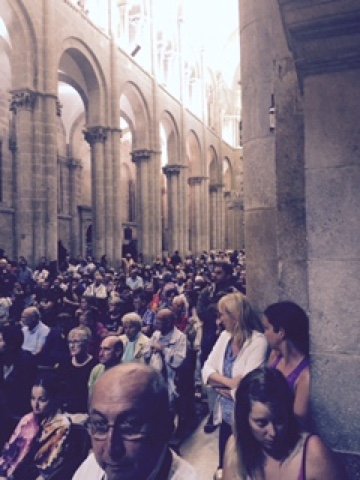
Santiago de Compostela.
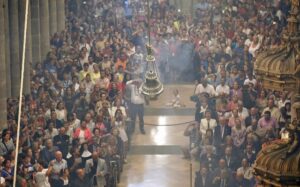
I have been there before.
What I don’t know—and what makes this adventure so appealing—is where it will take me this time.
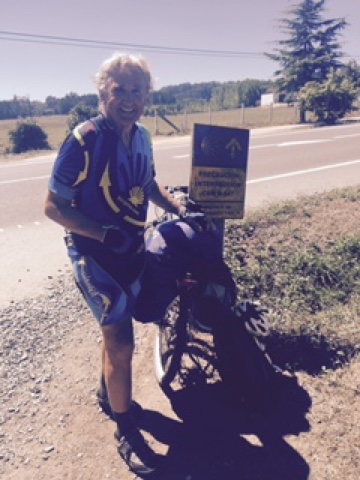
Eleven years ago, I thought I learned quite a lot from the Camino.
Now I get to find out whether I did.
And perhaps, if I am lucky, I will learn a few new things along the way.
Neil you’ll nevver slooow doowwnn!
It would be like expecting a glacier to take a nap.
Enjoy the ride!
E Bikes are like friends with benefits. They give you a little push when you need it most. And remember the traditional symbol of the Camino is a scallop shell, not a lithium battery.
Just be careful to not get julienned by the spokes!
Eleven years ago you got blisters, this time it will be exhausting just twisting the throttle on the e bike.
Buen Camino to you and Alexis!
We look forward to seeing you upon your return, and hearing about your adventure together.
Hey Neil. Un buen camino from us as well. As I mentioned to you recently, Joanne and I are meeting Ingolfur and Gudrun in Spain in about a month. We will touch and experience the Camino in 4 places. Norte and Frances. Best to you and Alexis on your wonderful new chapter in life.