I am 82 years old.
I am pretty healthy. I am persistent. I am reasonably capable. I know how to use a computer and a smartphone. I have transportation. I have the financial resources to get medical care. I am not afraid to ask questions. And, when necessary, I can be pretty damn determined.

And I am about ready to scream.
Not because I am sick.
Because I am trying to deal with the American health-care system.

I have reached the point where I am seriously considering hiring someone whose job would simply be to deal with the health-care system for me.
Not a doctor.
Not a nurse.
A health-care advocate. A navigator. A fixer. Maybe what I really need is a personal health-care chief of staff.

Someone who makes the phone calls. Gets the records. Follows up on referrals. Deals with scheduling. Makes sure Doctor A has what Doctor B sent. Waits on hold. Figures out who actually works in the doctor’s office. Makes sure everyone has the information they need before I drive 45 minutes across town.
Because apparently all of this has become the patient’s job.
Let me give you a few examples from just the past several weeks.
My doctor recently referred me to a specialist. I called the specialist’s scheduling department.
Could I make an appointment?
Not exactly.
First, they explained, they would review my referral and determine whether the doctor would be willing to see me.
Fine. How long would that take?
About four months.
Four months just to determine whether they would allow me to make an appointment.
If the answer eventually was yes, then we could begin the process of finding an appointment sometime after that.
Holy cow.

And just when I thought four months to find out whether a specialist would even agree to see me was ridiculous, I tried the University of Washington medical system.
I need another opinion about a possible cataract and glaucoma issue in my one functioning eye. I had the names of four ophthalmologists I would be happy to see.
I called in August 2026.
The first available appointment with any of the four?
July 2027.
Not next month. Not in three months. Not even six months.
Next July.
Eleven months to have a potentially important eye condition evaluated.
I asked again because I thought I must have misunderstood.
I hadn’t.
At some point, “access to health care” has to mean more than simply having insurance and theoretically having doctors somewhere in the system.
Then there was my recent eye appointment.
The appointment was scheduled for 12:30.
At 1:10, after I had been sitting in the waiting room for 40 minutes, someone came out and apologized for the delay. Apparently there were some “paperwork issues.”
I asked what that meant.
Some stickers had been put on the wrong pieces of paper.
Okay.
Could I please see the doctor?
They went to check.
They came back and informed me that the doctor had not arrived at the office yet.
I finally saw the doctor at 1:40.
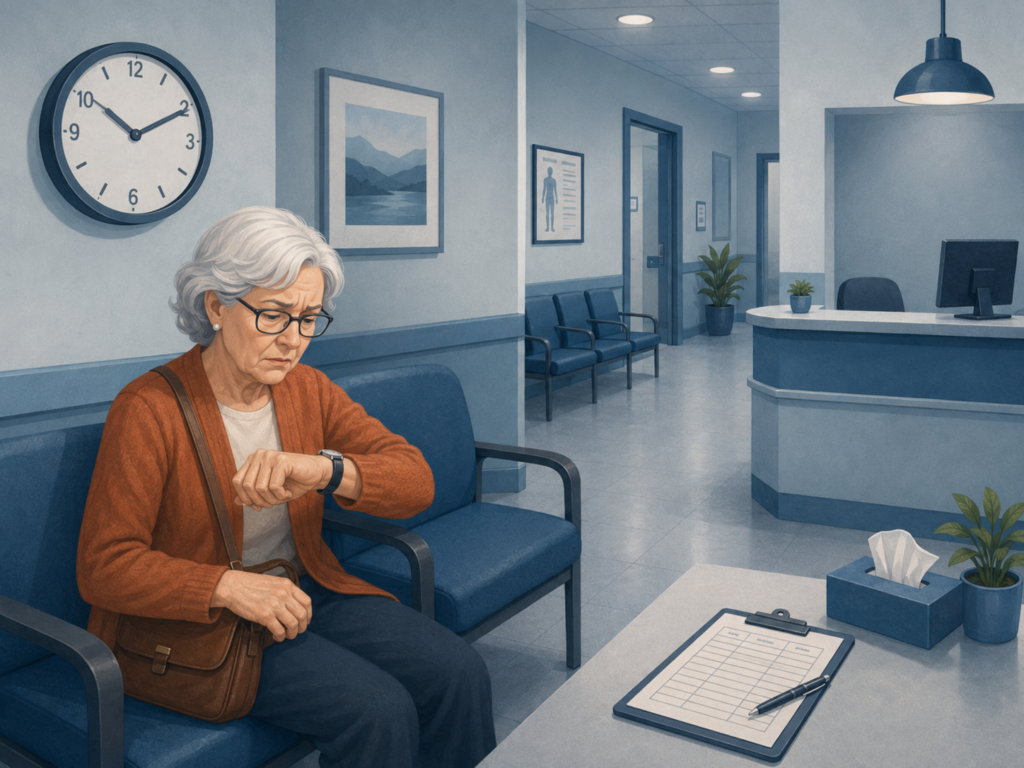
One hour and ten minutes after my scheduled appointment.
Then there was another specialist.
I had waited weeks to see him.
He walked into the examination room, introduced himself and asked why I was there.
I asked whether he had read the referral from my doctor.
No.
Had he received the medical records, X-rays and other information supporting the referral?
Apparently not.
I told him I had assumed my doctor’s office had forwarded everything.
Then I asked what happens when his office does not receive the supporting information. Does someone from his office call the referring physician and ask for it?
No.
So whose responsibility is it to make sure the specialist has the medical information necessary to evaluate me?
His answer:
Mine.
The patient’s.
Apparently I had unknowingly acquired another job.

Medical records coordinator.
But the story gets better.
Or worse.
I contacted my doctor’s office and asked them once again to send the referral and supporting records.
I scheduled another appointment with the specialist a couple of weeks later.
On the day of the appointment, I got into my car and drove the 45 minutes to his office.
About ten minutes before I was scheduled to see him—with me already on the road—I received a telephone call.
The doctor had decided to cancel all of his afternoon appointments.
They were sorry they couldn’t give me more notice.
The next day his office called me again to tell me he was canceling my appointment.
And the day after that?
I received a certified letter.
By snail mail.
Informing me that the doctor was dropping me as a patient.
You can’t make this stuff up.
And then there is the paperwork.
Almost every time I go to a new doctor’s office, I am asked to fill out “a little paperwork.”
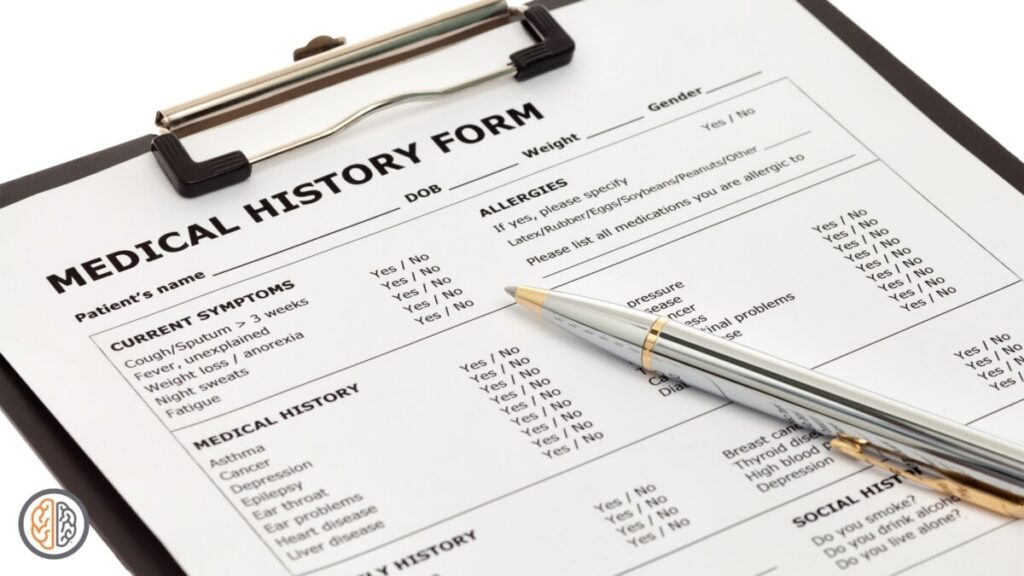
You know the paperwork.
Name.
Address.
Phone number.
Email address.
Emergency contact.
Insurance company.
Insurance number.
Medical history.
Family medical history.
Surgeries.
Allergies.
Every medication I take.
The dosage.
And then page after page of privacy notices, disclosures, acknowledgments and documents that appear to have been written primarily to explain what the medical practice is and is not responsible for.
If I have filled out this information once, I have filled it out a hundred times.
Aren’t we supposed to have electronic medical records?
Wasn’t that one of the great promises of modern medicine?
Apparently we have developed the technology to perform robotic surgery, replace heart valves through catheters and implant pacemakers without traditional surgery—but we still cannot figure out how to transfer my phone number and medication list from one doctor’s office to another.
Then try calling your doctor’s office.
Good luck.
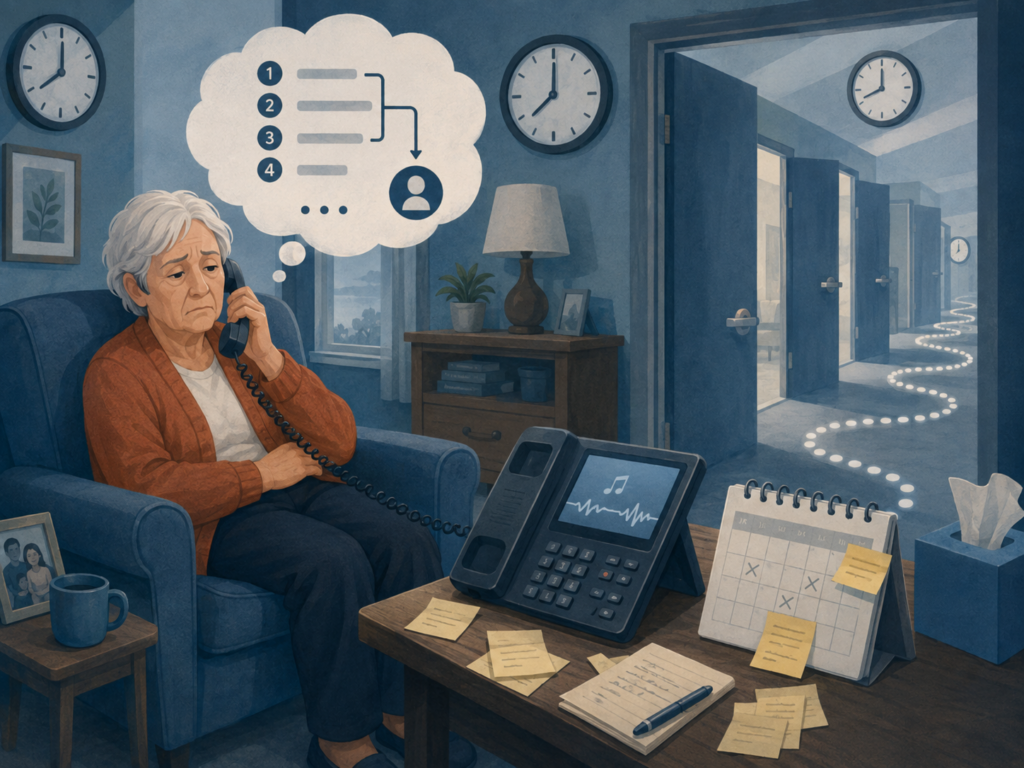
You may reach a scheduling center.
It may be in another building.
It may be in another city.
You may reach “customer care.”
You may navigate six choices on a phone tree.
You may sit on hold for ten minutes.
Eventually a recorded voice may graciously inform you that if you press 1, someone will call you back.
Of course, it took you five minutes just to reach the recording telling you that someone might eventually call you back.
Trying to reach the actual doctor’s office?
Almost impossible.
Trying to reach the doctor?
Forget it.
Trying to reach the doctor’s medical assistant?
Increasingly difficult.
Instead, send a message through the patient portal and hope somebody responds within a day.
We call this patient-centered health care.
Centered around which patient?
Even getting into the doctor’s office can become an adventure.
You park in the parking garage.
There is no attendant.
There is no place to insert cash.

Instead there is a QR code.
Take out your smartphone.
Open the camera.
Scan the QR code.
Open the website.
Create an account.
Remember your password.
Enter your license plate number.
Enter your credit card information.
Confirm the transaction.
All so you can park your car and go see the doctor.
For someone older, less technologically comfortable or simply overwhelmed, this alone can be confusing and disheartening.
I haven’t even made it through the front door yet, and apparently I already need a health-care advocate.
And then there is the annual “wellness” examination.
Thirty minutes.
Really?
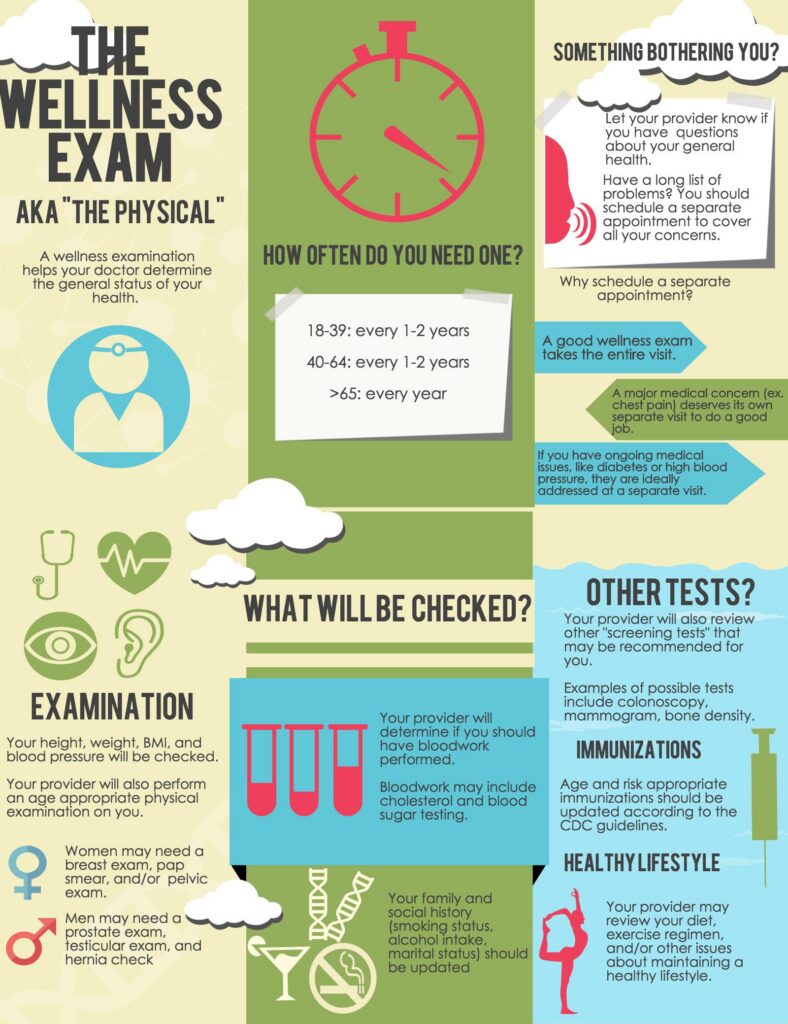
At 82, I have more than one body part.
I have medications to review. Test results. Questions. Specialists. Preventive issues. Blood pressure. Hearing. Eyes. Knees. Heart. Balance. Exercise. Nutrition.
Thirty minutes?
By the time we verify my medication list, our time is practically up.
Of course, there is concierge medicine.
Pay an additional annual fee—sometimes thousands of dollars—and you may get a doctor with fewer patients, longer visits and easier access.
That can be wonderful if you can afford it.
But even concierge medicine does not magically integrate the American health-care system. The minute you need an ophthalmologist, cardiologist, orthopedist, surgeon or other specialist outside that doctor’s immediate network, you may find yourself right back where you started.
And for many people, concierge medicine is simply financially out of reach.
Now, I want to be careful about something.
My complaints are not the biggest problems in American health care.
They pale beside the problems faced by people who cannot afford insurance, cannot afford medications, cannot obtain preventive care, or simply do not have realistic access to doctors at all.
I am fortunate.
Very fortunate.
But that is precisely what has finally stopped me.
I started thinking about who I am.
I am healthy enough to do all of this.
I am persistent enough.
I am technologically capable enough.
I have the time.
I have a car.
I speak English.
I can ask questions.
I have financial resources.
And I am willing to fight my way through the system.
And I am having trouble.
What happens to the 88-year-old who lives alone?
What happens to someone whose memory isn’t very good?
Someone without a smartphone?
Someone who does not speak English well?
Someone working two jobs who cannot spend 40 minutes on hold?
Someone who doesn’t drive?
Someone frightened by doctors?
Someone who simply assumes that when the system says no, the answer must be no?
Most important, what happens to someone who is actually sick?
We have constructed a health-care system in which the people who most desperately need care may be the people least capable of navigating their way to it.
And somewhere along the way, something very strange happened.
The patient became responsible for managing the system.
We became the scheduler.
The medical-records clerk.
The referral coordinator.
The communications manager.
The insurance expert.
The technology specialist.
The follow-up department.
And, apparently, the person responsible for making sure the doctor has the information necessary to treat us.
It occurs to me that navigating one’s way to—and then through—the American health-care system has become almost a full-time job.
Appointments. Referrals. Medical records. Phone calls. Portals. Passwords. Insurance. Follow-ups. Scheduling. Rescheduling. Making sure one doctor knows what another doctor has done.
Apparently, I have a choice.
I can accept that all of this is now my responsibility and resign myself to spending an increasing amount of my time managing my health care rather than simply receiving it.
Or I can find someone to do it for me.
When I need help with my taxes, I hire an accountant.
When I need legal help, I hire a lawyer.
When I need help managing investments, I hire an investment adviser.
Maybe the American health-care system has become complicated enough that I need professional help navigating it too.
Someone sitting on my side of the table.
Someone who makes the calls, chases the records, follows up on the referrals, deals with the scheduling departments, makes sure the doctors have what they need, and keeps all the pieces connected.
A personal health-care advocate.
Or perhaps, as I have begun to think of it, a personal health-care chief of staff.
Maybe those people already exist.
I am going to find out.
And if they don’t—or if what exists doesn’t really solve the problem—maybe there is a business here that someone ought to start.
Maybe even me.
Because I can’t possibly be the only person who feels this way.
And once again, I come back to the part that bothers me most.
I am healthy. I am persistent. I have the time, the technology, the transportation and the financial resources to fight my way through this system.
And I am exhausted by it.
So perhaps I can hire someone to help me.
But what about the millions of people who can’t?
Who is their health-care chief of staff?
Exactly! You should sent this to NYT! There are hordes of us experiencing this situation. When I get together with my golden girls this is all we talk about. Had to go to emergency room in Lisbon in May. 1 hr and 45 minutes total visit. Had no issues navigating process although I speak very little Portuguese. Went through triage, chest xray, consultation with MD and received a prescription. 200 Euros. Total! 3 meds….40 Euros. Guess how much it would cost here for someone in-country without insurance? $$$$$
Neil, No wonder health care in the US is so expensive. Another reason to emigrate! The NHS is a truly great, fully integrated system with electronic records, a GP coordinating any care needed beyond the GP’s office and no insurance or medical history forms. There can be long waits for surgeries like hip replacements not seen as urgent, but there’s always the option to use private insurance/private provider. They integrate seamlessly with NHS doctors. Also, we have great live West End theatre at reasonable prices and increasingly decent food!
What a cumbersome experience! You are asking the right questions; especially for those people who don’t have the tenacity to persevere to get the help they need. And there are a lot of those people.
What about getting health care CEOs to try to access their own systems from the patient perspective. Like an ‘undercover boss’ experience. Let them see how customer friendly their systems really are!
AND Neil you didn’t mention the peril of that parking QR Code being fake and the risk of being scammed by paying. If indeed scammed, that would add another week of run around for you. We also need a Chief of Scam/Spam to manage our daily emails, phone calls and payment systems. Too much time warding off Grandparent phone scams, email Bitcoin scams, fake QRs etc.
You may want to try AI. Amazing help and no cost.
Neil, I just found a Primary Care doctor because of your friend Doug
I asked AI…..Neil start talking to AI about all of your problems they are very nosy and they know everything..
I’m experiencing the same things at UC San Diego. Fortunately, I’ve had good luck with Eisenhower so far.